Californian Rabbit
Oryctolagus cuniculus
A sturdy, placid breed in Himalayan points · Intermediate
- Lifespan
- 5-10 years
- Adult size
- 3.6-4.8 kg (8-10.5 lb); does run larger than bucks
- Min. habitat
- Room or pen of 3x2m (10x6ft) floor space, 1m (3ft) high, minimum per pair, always accessible
- Social needs
- Social; keep in neutered bonded pairs
- Diet
- Unlimited grass hay, daily greens, strictly measured pellets
- Time
- Daily; 1-2 hours of feeding, cleaning and floor time
- Cost
- Moderate to high
Overview
- The Californian was developed in the 1920s by George West in Southern California as a dual-purpose meat and fur breed, combining Himalayan, Standard Chinchilla and New Zealand White stock.
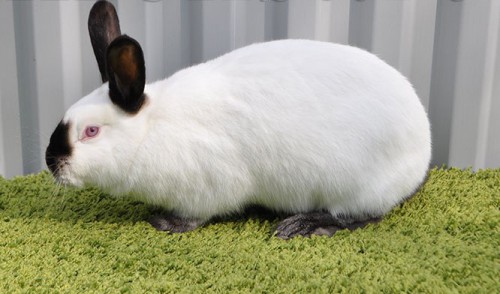
- It is a large, muscular rabbit with a white body, near-black points on the nose, ears, feet and tail, and ruby-pink eyes.
- The pointed pattern is temperature-sensitive, so the markings darken in cold weather and fade in warm spells, and kits are born almost entirely white.
- As a companion it is calm, solidly built and less delicate than the dwarf and lop breeds, but at 3.6-4.8kg it needs space, food and equipment at large-rabbit scale.
- Because it remains a common commercial and 4-H breed, Californians turn up in rescues regularly, so check adoption before buying.
- They are not a low-effort starter pet, and they need the same decade-long commitment, companionship and rabbit-savvy vet care as any other rabbit.
Housing
- A pair needs a permanently accessible base of at least 3x2m (10x6ft) of floor space with 1m (3ft) of height, such as a rabbit-proofed room or large floor pen, plus daily access to a bigger exercise space.
- Traditional hutches and pet-shop cages are far too small for a breed this size, and a Californian must always be able to take several full hops, stand upright on its hind legs and stretch out flat.
- Their weight makes soft, non-slip flooring important, so avoid wire, bare hard floors and thin bedding, which cause sore hocks.
- Provide oversized litter trays, sturdy hides, tunnels and chew items, and keep cables and skirting protected indoors.
- Keep them cool and shaded, because rabbits struggle above about 25°C (77°F) and this heavy-bodied breed overheats faster than small ones.
- Ruby-eyed rabbits can also be sensitive to harsh bright light, so always offer dim retreats.
Diet
- Unlimited fresh grass hay must make up around 85% of the diet, with a daily adult-handful portion of varied leafy greens.
- Feed plain uniform pellets strictly measured at no more than an eggcupful (about 25g) per kilogram of body weight daily, and reduce that if weight creeps up.
- The breed was selected for fast growth and efficient feed conversion, so Californians gain fat quickly on free-fed pellets, muesli mixes or sugary treats.
- Obesity in a rabbit this heavy directly worsens sore hocks, grooming problems and gut trouble.
- Offer water in a heavy, tip-proof bowl as well as any bottle, since large rabbits drink a lot.
- Introduce new greens gradually and skip fruit except as an occasional tiny treat.
Health
- Sore hocks (pododermatitis) are the main breed-linked risk, driven by their body weight on hard or dirty flooring, so check the hind feet weekly.
- Gut stasis is an emergency in all rabbits, and any drop in appetite or droppings needs a vet the same day.
- Their white rump also shows soiling clearly, which helps you catch the wet fur that invites flystrike in warm months.
- Unlike the dwarfs and lops on this site, the Californian's longer commercial head shape makes congenital dental problems less common, but constant hay wear is still essential.
- Spay does, because uterine adenocarcinoma affects the majority of unspayed females by five or six years old, and neuter bucks for bonding.
- In the UK and Europe, vaccinate annually against myxomatosis, RHD1 and RHD2; in North America, ask your vet about the RHDV2 vaccine.
- Budget for larger drug doses at this body weight and choose a rabbit-experienced practice before you need one.
Temperament
- Californians are widely regarded as one of the calmer, steadier rabbit breeds, and well-socialised adults are placid, curious and tolerant of quiet company.
- They are still prey animals that generally dislike being lifted, so interact at floor level and let the rabbit come to you.
- Their hindquarters are powerful, and a struggling Californian can scratch a handler or injure its own spine, so children should never carry one.
- They suit patient households that enjoy calm, ground-based companionship rather than a cuddly lap pet.
- They are social and should live with a bonded, neutered companion rabbit.
- Most litter-train easily, learn routines quickly and become confident free-roam house rabbits when given consistent, gentle handling.
A good fit for
- Keepers wanting a calm, sturdy large rabbit
- Homes with generous permanent floor space
- Adopters willing to check rescues first
- Families with gentle older children
- Those preferring a low-grooming flyback coat
Common mistakes to avoid
- Hutch or cage housing far too small for the breed
- Fast weight gain on unmeasured pellets
- Sore hocks from hard, wire or dirty flooring
- Overheating above about 25°C (77°F)
- Children picking up a strong, kicking rabbit
- Keeping this social breed alone
Is your enclosure big enough?
Is this urgent?
A rabbit that stops eating is an emergency, not a wait-and-see. Nothing else on this page is as time-critical.
Go now
Today
Two rabbits are the minimum, and a bonded pair will also tell you when something is wrong — a rabbit sitting apart from its partner is worth a second look.
This is general guidance for a healthy adult, not a diagnosis. An exotics vet who knows your animal always overrides it — and the time to find one is before you need one.
Can a californian rabbit eat that?
Hay first, greens second, everything else barely at all. A rabbit fed mostly pellets and treats is a rabbit with dental disease waiting to happen.
Never (23)
Rare treats (13)
Occasional (18)
Everyday foods (9)
That plant or food is not on our list. Do not offer it — a rabbit cannot vomit, so anything that goes in has to go all the way through. Check with an exotics vet.
A rabbit that has not eaten for 8 hours needs a vet, whatever the reason. Diet changes are the most common trigger for that, which is why new foods go in one at a time.
What it really costs
Setup, monthly, first year and across a whole life, itemised and with the electricity worked out from the actual wattage. Published figures for the same animal disagree by a factor of four, so the calculator shows ranges rather than picking one.
More Small Pets guides

The classic white-blazed breed, steady and beginner-beloved

A very small rabbit with an alert, energetic nature

A small lop-eared breed with a generally relaxed nature

A small maned breed that needs regular grooming

A very large, docile breed needing serious space

Compact lop-eared, social, hay-powered companion