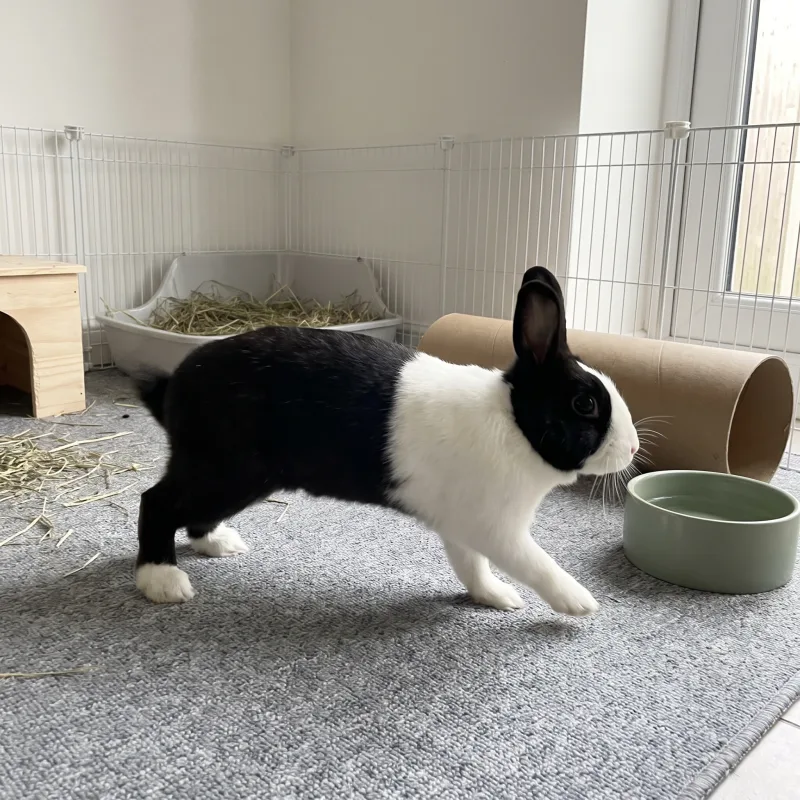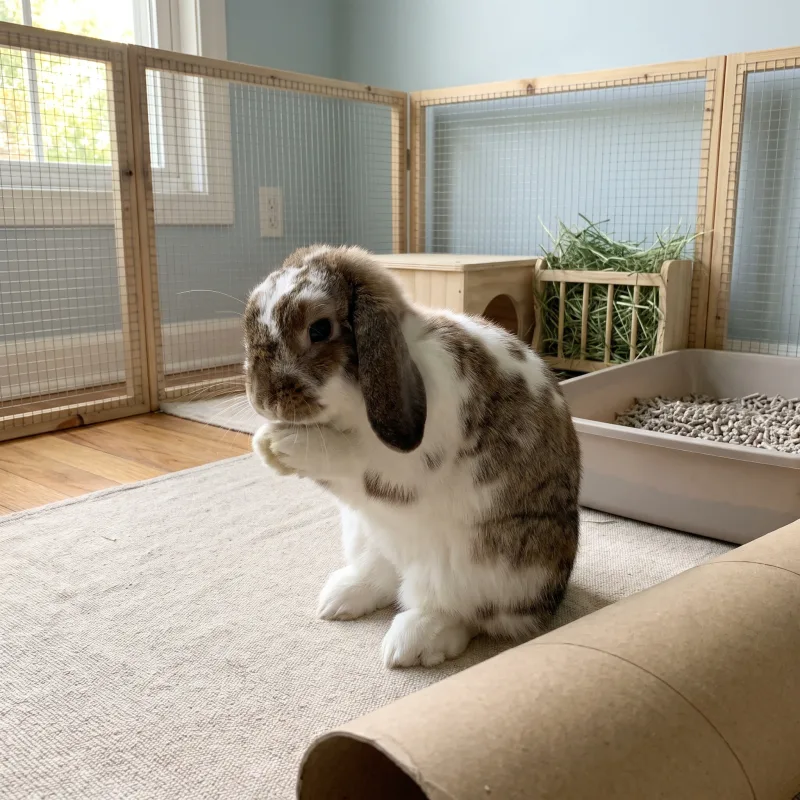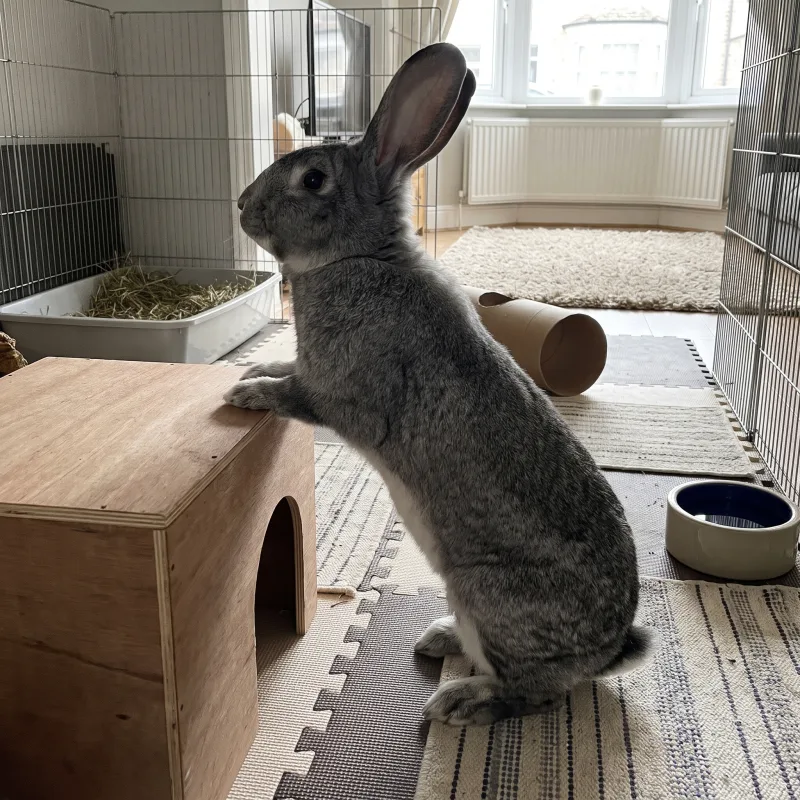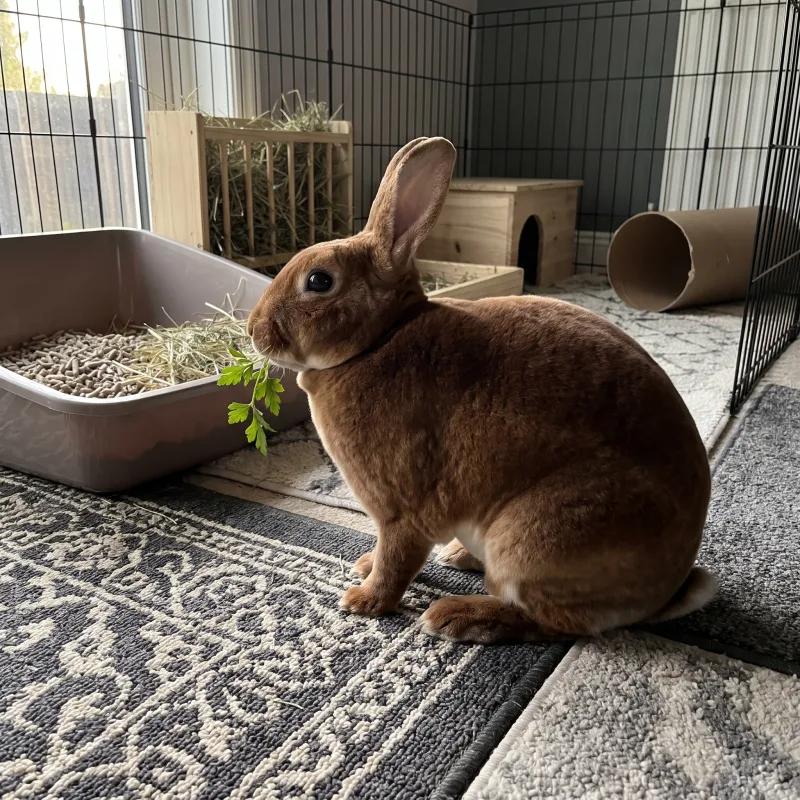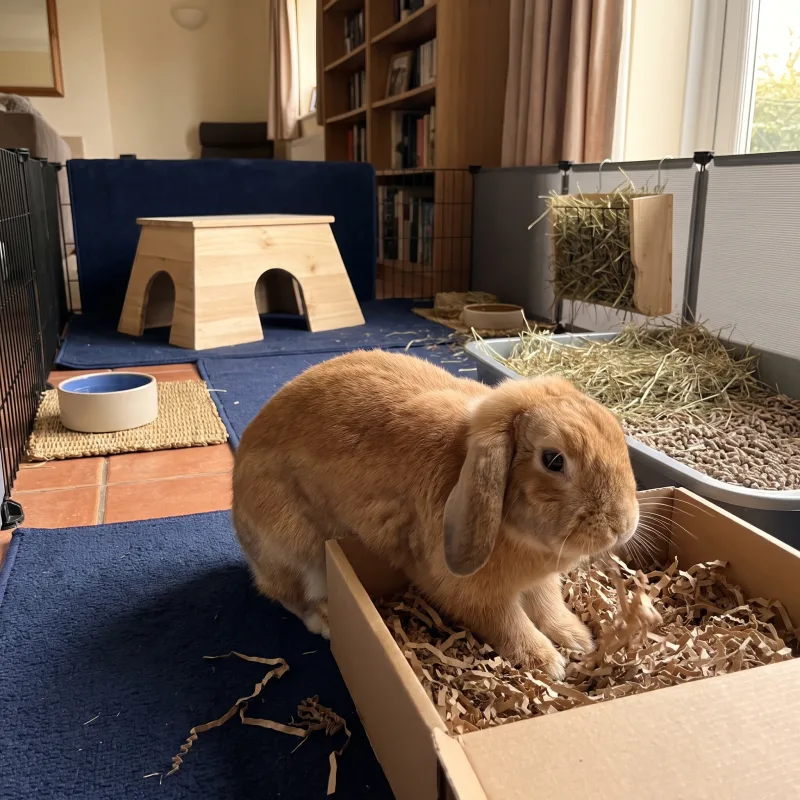
Mini Lop Rabbit
Oryctolagus cuniculus
Compact lop-eared, social, hay-powered companionIntermediate
- Lifespan
- 7-12 years
- Weight
- Compact; about 3-6 lb1.3-2.7 kg depending on standard
- Social needs
- Social; best in bonded neutered pairs
- Time
- Medium-high; daily care and interaction
- Cost
- Medium
- Diet
- Herbivore; unlimited grass hay-based
Overview
What is this animal?
- The Mini Lop is a small, stocky rabbit breed known for its rounded body and floppy, lop-shaped ears.
- Breed naming differs between countries, with the UK "Mini Lop" and US "Holland Lop" overlapping.
- Rabbits are social, intelligent prey animals that live for a decade or more.
Show 3 more
- They are not low-maintenance starter pets.
- They need space, company, a hay-based diet, and rabbit-savvy veterinary care.
- Outdated hutch-only housing causes widespread suffering, so modern welfare standards call for far more room and enrichment.
Temperament
- Mini Lops are typically friendly, curious, and people-oriented, often calmer than some flightier breeds, though every rabbit is an individual.
- As prey animals they dislike being picked up and prefer interaction at ground level; forced handling erodes trust and can injure their fragile spines.
Show 2 more
- They thrive with a bonded companion and become bored or withdrawn when kept alone.
- With patience, gentle routine, and floor-level play many become affectionate and litter-trained, making genuinely interactive indoor companions.
A good fit for
- Families wanting an interactive house rabbit
- Owners able to bond and keep a neutered pair
- Keepers committed to a hay-based diet and space
- People seeking a calmer, friendly lop breed
Common mistakes to avoid
- Small hutch-only housing with no exercise room
- Muesli mixes and too little hay (dental/gut disease)
- Skipping myxomatosis and RVHD vaccinations
- Keeping a single rabbit with no companion
Enclosure
Minimum 65 sq ft6 m² of floor, for the pair · 10 x 6.5 x 3.3 ft3 x 2 x 1 m
Cannot be kept alone. The minimum is 2, and the space above is for that group.
- Rabbits need far more space than a traditional hutch.
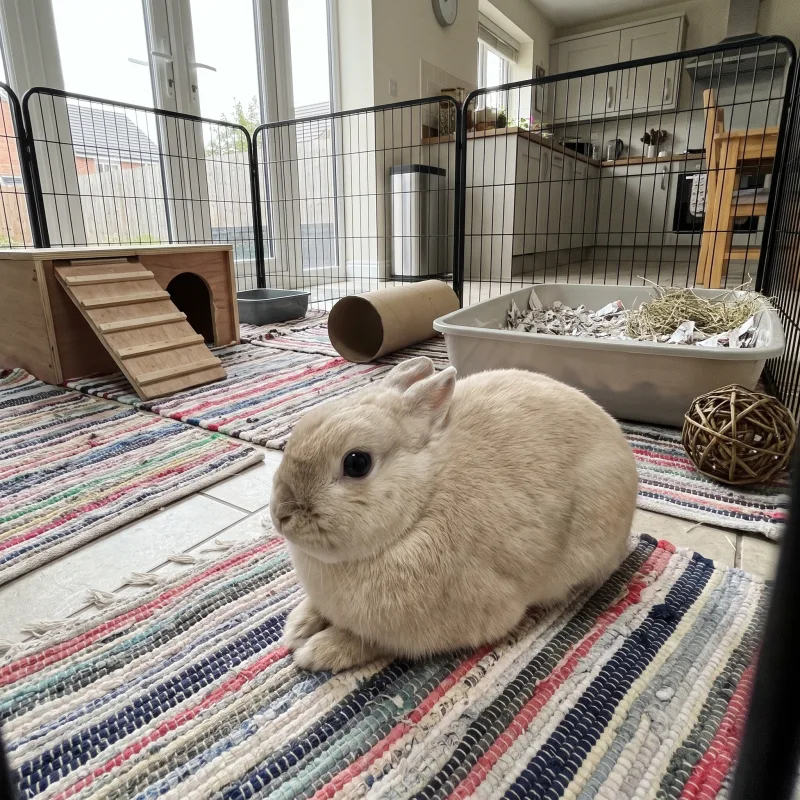
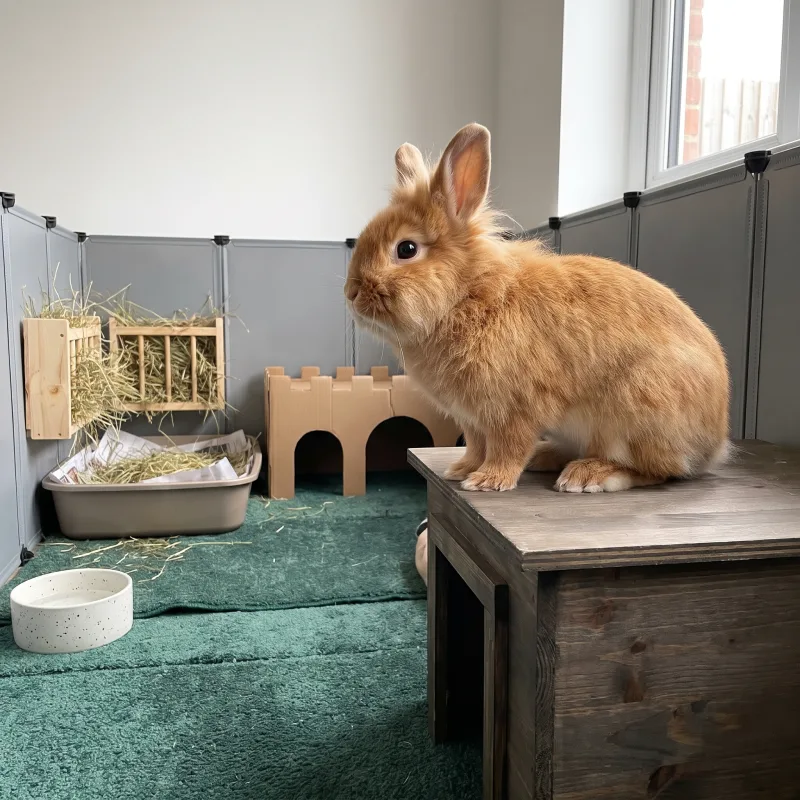
- Best practice provides a single, permanently accessible space of at least 10 x 6.5 ft3 x 2 m and 39 in1 m high (65 sq ft6 m²) for a pair, covering shelter and exercise together, ideally as house rabbits or in a secure, predator-proof outdoor setup, with daily free-roaming time on top of it.
- They must always be able to hop, stand fully upright, and stretch out.
Show 2 more
- Provide a litter tray, hides, and safe chew items, and rabbit-proof cables and skirting indoors.
- Lops can be prone to overheating, so keep them cool and shaded; temperatures above about 77-82°F25-28°C are dangerous.
Supplies
Setup
- Housing and secure exercise space
- Litter trays, bowls, carrier, hides
Ongoing
- Grass hay by the bale or the largest box available
- Plain uniform adult rabbit pellets (no seeds, no coloured bits)
- Mixed leafy greens for daily feeding
- Heavy ceramic water bowl (tip-proof)
- Hay rack or hay-filled litter tray
Show 3 more
- Eggcup or small scale for measuring pellets
- Untreated willow or apple chews
- Airtight bin to keep pellets fresh
Safe substrate: Paper-based litter in the tray, topped with hay · Fleece or washable mats on the living floor · Straw for outdoor warmth
Care routine
Daily
- Check droppings and appetite
- Check the rear for soiling and flystrike (twice a day in warm weather)
- Company and time out
- Fresh greens and a measured pellet portion
- Fresh water
- Spot-clean the enclosure
- Top up unlimited hay
- Watch them while they are awake
Show 8 more
Every few days
- Change the litter trayevery 2 days
- Check the coat and remove loose furevery 3 days
Weekly
- Deep-clean and change bedding
- Hands-on health check
- Rotate enrichment
- Weigh-in
Monthly
- Check supplies and dates
Less often
- Trim nailsevery 6 weeks
Vet: Annual exam, vaccinations and dental check, every 12 months (every 6 months from 5 years old)
Tools
Care in depth
Diet
Herbivore; unlimited grass hay-based
- The cornerstone of rabbit health is unlimited good-quality grass hay, which should make up around 85% of the diet and wears down their continuously growing teeth.
- Add a generous daily portion of leafy greens and only a small measured amount of pellets.
- Constant fresh water is essential.
- Limit sugary treats, fruit, and carrots, and avoid muesli-style mixes, which cause selective feeding and dental and gut disease.
- A low-fibre diet is the leading cause of dangerous gut stasis and dental overgrowth in pet rabbits.
Health
Signs of good health, and the common problems
- Lop ears can predispose rabbits to ear-canal problems and wax buildup, and their compact, flat-faced conformation can worsen dental malocclusion, so regular dental and ear checks matter.
- Gut stasis, where the digestive system slows or stops, is a true emergency.
- Flystrike in warm months can be rapidly fatal.
- Vaccinate against myxomatosis and rabbit haemorrhagic disease (RVHD1 and RVHD2) where available, and neuter to prevent uterine cancer in females and reduce aggression.
- A rabbit that stops eating or passing droppings is an emergency: call an exotics vet straight away rather than waiting to see, and get it seen within 8 hours at most.
Is this urgent?
8 warning signs and how fast to act, 6 of them right away
A rabbit that stops eating is an emergency, not a wait-and-see. Nothing else on this page is as time-critical.
Go now
Today
Two rabbits are the minimum, and a bonded pair will also tell you when something is wrong: a rabbit sitting apart from its partner is worth a second look.
This is general guidance for a healthy adult, not a diagnosis. An exotics vet who knows your animal always overrides it, and the time to find one is before you need one.
Bedding and substrate
3 safe, 1 with a caveat, 3 to avoid
Rabbits need a clean, dry, non-slip floor plus a separate deep litter tray. The two jobs need two materials.
Safe
With a caveat
Never
Check and clean the rear at least twice a day in warm weather, for every rabbit. A soiled or damp rear is what flystrike needs.
Top resources for more info
Independent creators and organisations we would send a friend to. We have no affiliation with any of them, and nothing here is sponsored. Links checked 2026-10-22.
YouTubers
Sites
Rabbits, side by side
Same axes, same care guides: the honest way to choose between types.