African Pygmy Hedgehog
Atelerix albiventris
Solitary, prickly, heat-loving night explorerIntermediate
- Lifespan
- 4-6 years
- Size
- 6-8.5 in15-22 cm
- Weight
- 0.65-1.55 lb300-700 g
- Social needs
- Strictly solitary; house alone
- Time
- Medium; daily handling and cleaning
- Cost
- Medium
- Diet
- Insectivore-leaning omnivore
Overview
What is this animal?
- African pygmy hedgehogs are small, nocturnal insectivores derived from the four-toed hedgehog.
- They are covered in non-barbed spines they raise and curl into a ball when frightened.
- Each animal has a distinct personality, from bold and explorative to shy and defensive.
Show 2 more
- They are solitary by nature and must be housed alone; cohabiting adults fight and become stressed.
- They are often mis-sold as easy starter pets, but their heat, space, and dietary needs make them better for committed intermediate keepers.
Temperament
- Hedgehogs are shy, independent, and naturally defensive, huffing and balling up until they learn to trust a keeper.
- With patient, daily, gentle handling many become tolerant and curious, though they rarely seek affection like a dog or ferret.
Show 4 more
- They are most active at night.
- They are not lap pets and dislike loud, busy environments.
- Their quills can prick, so they suit calm, gentle handlers rather than young children.
- Consistent routine and scent familiarity build the most confident animals.
A good fit for
- Quiet, patient keepers wanting a solitary pet
- Night owls who can interact in the evening
- Owners able to provide steady warmth and space
- People wanting a low-social-need exotic
Common mistakes to avoid
- Housing two together (they fight and stress)
- Letting temperatures drop and triggering hibernation
- Overfeeding causing obesity and fatty liver
- Wire or mesh floors injuring delicate feet
Enclosure
Minimum 22 sq ft2 m² of floor · 6.5 x 3.3 ft2 x 1 m
Must be housed alone. Strictly solitary; house alone
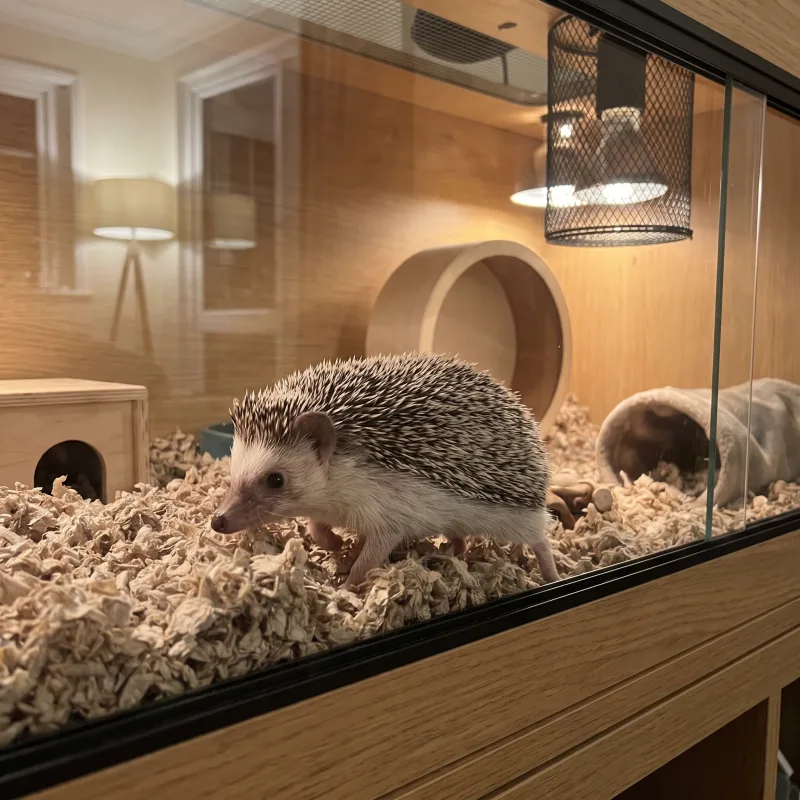
- Use a large enclosure with one continuous solid floor of at least 21.5 sq ft2 square metres, for example 6.5 x 3.3 ft2 x 1 m, and sides it cannot climb or a secure lid: hedgehogs climb and can escape through small gaps.
- In the wild they travel large distances, so supervised time out in a safe room helps as well.
- Avoid wire floors and mesh that can trap their legs.
Show 4 more
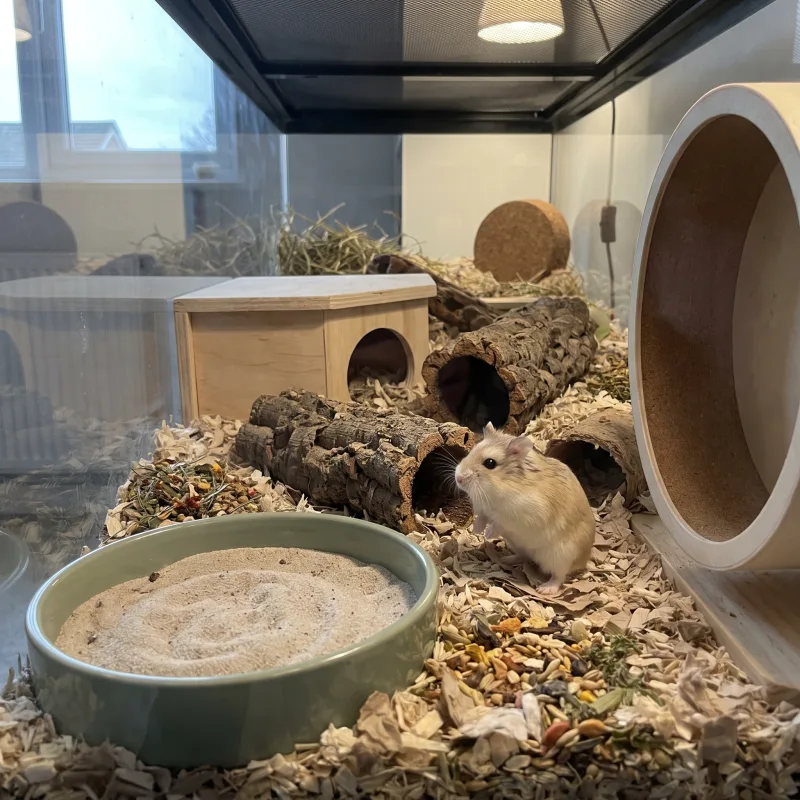
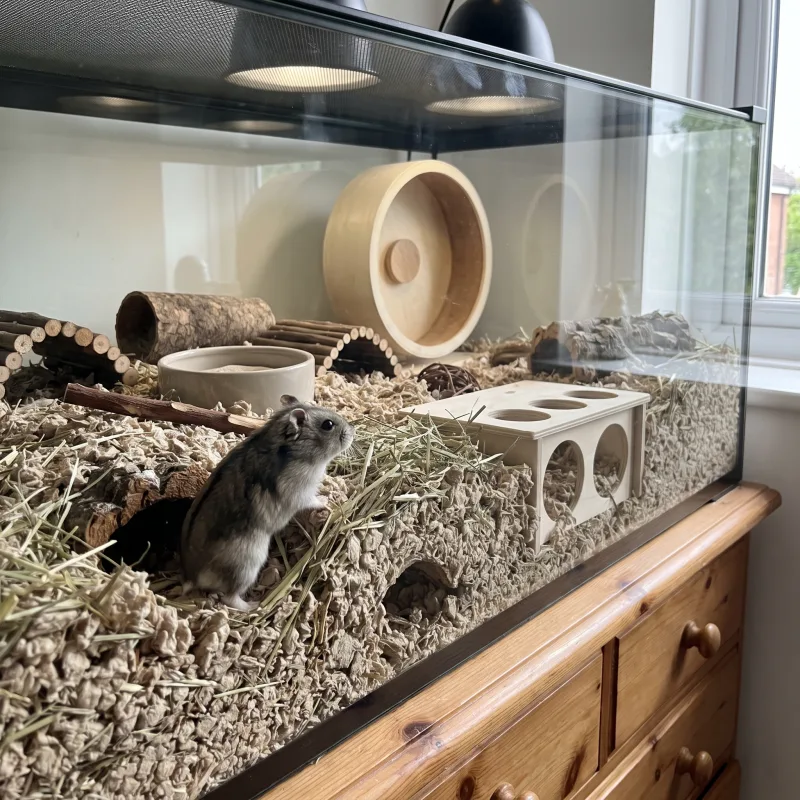
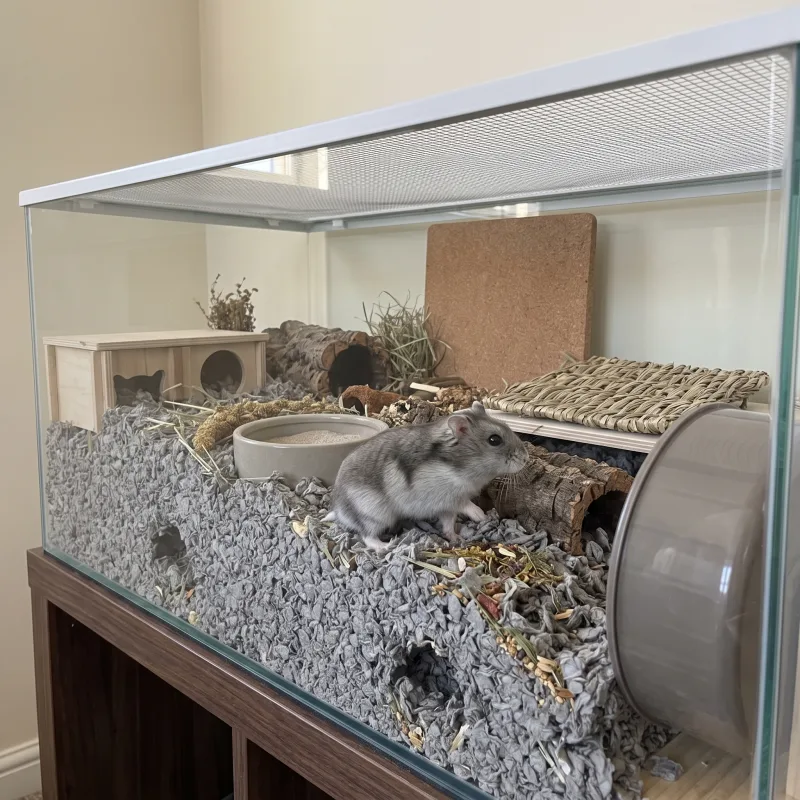
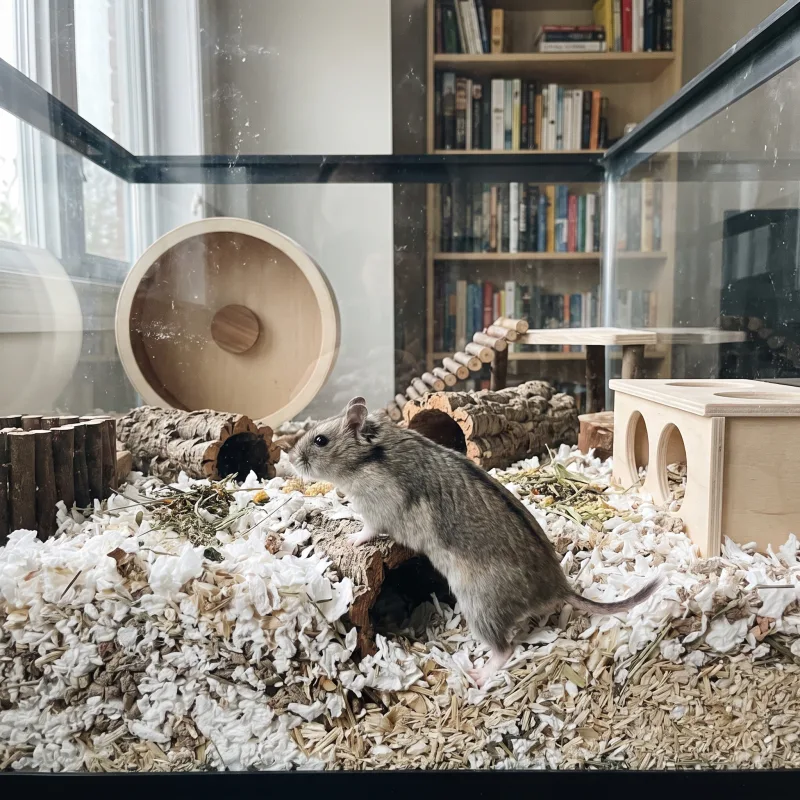
- Provide a deep, dust-free substrate such as fleece liners or paper-based bedding, a hide, and a large solid-surface running wheel.
- Temperature is critical: maintain a stable 75-81°F24-27°C, and never let it fall below 72°F22°C, using a thermostat-controlled ceramic heat emitter or heat panel.
- Cold hedgehogs may attempt hibernation, for which this species is not adapted and which is often fatal.
- Provide a gentle day-night light cycle.
Supplies
Setup
- Solid-floored enclosure with 21.5 sq ft2 m² of floor or more
- Ceramic heat emitter or heat panel with thermostat
- Water bottles, bowls, hides and enrichment
- Carrier and travel box
- Digital kitchen scale
Ongoing
- Quality hedgehog kibble or a high-quality, low-fat cat food
- Live or dried mealworms, crickets and dubia roaches
- Shallow heavy ceramic dish
- Water bottle or second shallow bowl
- Small kitchen scale for portioning and weekly weigh-ins
Show 2 more
- Feeding tweezers for hand-offering insects
- Airtight food bin
Safe substrate: Dust-extracted paper bedding · Kiln-dried aspen shavings · Hemp bedding
Care routine
Daily
- Check the room temperature
- Company and time out
- Feed and clear yesterday's leftovers
- Fresh water
- Spot-clean the enclosure
- Wash the wheel
- Watch them while they are awake
Show 7 more
Weekly
- Check feet and nails
- Deep-clean and change bedding
- Hands-on health check
- Rotate enrichment
- Weigh-in
Monthly
- Check nails and teeth
- Check supplies and dates
Vet: Annual exam, every 12 months (every 6 months from 3 years old)
Tools
Care in depth
Diet
Insectivore-leaning omnivore
- These animals lean strongly insectivorous and thrive on a high-protein, moderate-fat, low-filler diet.
- A good base is a quality hedgehog kibble or a high-quality, low-fat cat food with a named meat first, supplemented with live or dried insects such as crickets, mealworms, and dubia roaches.
- Feed measured portions at night, as obesity is common and dangerous.
- Offer occasional small amounts of cooked egg or lean meat.
- Avoid milk, bread, and sugary or salty human foods.
- Provide fresh water in a shallow bowl or bottle.
Health
Signs of good health, and the common problems
- Common problems include obesity, dental disease, mites, and fatty liver from poor diet.
- A serious neurological condition called Wobbly Hedgehog Syndrome causes progressive paralysis and has no cure.
- Cancer is also relatively frequent in older animals.
- Monitor weight, droppings, and gait closely, and find an exotic vet before you need one.
- "Self-anointing," where a hedgehog froths and spreads saliva over its spines in response to new smells, is normal behavior, not illness.
Is this urgent?
11 warning signs and how fast to act, 7 of them right away
Small mammals are prey animals. They mask pain and illness by instinct, so by the time something is obvious it is usually already advanced.
Go now
Today
Soon
Have the number of an exotics-competent practice saved before you need it. Most general small-animal clinics do not treat rabbits or rodents out of hours, and finding one at 11pm is not realistic.
This is general guidance for a healthy adult, not a diagnosis. An exotics vet who knows your animal always overrides it, and the time to find one is before you need one.
Bedding and substrate
6 safe, 3 with a caveat, 6 to avoid
Bedding has three jobs: absorb, stay dust-free, and, for the species that burrow, let the animal dig. Anything aromatic is failing the second one.
Safe
With a caveat
Never
This is our general list for small pets. We have not built one specific to Hedgehogs yet.
Depth matters as much as material for burrowing species. A hamster or a gerbil needs about 16 in40 cm of substrate it can actually tunnel through; shallow bedding on a large floor is still an inadequate enclosure.
Top resources for more info
Independent creators and organisations we would send a friend to. We have no affiliation with any of them, and nothing here is sponsored. Links checked 2026-10-22.
Sites
Other Small Pets worth knowing
Same axes, same care guides: the honest way to compare them.