Degu
Octodon degus
Diurnal, chatty, diabetes-prone herd rodentsIntermediate
- Lifespan
- 6-9 years
- Size
- 10-12 in25-31 cm including tail
- Weight
- 6-11 oz170-300 g
- Social needs
- Highly social; must live in pairs or groups
- Time
- Medium; daily interaction and cleaning
- Cost
- Medium-High
- Diet
- Strict herbivore; sugar-free, high-fibre
Overview
What is this animal?
- Degus are small, highly social rodents from the dry scrubland (matorral) of central Chile, related to chinchillas and guinea pigs.
- Unlike most pet rodents they are diurnal, so they are active during the day.
- They are intelligent, vocal, and curious, using a rich repertoire of calls.
Show 2 more
- They are obligately social and suffer if kept alone, so they must always live with at least one compatible degu.
- Their long lifespan and special dietary needs make them a serious commitment for an attentive owner.
Temperament
- Degus are bright, busy, and playful, forming strong bonds within their group and grooming and "talking" to one another constantly.
- With gentle, frequent handling from a young age they become tame and interactive, often climbing onto trusted owners and learning simple routines.
Show 2 more
- They are fast and can be nippy if startled or rough-handled, so calm consistency works best.
- Their daytime activity makes them more interactive than nocturnal rodents, but a lone degu becomes stressed and unhealthy.
A good fit for
- Owners wanting an active, daytime rodent
- Keepers who can house a bonded pair or group
- People committed to a strict sugar-free diet
- Those wanting a long-lived, intelligent small pet
Common mistakes to avoid
- Keeping a single degu alone
- Feeding fruit, carrots, or sugary mixes (diabetes)
- Lifting by the tail (causes degloving)
- Plastic cages and accessories they chew and ingest
Enclosure
Minimum 22 sq ft2 m² of floor, for the pair
Cannot be kept alone. The minimum is 2, and the space above is for that group.
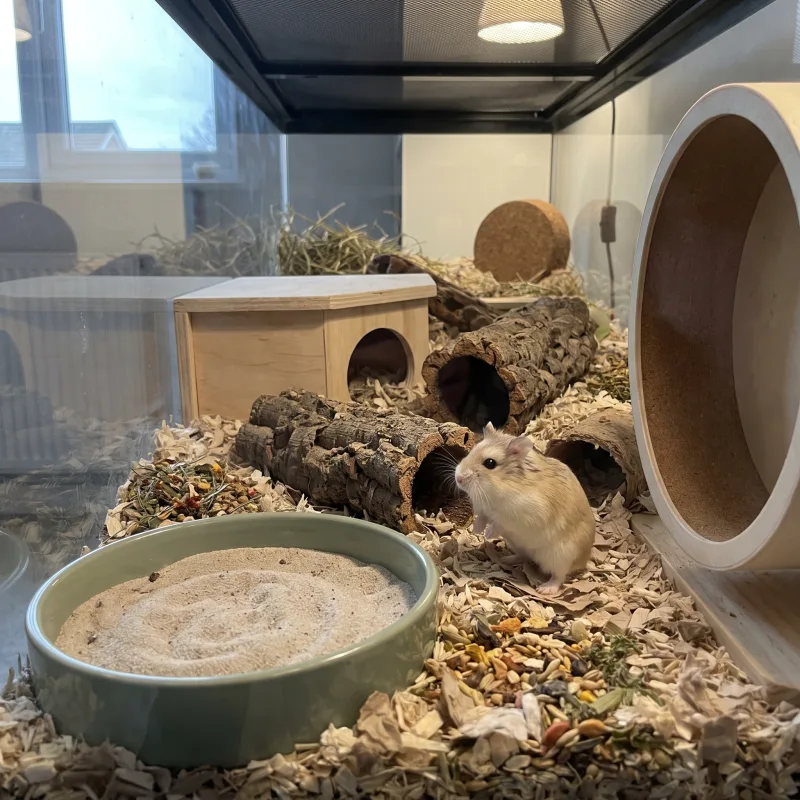
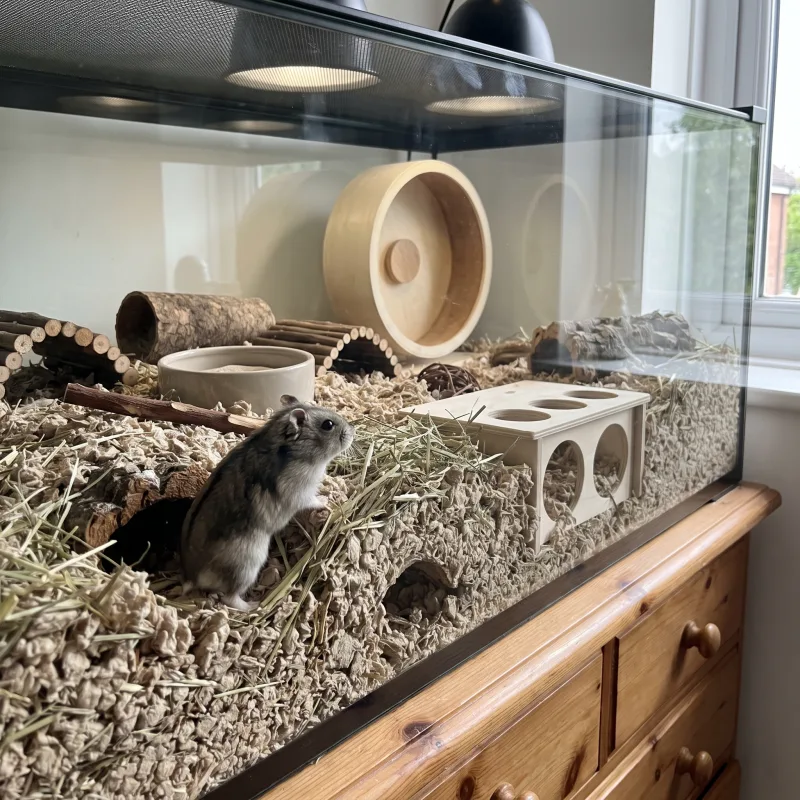
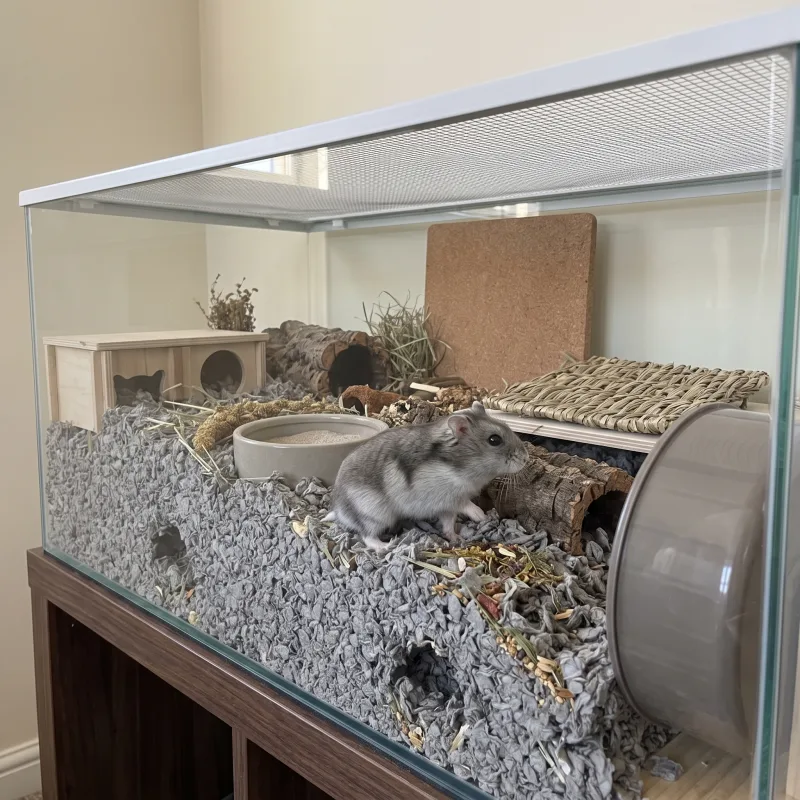
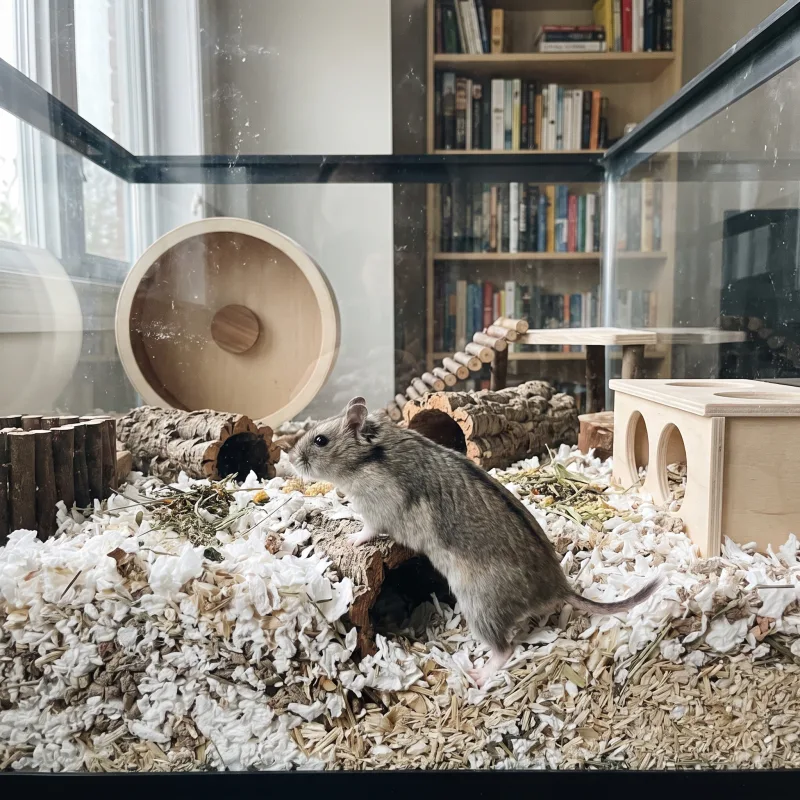
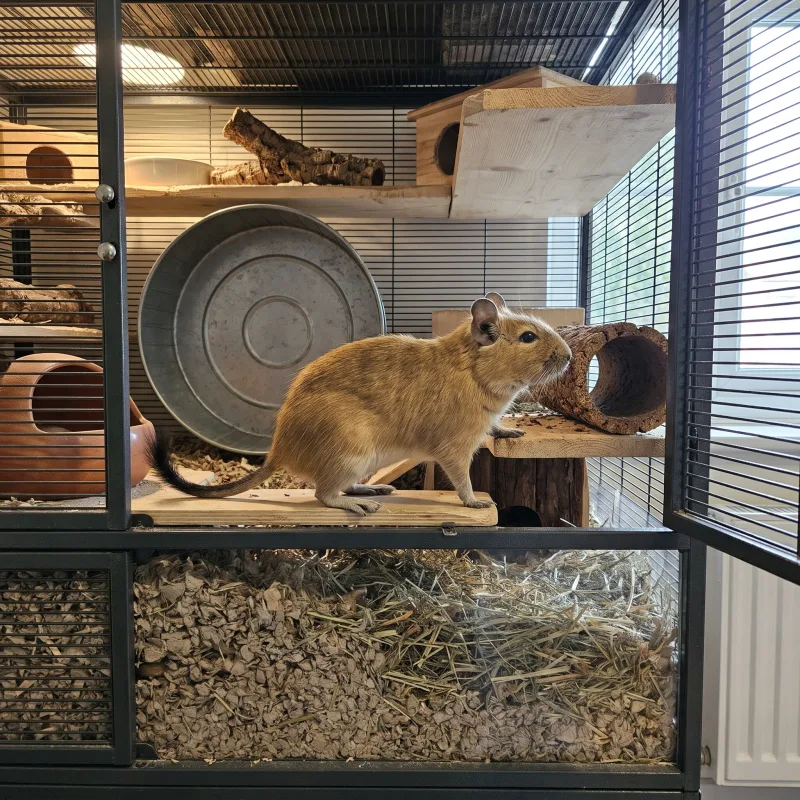
- Give a pair or small group a tall enclosure with at least 21.5 sq ft2 square metres of floor and 6.5 ft2 m of height, in metal or glass with narrow bar spacing, and add at least 5.5 square feethalf a square metre for each degu beyond four.
- Fill the height with several connected full or part levels, at least 12 in30 cm apart, and solid (not wire) platforms, arranged so that no fall anywhere is longer than 20 in50 cm.
- Degus are powerful chewers and diggers, so avoid plastic, which they destroy and may ingest.
Show 4 more
- Include a deep digging area, hides, and platforms for climbing.
- They need a dust bath several times a week to keep their coat in good condition, plus a large solid running wheel.
- Keep the cage out of direct sun and draughts, in a room of about 64-72°F18-22°C (the RSPCA advises no warmer than 68°F20°C) and never above 77°F25°C: degus cannot sweat, so heatstroke comes on quickly.
- Provide constant safe chew material.
Supplies
Setup
- Enclosure with 21.5 sq ft2 m² of floor and 6.5 ft2 m of height, or larger
- Water bottles, bowls, hides and enrichment
- Carrier and travel box
- Digital kitchen scale
Ongoing
- Grass hay in bulk
- Sugar-free degu or chinchilla pellets (check for molasses on the label)
- Fresh leafy greens for daily feeding
- Dried herb forage mix (dandelion, nettle, plantain)
- Untreated apple or willow gnawing wood
Show 3 more
- Water bottle plus brush
- Hay rack
- Kitchen scale for weekly weigh-ins
Safe substrate: Dust-extracted paper bedding · Kiln-dried aspen shavings · Hemp bedding
Care routine
Daily
- Company and time out
- Feed and clear yesterday's leftovers
- Fresh water
- Spot-clean the enclosure
- Top up unlimited hay
- Watch them while they are awake
Every few days
- Offer a dust bathevery 3 days
Show 9 more
Weekly
- Check labels on anything new
- Check the teeth are orange
- Deep-clean and change bedding
- Hands-on health check
- Rotate enrichment
- Weigh-in
Every few weeks
- Replace chews and wooden furnitureevery 2 weeks
Monthly
- Check nails and teeth
- Check supplies and dates
Vet: Annual exam with a diabetes check, every 12 months (every 6 months from 4 years old)
Tools
Care in depth
Diet
Strict herbivore; sugar-free, high-fibre
- Degus are strict herbivores that cannot process sugar properly and are prone to diabetes, so their diet must be low in sugar and starch and very high in fibre.
- The foundation is unlimited grass hay, supplemented with a small amount of degu- or chinchilla-appropriate pellets and fresh leafy greens.
- Never feed fruit, carrots, sweet vegetables, or sugary treats, and avoid sugary commercial rodent mixes.
- Constant fresh water and unlimited hay support both their teeth and gut.
- Safe gnawing wood helps wear their continuously growing teeth.
Health
Signs of good health, and the common problems
- Diabetes is the signature degu disease, linked to sugary diets and causing cataracts and weight loss.
- Their teeth grow continuously and can overgrow or develop painful malocclusion without enough hay and gnawing material.
- Cataracts, bumblefoot, and tail-skin injuries are also common.
- Never pick a degu up by the tail; the skin can slough off ("tail degloving"), after which the bare bone is amputated.
- Cloudy eyes, weight loss, excessive drinking, or drooling all warrant a prompt exotic-vet visit.
Is this urgent?
11 warning signs and how fast to act, 7 of them right away
Small mammals are prey animals. They mask pain and illness by instinct, so by the time something is obvious it is usually already advanced.
Go now
Today
Soon
Have the number of an exotics-competent practice saved before you need it. Most general small-animal clinics do not treat rabbits or rodents out of hours, and finding one at 11pm is not realistic.
This is general guidance for a healthy adult, not a diagnosis. An exotics vet who knows your animal always overrides it, and the time to find one is before you need one.
Bedding and substrate
6 safe, 3 with a caveat, 6 to avoid
Bedding has three jobs: absorb, stay dust-free, and, for the species that burrow, let the animal dig. Anything aromatic is failing the second one.
Safe
With a caveat
Never
This is our general list for small pets. We have not built one specific to Degus yet.
Depth matters as much as material for burrowing species. A hamster or a gerbil needs about 16 in40 cm of substrate it can actually tunnel through; shallow bedding on a large floor is still an inadequate enclosure.
Top resources for more info
Independent creators and organisations we would send a friend to. We have no affiliation with any of them, and nothing here is sponsored. Links checked 2026-10-22.
Sites
Other Small Pets worth knowing
Same axes, same care guides: the honest way to compare them.