French Lop Rabbit
Oryctolagus cuniculus
The gentle giant of the lop breedsAdvanced
- Lifespan
- 5-8 years
- Weight
- 10-15 lb4.5-6.8 kg
- Social needs
- Social; keep in neutered bonded pairs
- Time
- Daily; heavy feeding, cleaning and exercise needs
- Cost
- High
- Diet
- Unlimited grass hay, daily leafy greens, measured pellets (~0.4 oz per lb25 g per kg body weight)
Overview
What is this animal?
- The French Lop is the giant of the lop family, developed in France around 1850 by crossing the English Lop with giant breeds such as the Flemish Giant.
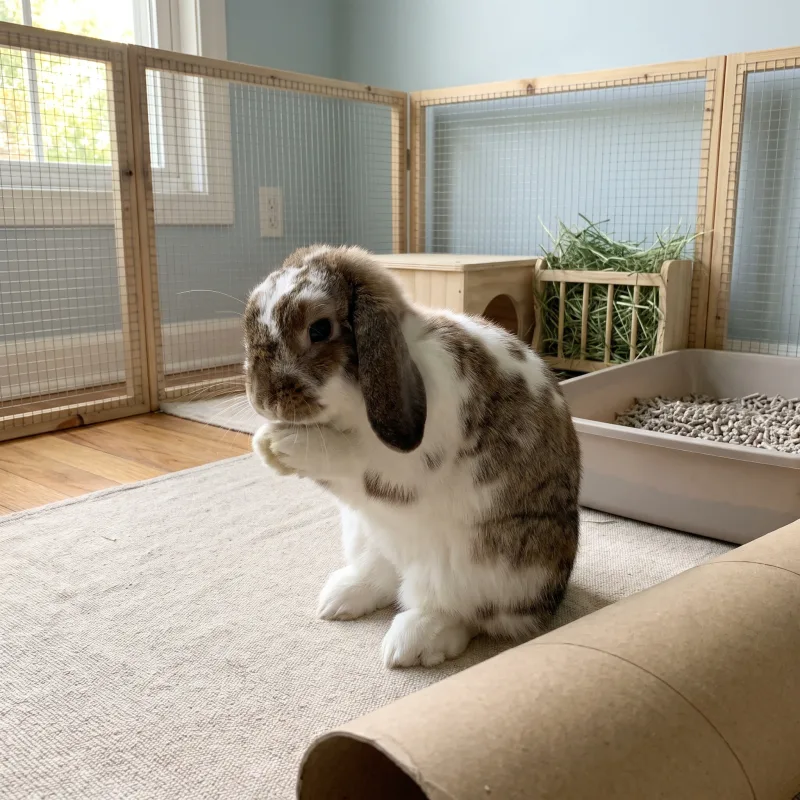
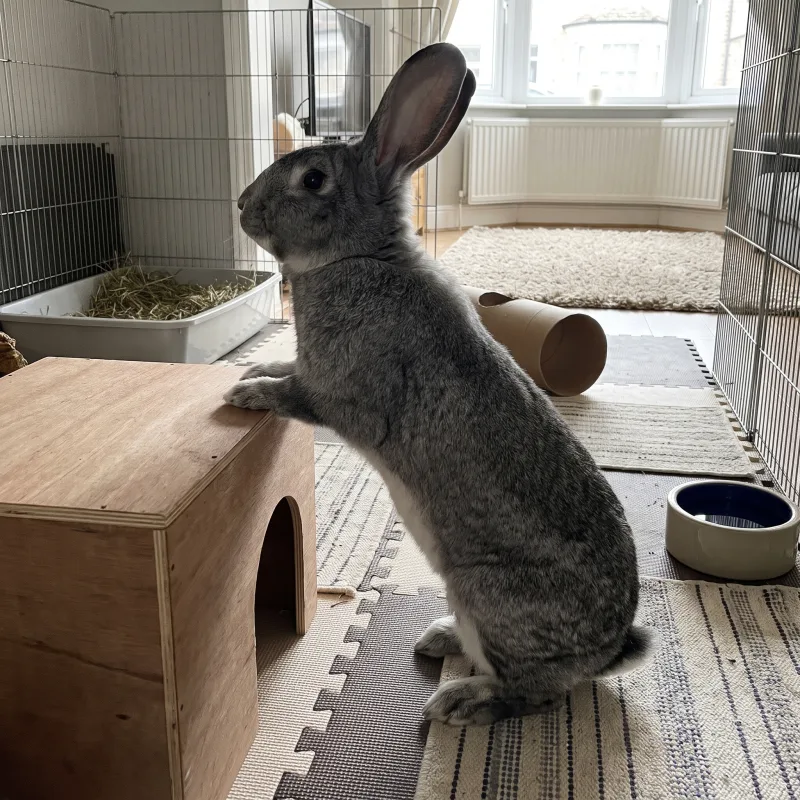
- Adults typically weigh 10-15 lb4.5-6.8 kg, three to four times the size of a Holland Lop, with a massive head, heavy bone and thick, horseshoe-shaped ears that hang just below the jawline.
- That combination means the breed stacks two sets of care considerations at once: the space, food and sore-hock risks of a giant alongside the ear and dental issues common to lops.
Show 3 more
- Like most giant breeds it also lives a shorter life than smaller rabbits, usually 5-8 years.
- It is famously placid, but its sheer size and strength make it a poor first rabbit.
- If you cannot commit room-sized space and giant-breed running costs, a smaller lop or no rabbit yet is the honest answer.
Temperament
- The French Lop is widely regarded as one of the calmest, most tolerant rabbit breeds, and a well-socialised adult is genuinely dog-like in its relaxed, people-oriented manner.
- That reputation is the main reason people seek the breed out.
Show 4 more
- Calm does not mean carriable: a startled 13 lb6 kg rabbit kicks hard enough to fracture its own spine and to knock a child over, so interaction should happen at floor level and lifting should be rare, properly supported and done by adults.
- It suits respectful older children under supervision rather than toddlers.
- Like all rabbits it is social and should live with a bonded, neutered companion, ideally another large rabbit so neither partner is overwhelmed.
- A settled pair will sprawl, groom and follow their keeper around a room they treat as their own.
A good fit for
- Experienced keepers with giant-breed space
- Owners wanting a famously placid rabbit
- Homes able to fund giant-scale food and vet costs
- Those able to bond a large neutered pair
- Households offering calm, floor-level company
Common mistakes to avoid
- Standard hutches and cages are far too small
- Sore hocks from hard, wire or soiled flooring
- Lop ear canals prone to wax buildup and otitis
- Overheating above about 77°F25°C
- Powerful kicks can injure spine and handler
- Obesity blocking self-grooming, inviting flystrike
Enclosure
Minimum 140 sq ft12.96 m² of floor, for the pair · 12 x 12 x 4 ft3.6 x 3.6 x 1.2 m
Cannot be kept alone. The minimum is 2, and the space above is for that group.
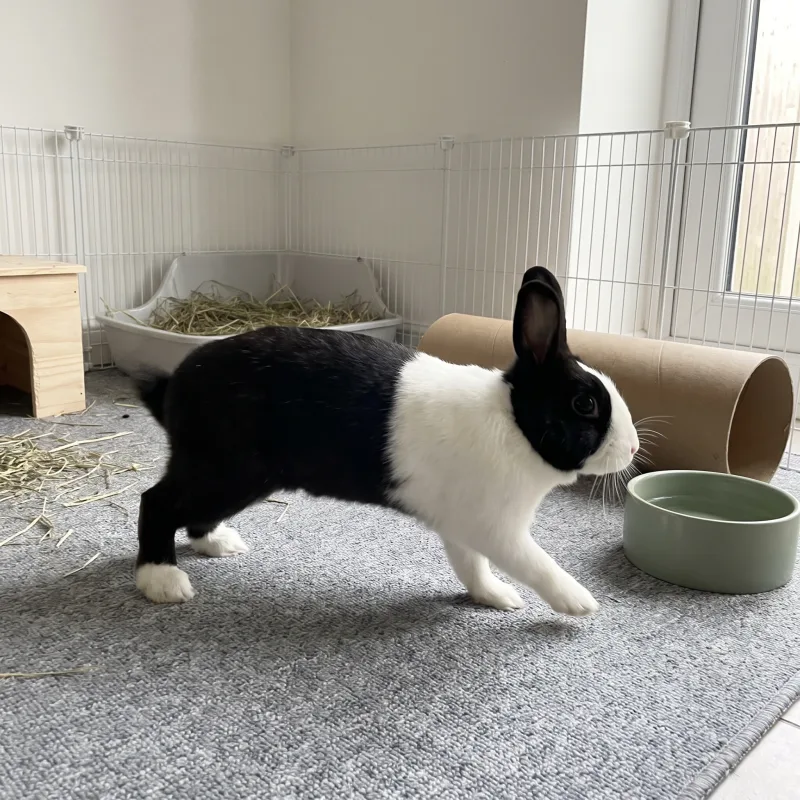
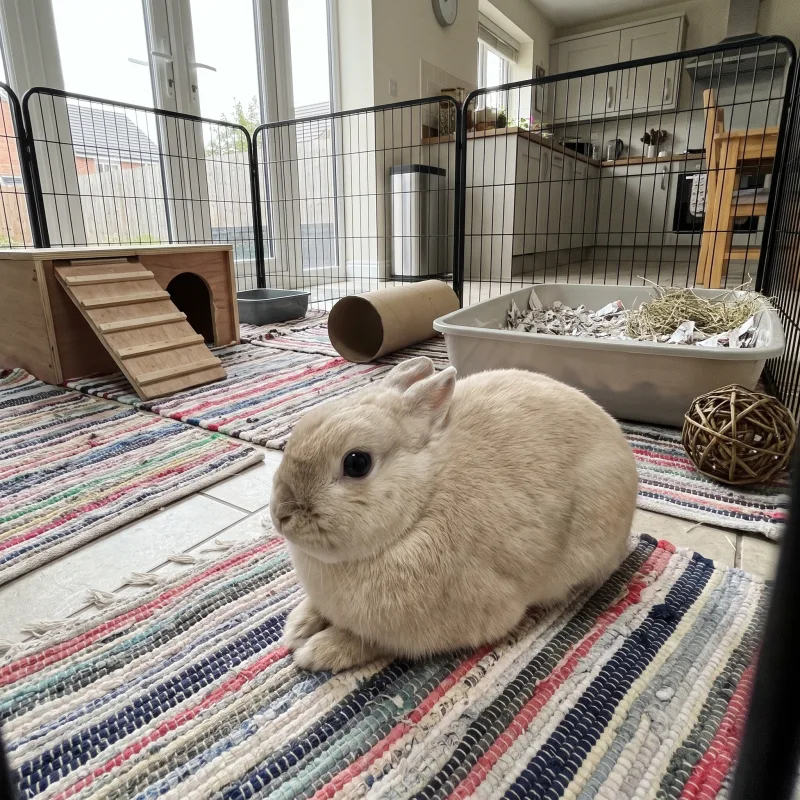
- No standard cage or hutch is remotely adequate for this breed.
- Modern welfare guidance sets 10 x 6.5 ft3 x 2 m of permanently accessible space with 39 in1 m of headroom (65 sq ft6 m²) as the minimum for a pair of average-sized rabbits.
- The Rabbit Welfare Association & Fund counts the French Lop among the giant breeds, which need room for at least three consecutive hops in any direction, potentially 12 ft3.7 m, and headroom for a rabbit that can measure over 4 ft120 cm standing.
Show 6 more
- A French Lop pair therefore needs free-roam access to a room, or a pen of at least 12 x 12 x 4 ft3.6 x 3.6 x 1.2 m, plus a large secure run for daily exercise.
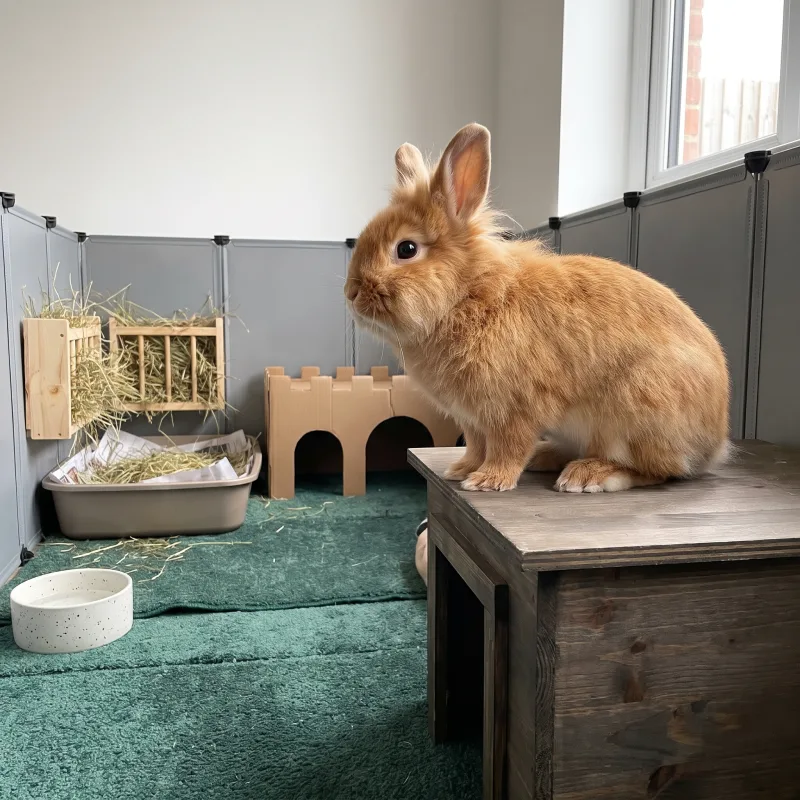
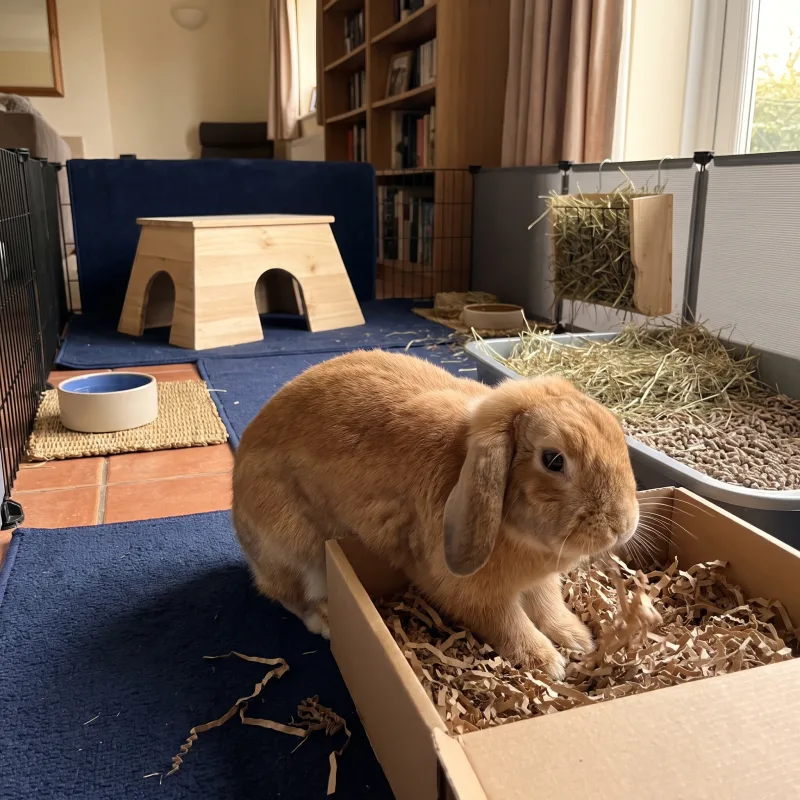
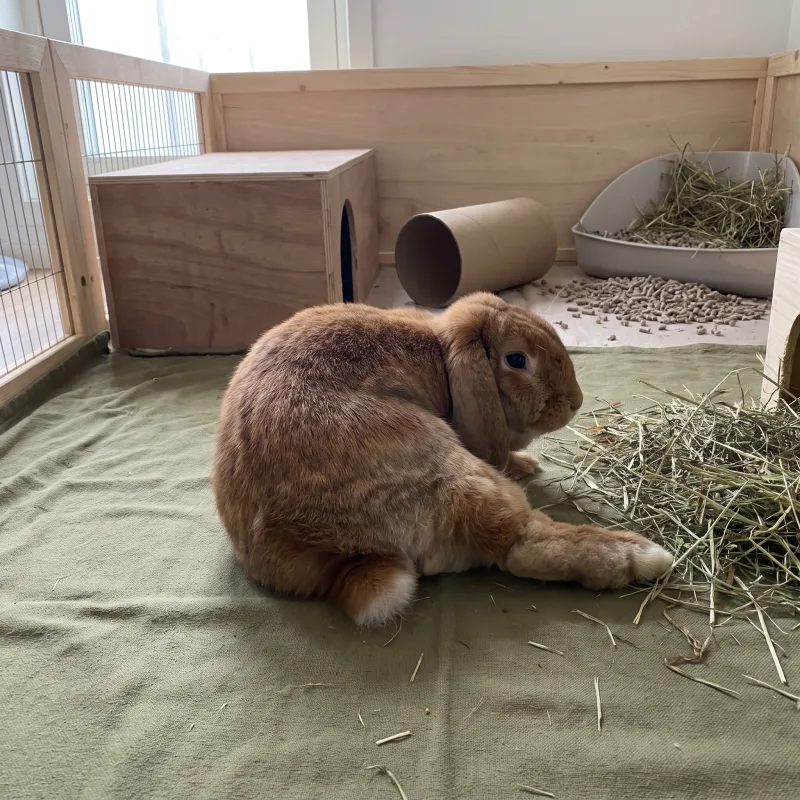
- Furnish at giant scale, with oversized litter trays, hides big enough to turn around in, and heavy tip-proof bowls.
- Soft, clean, non-slip flooring is essential, because their weight makes pressure sores on the hocks a constant threat on hard, wire or abrasive surfaces.
- Bare laminate and thin fleece over concrete are common mistakes.
- Keep them cool and well ventilated, since heavy-bodied rabbits overheat quickly and struggle above about 77°F25°C.
- A determined 13 lb6 kg rabbit can flatten flimsy pen panels, so use sturdy fencing and rabbit-proof cables and skirting indoors.
Supplies
Setup
- Housing and secure exercise space
- Litter trays, bowls, carrier, hides
Ongoing
- Grass hay by the bale or the largest box available
- Plain uniform adult rabbit pellets (no seeds, no coloured bits)
- Mixed leafy greens for daily feeding
- Heavy ceramic water bowl (tip-proof)
- Hay rack or hay-filled litter tray
Show 3 more
- Eggcup or small scale for measuring pellets
- Untreated willow or apple chews
- Airtight bin to keep pellets fresh
Safe substrate: Paper-based litter in the tray, topped with hay · Fleece or washable mats on the living floor · Straw for outdoor warmth
Care routine
Daily
- Check droppings and appetite
- Check the rear for soiling and flystrike (twice a day in warm weather)
- Company and time out
- Fresh greens and a measured pellet portion
- Fresh water
- Spot-clean the enclosure
- Top up unlimited hay
- Watch them while they are awake
Show 8 more
Every few days
- Change the litter trayevery 2 days
- Check the coat and remove loose furevery 3 days
Weekly
- Deep-clean and change bedding
- Hands-on health check
- Rotate enrichment
- Weigh-in
Monthly
- Check supplies and dates
Less often
- Trim nailsevery 6 weeks
Vet: Annual exam, vaccinations and dental check, every 12 months (every 6 months from 5 years old)
Tools
Care in depth
Diet
Unlimited grass hay, daily leafy greens, measured pellets (~0.4 oz per lb25 g per kg body weight)
- Unlimited grass hay must form the bulk of the diet to keep the continuously growing teeth worn and the gut moving, topped with a generous daily portion of washed leafy greens and a measured pellet ration of roughly 0.4 oz per pound25 g per kilogram of body weight.
- Expect to buy hay in bale quantities; a French Lop eats several times what a dwarf breed does.
- Avoid muesli mixes, sugary treats and free-fed pellets, which drive obesity, selective feeding and dental disease.
- Offer fresh water in heavy ceramic bowls rather than small bottles, which cannot keep up with a giant's intake.
- Obesity is especially dangerous in this breed, because extra weight worsens sore hocks and stops the rabbit grooming its own rear, which invites flystrike in warm months.
Health
Signs of good health, and the common problems
- Sore hocks (pododermatitis) are the headline risk, driven by the breed's weight pressing on thinly furred feet, so check the hocks weekly and keep flooring soft and dry.
- The lopped ears narrow the ear canal and trap wax, making otitis common, so regular checks for discharge, odour, scratching or head-tilt are equally non-negotiable.
- Gut stasis remains the classic rabbit emergency, and a French Lop that stops eating or passing droppings needs a rabbit-savvy vet straight away, not later in the day.
- The shortened lop skull predisposes to dental malocclusion, and giant breeds carry elevated risk of heart disease and arthritis in middle age.
- Vaccinate against RHDV2 everywhere, plus myxomatosis and RHDV1 where those vaccines are available (UK and Europe; no myxomatosis vaccine is licensed in the US), and neuter to prevent uterine cancer and ease bonding.
- Budget realistically: drug doses, boarding and surgery are all priced by body weight, so a giant costs giant vet money.
Is this urgent?
8 warning signs and how fast to act, 6 of them right away
A rabbit that stops eating is an emergency, not a wait-and-see. Nothing else on this page is as time-critical.
Go now
Today
Two rabbits are the minimum, and a bonded pair will also tell you when something is wrong: a rabbit sitting apart from its partner is worth a second look.
This is general guidance for a healthy adult, not a diagnosis. An exotics vet who knows your animal always overrides it, and the time to find one is before you need one.
Bedding and substrate
3 safe, 1 with a caveat, 3 to avoid
Rabbits need a clean, dry, non-slip floor plus a separate deep litter tray. The two jobs need two materials.
Safe
With a caveat
Never
Check and clean the rear at least twice a day in warm weather, for every rabbit. A soiled or damp rear is what flystrike needs.
Top resources for more info
Independent creators and organisations we would send a friend to. We have no affiliation with any of them, and nothing here is sponsored. Links checked 2026-10-22.
YouTubers
Sites
Rabbits, side by side
Same axes, same care guides: the honest way to choose between types.