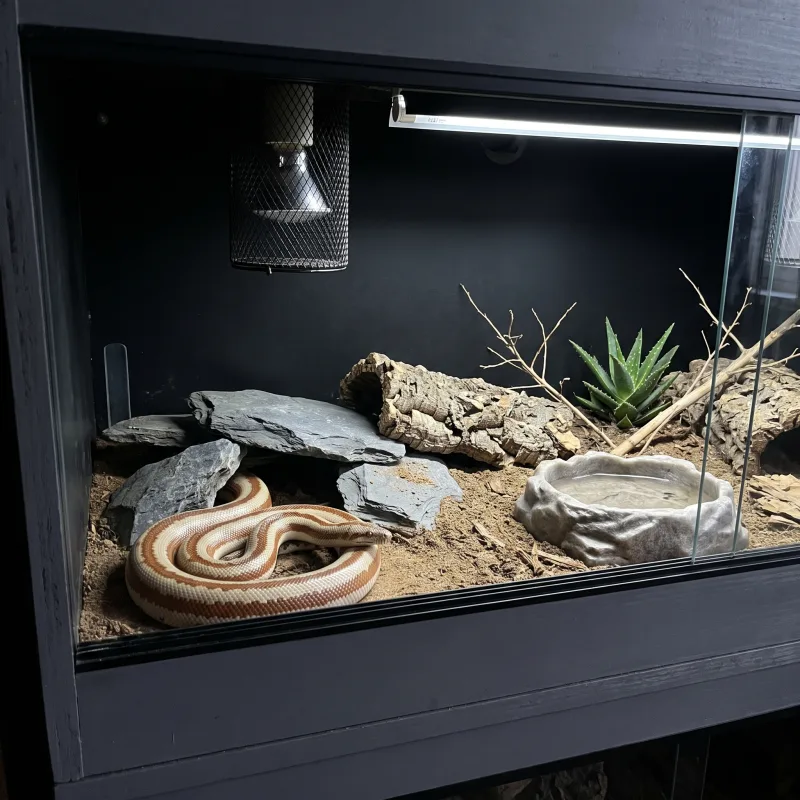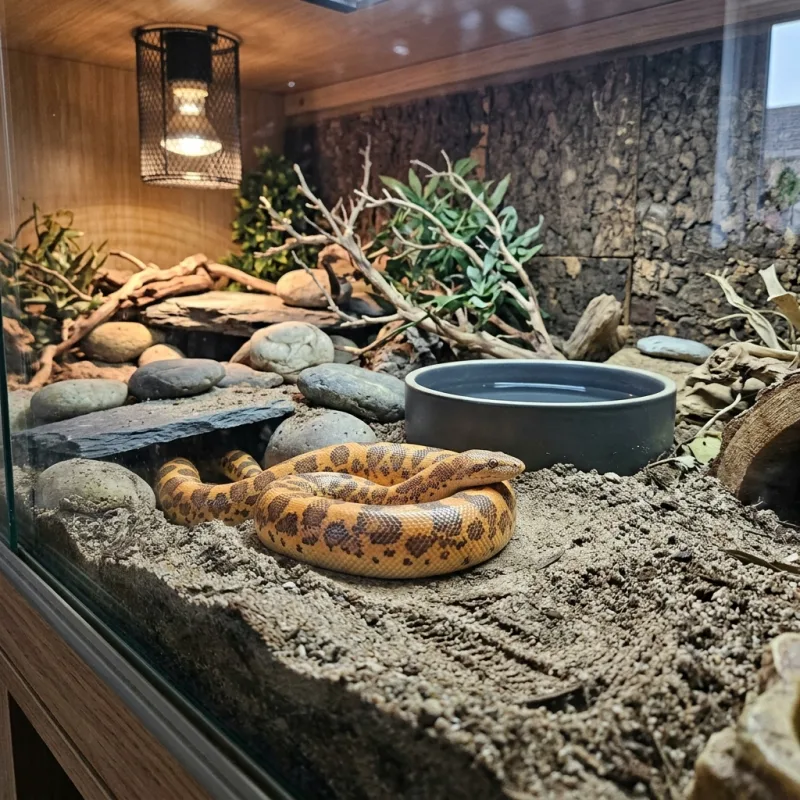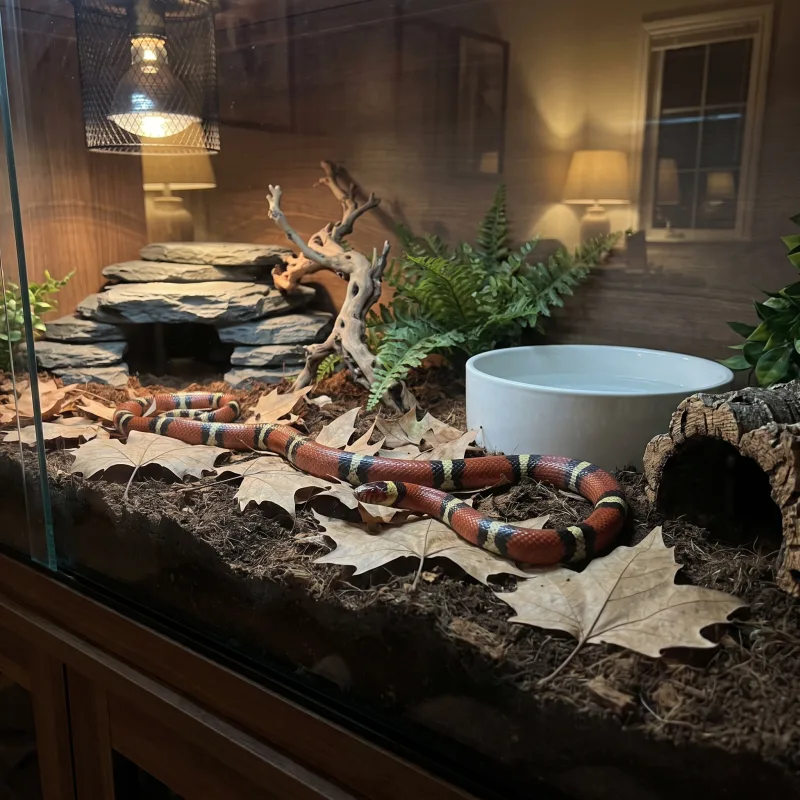
Milk Snake
Lampropeltis triangulum complex
Bright colours and an even temperamentBeginner
- Lifespan
- 15-20 years
- Size
- 24-59 in0.6-1.5 m (varies by form)
- Social needs
- Solitary - cannibalistic
- Time
- Low - feed every 10-14 days (adults), spot-clean
- Cost
- Medium
- Diet
- Carnivore - frozen/thawed rodents
Overview
What is this animal?
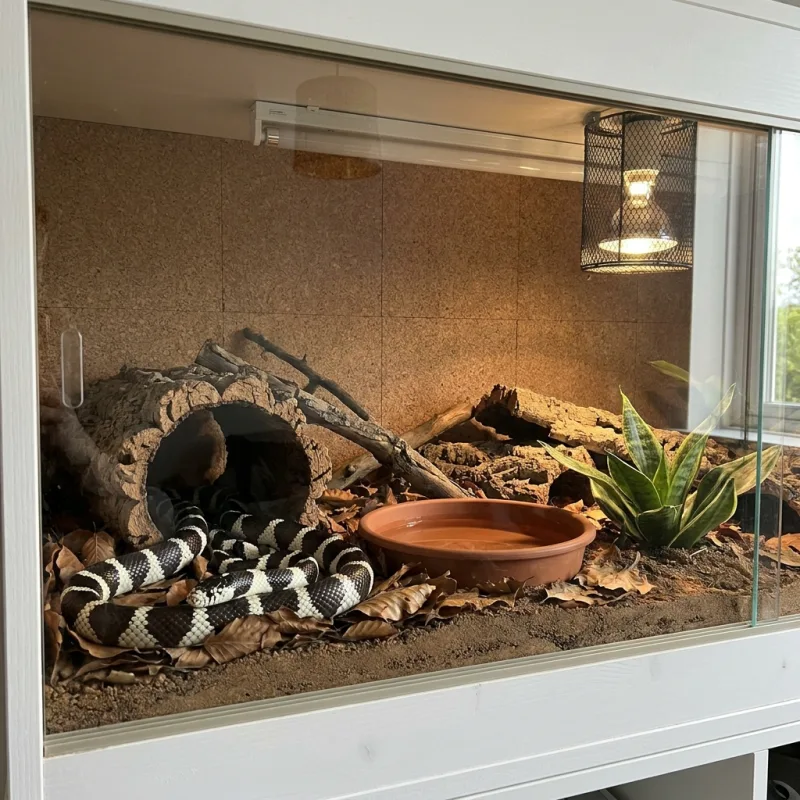
- Milk snakes are close relatives of kingsnakes, known for the red, black and white banding that in many subspecies mimics venomous coral snakes.
- Adult size varies widely between the forms sold, from small Pueblan to large Honduran milks, so research the specific type before buying.
- The milk snake subspecies were split into several species in 2014: the Pueblan is now usually Lampropeltis polyzona and the Honduran L. abnorma (included in L. polyzona by some authors), while L. triangulum in the strict sense is the eastern milk snake.
Show 3 more
- The split is still debated, and the trade's old subspecies names remain in everyday use.
- They are captive-bred in large numbers and make hardy beginner snakes.
- Unlike the bolder California kingsnake, milk snakes are secretive and spend more time hidden than out in the open.
Temperament
- Milk snakes are nervous and fast-moving when young, often musking or wriggling, but most settle with consistent gentle handling as they mature.
- They are non-venomous and harmless despite their warning colouration.
Show 3 more
- Give juveniles time to settle and handle them in short, calm sessions.
- Adults usually become docile and easy to hold.
- Avoid handling near feeding to prevent accidental food-response strikes.
A good fit for
- Beginners wanting a colourful snake
- Keepers happy with a secretive pet
- Those wanting a hardy species with low running costs
- People who will research subspecies size
Common mistakes to avoid
- Never cohabit - they eat other snakes
- Hatchlings can be tricky first feeders
- Escape-proof housing essential
- Choosing a subspecies without checking adult size
Enclosure
Minimum 12 sq ft1.08 m² of floor · 6 x 2 x 2 ft1.8 x 0.6 x 0.6 m
Must be housed alone. Solitary - cannibalistic
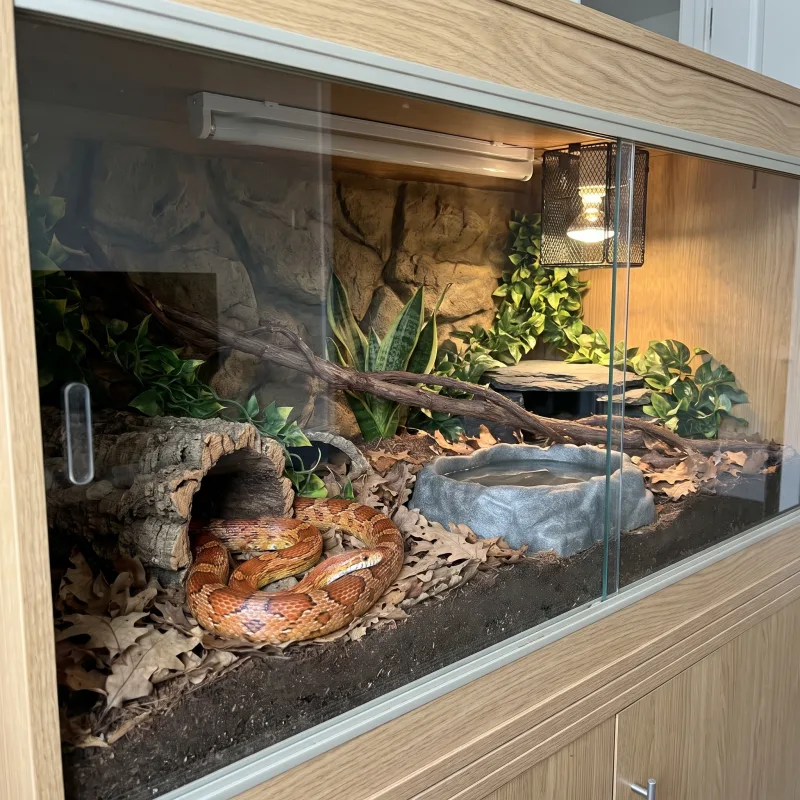
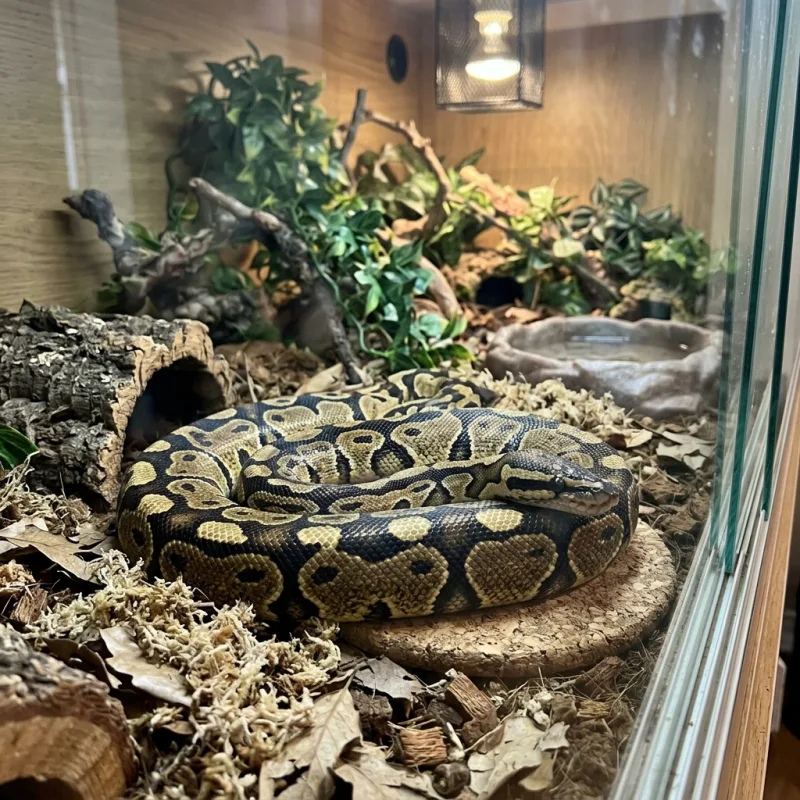
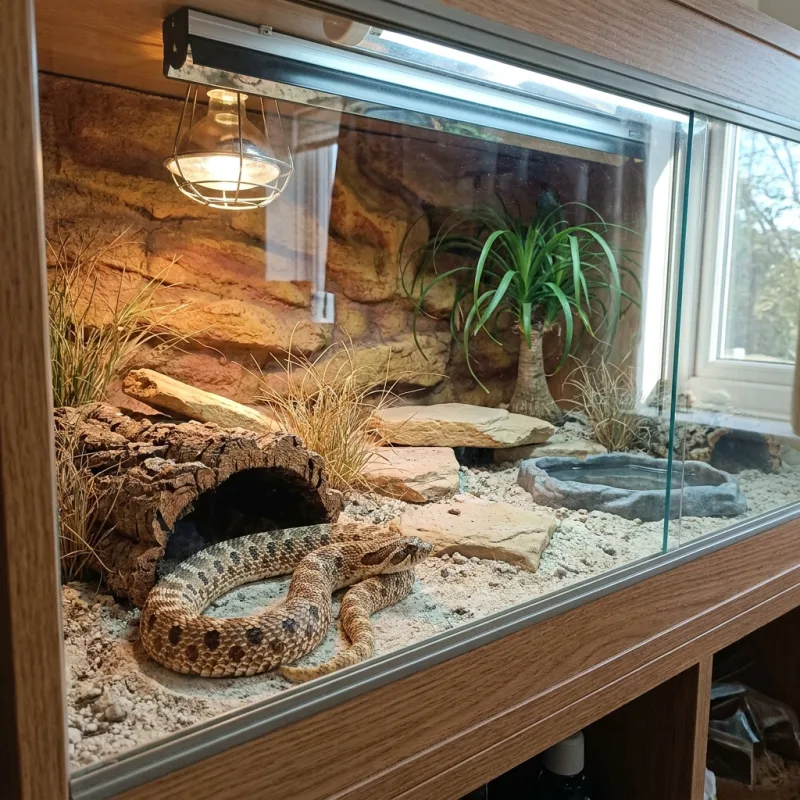
- An adult milk snake needs a vivarium of at least 6 x 2 x 2 ft1.8 x 0.6 x 0.6 m.
- That is long enough for the large forms, which can reach 59 in1.5 m, and any milk snake that grows longer needs an enclosure at least as long as itself.
- Provide a substrate deep enough to burrow into, two or more hides, and a secure lid, as milk snakes are persistent escape artists.
Show 2 more
- Maintain a warm side of 82-86°F28-30°C and a cool side of 72-75°F22-24°C using a thermostatically controlled heat source.
- Keep humidity around 40-60%, with a humid hide offered during sheds.
Supplies
Setup
- Enclosure, 6 x 2 x 2 ft1.8 x 0.6 x 0.6 m
- Heating and thermostat
- Thermometers and hygrometer
- Substrate, hides at both ends, water bowl
Ongoing
- Frozen rodents in the right size for your snake
- Freezer container or bin dedicated to feeder storage
- Long blunt-tipped feeding tongs
- Sealable bags or a thawing tub for warming prey
- Heavy, tip-proof water bowl (big enough to soak in for most species; a small bowl on the cool side for rosy and sand boas, which are kept dry)
Show 2 more
- Digital kitchen scale for tracking weight
- Digital thermometer for checking prey temperature
Safe substrate: Cypress mulch · Aspen shavings · Topsoil and coco fibre mix
Care routine
Daily
- Check temperatures and humidity
- Look the animal over
- Spot-clean waste and uneaten food
Every few days
- Fresh water bowlevery 3 days
- Short handling sessionevery 3 days
Weekly
- Check every latch and vent
- Watch for a shed cycle
Show 7 more
Every few weeks
- Check for mitesevery 2 weeks
- Feed an adult a thawed prey item (hatchlings and juveniles about weekly)every 2 weeks
- Weigh-inevery 2 weeks
Monthly
- Deep-clean decor, glass and bowls
- Test thermostats, lamps and guards
Less often
- Refresh the substrateevery 3 months
- Check the UVB lamp's age and replace it if due (if one is fitted)every 6 months
Vet: Annual exam and faecal check, every 12 months
Tools
Care in depth
Diet
Carnivore - frozen/thawed rodents
- Milk snakes are carnivores fed frozen-thawed rodents sized to the snake's girth.
- Hatchlings of smaller subspecies have small mouths and may need pinky parts or scented prey to start feeding.
- Feed growing animals every 7-10 days and adults every 10-14 days.
- They can be shy feeders, so offer food in a quiet, dark spot and leave them undisturbed.
- Never house milk snakes together, as they will eat tank mates.
Health
Signs of good health, and the common problems
- Milk snakes are generally hardy but can develop respiratory infections in cold, damp conditions and shedding problems when humidity is too low.
- Smaller subspecies are more delicate as hatchlings and prone to dehydration.
- Keep enclosures clean with appropriate humidity and a humid hide available.
- Quarantine new arrivals to screen for mites and parasites.
- Provide constant fresh water, and seek veterinary advice for wheezing, gaping, or persistent refusal to feed.
Is this urgent?
5 warning signs and how fast to act, 2 of them right away
Most snake worry is about feeding, and most feeding worry is misplaced. Check the guide for this species' normal fast before treating a refusal as illness.
Go now
Today
Soon
This is general guidance for a healthy adult, not a diagnosis. An exotics vet who knows your animal always overrides it, and the time to find one is before you need one.
Bedding and substrate
5 safe, 1 with a caveat, 2 to avoid
For snakes the substrate has to hold the right humidity for the shed, and let the animal get fully under it.
Safe
With a caveat
Never
Stuck shed and retained eyecaps are usually a humidity failure during the blue phase, not a substrate failure afterwards.
Top resources for more info
Independent creators and organisations we would send a friend to. We have no affiliation with any of them, and nothing here is sponsored. Links checked 2026-10-22.
YouTubers
Sites
Snakes, side by side
Same axes, same care guides: the honest way to choose between types.