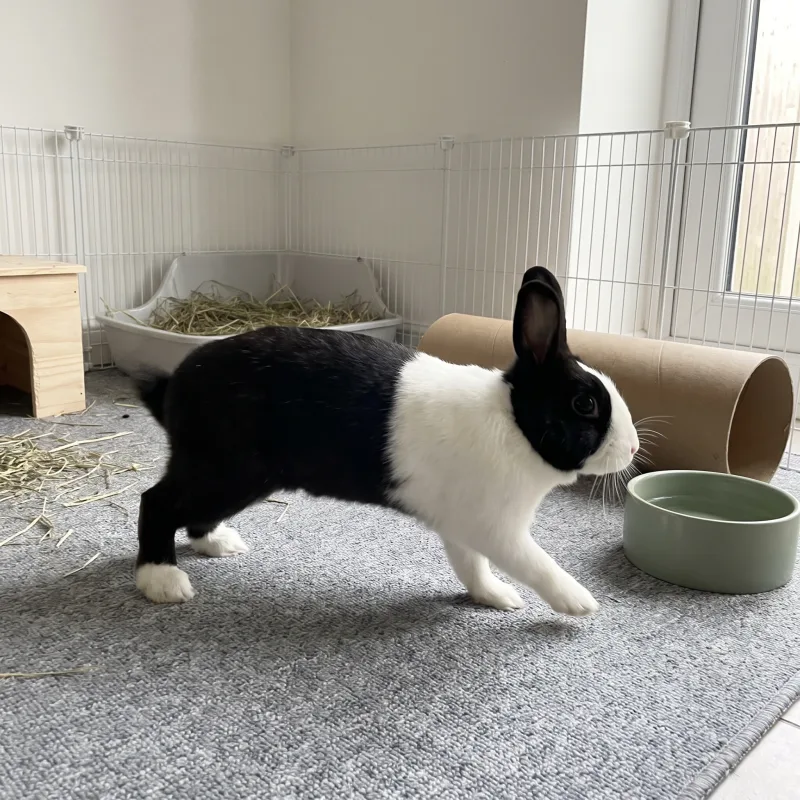
Mini Rex Rabbit
Oryctolagus cuniculus
Velveteen fur, gentle nature, famously tender feetIntermediate
- Lifespan
- 8-12 years
- Weight
- 3-4.5 lb1.4-2 kg; ARBA maximum 4.5 lb2 kg
- Social needs
- Social; keep as a neutered, bonded pair
- Time
- Daily; 1-2 hours of interaction, exercise, and health checks
- Cost
- Medium
- Diet
- Unlimited grass hay, daily leafy greens, a measured ration of plain pellets (no more than about 0.4 oz per lb25 g per kg)
Overview
What is this animal?
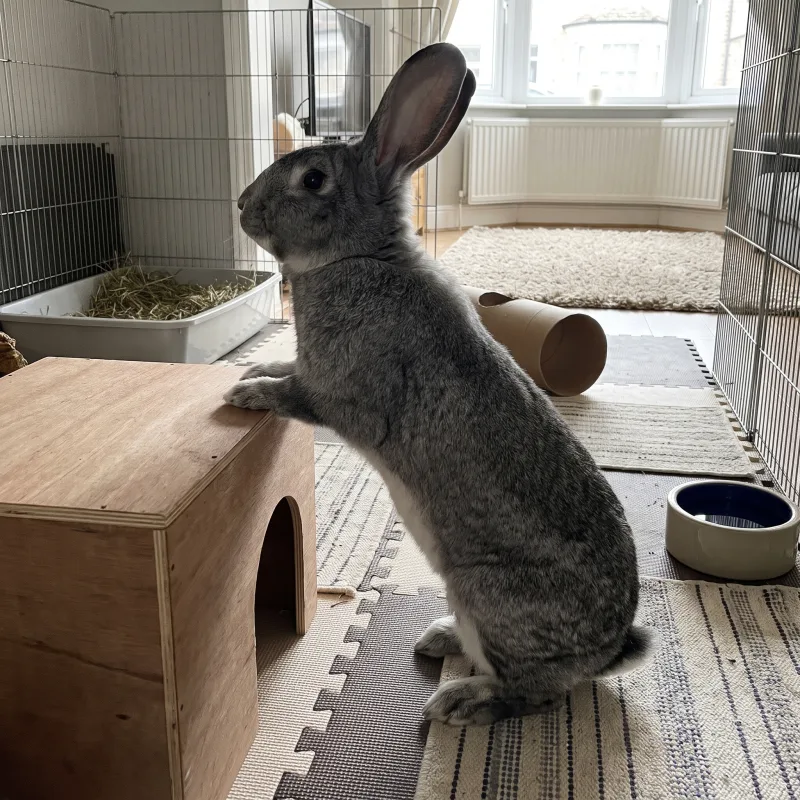
- The Mini Rex carries the recessive rex gene, which shortens the guard hairs to the level of the dense undercoat and produces a plush, velvet-like coat standing about 5/8 in1.5 cm deep.
- Monna Berryhill developed the breed in Texas in 1984 by crossing a Dwarf Rex buck with a small standard Rex doe, the ARBA recognized it in 1988, and it has ranked among the most popular pet and show rabbits in the United States ever since.
- At 3-4.5 lb1.4-2 kg a Mini Rex sits between the tiny Netherland Dwarf and mid-sized breeds like the Dutch, with a normal muzzle rather than the flattened face of a Holland Lop.
Show 2 more
- It is still a full rabbit commitment of 8-12 years.
- The welfare standard is a neutered, bonded pair with generous permanent space and daily exercise, never a lone rabbit in a hutch.
Temperament
- Mini Rex are generally calm, tolerant, and people-oriented, closer in temperament to the steady Dutch than to the more reactive Netherland Dwarf, though youngsters can be lively.
- Like all rabbits they are prey animals that prefer four feet on the ground and dislike being picked up and carried.
Show 2 more
- The velvety coat invites constant stroking, and many Mini Rex genuinely enjoy long floor-level petting sessions, which suits gentle, seated interaction better than a child's lap.
- They are social animals and should live with a neutered, bonded companion, as neutering also improves litter habits and pairing success.
A good fit for
- Keepers wanting a calm, low-grooming small breed
- Households happy to interact at floor level
- Owners committed to a neutered, bonded pair
- Homes offering soft-floored free-roam space
Common mistakes to avoid
- Wire or bare hard floors causing sore hocks
- Over-brushing the delicate rex coat
- Obesity adding pressure to thinly furred hocks
- Keeping a single rabbit or hutch-only housing
- Skipping RHDV2 vaccination and neutering
Enclosure
Minimum 65 sq ft6 m² of floor, for the pair · 10 x 6.5 x 3.3 ft3 x 2 x 1 m
Cannot be kept alone. The minimum is 2, and the space above is for that group.
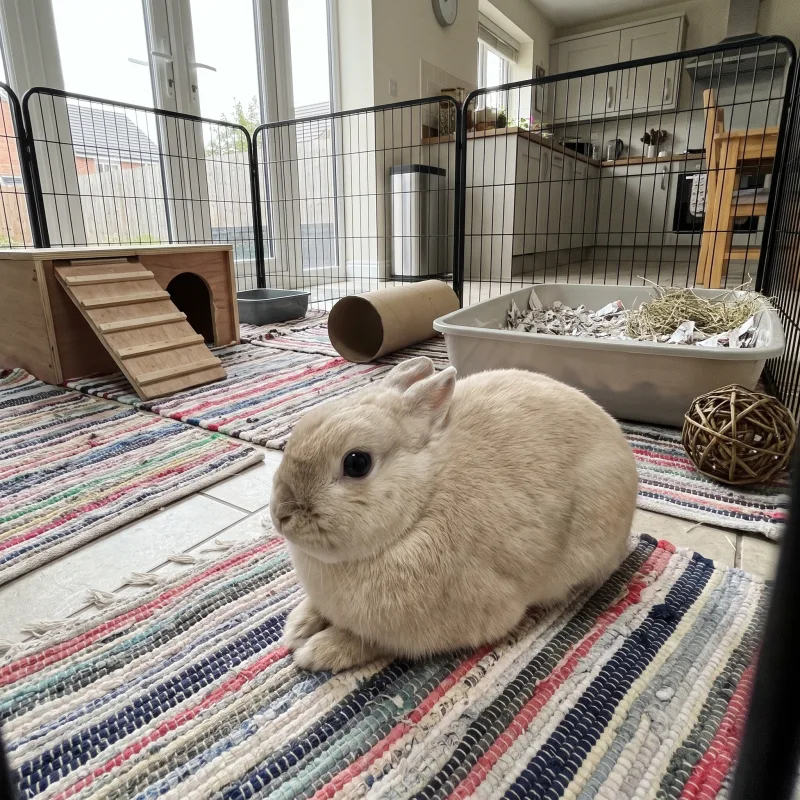
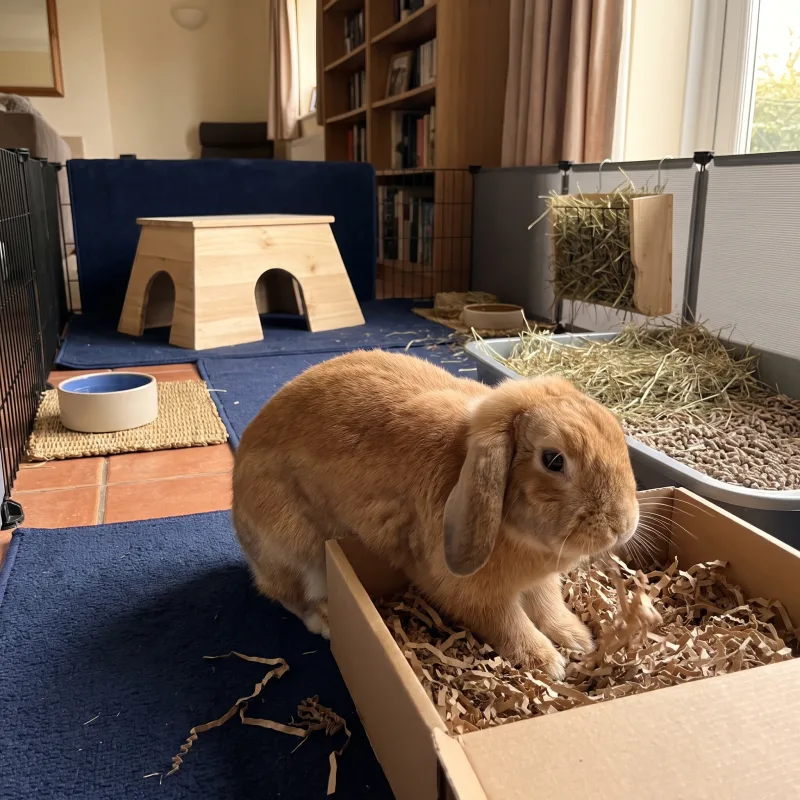
- Give a bonded pair a permanent enclosure of at least 10 x 6.5 ft (3 x 2 m (about 65 sq ft6 m²) and 39 in1 m high, accessible day and night, plus supervised free-roam time in a rabbit-proofed area, as a shop-bought hutch on its own is not enough.
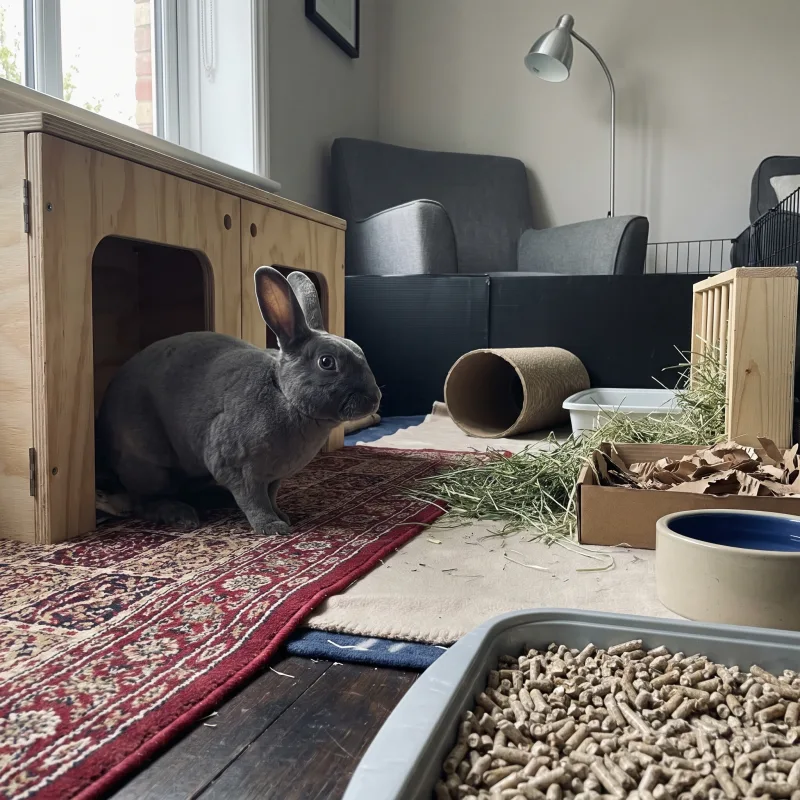
- Flooring matters more for this breed than for most rabbits: the short rex coat leaves the fur under the feet (rabbits have no pads) thin and short, so wire floors are ruled out entirely and hard surfaces should be covered with mats, fleece, rugs, or deep bedding.
- House them indoors or in a fully predator-proof, weatherproof shelter away from damp and draughts.
Show 2 more
- Rabbits tolerate cold far better than heat, so avoid sustained temperatures above about 77°F25°C.
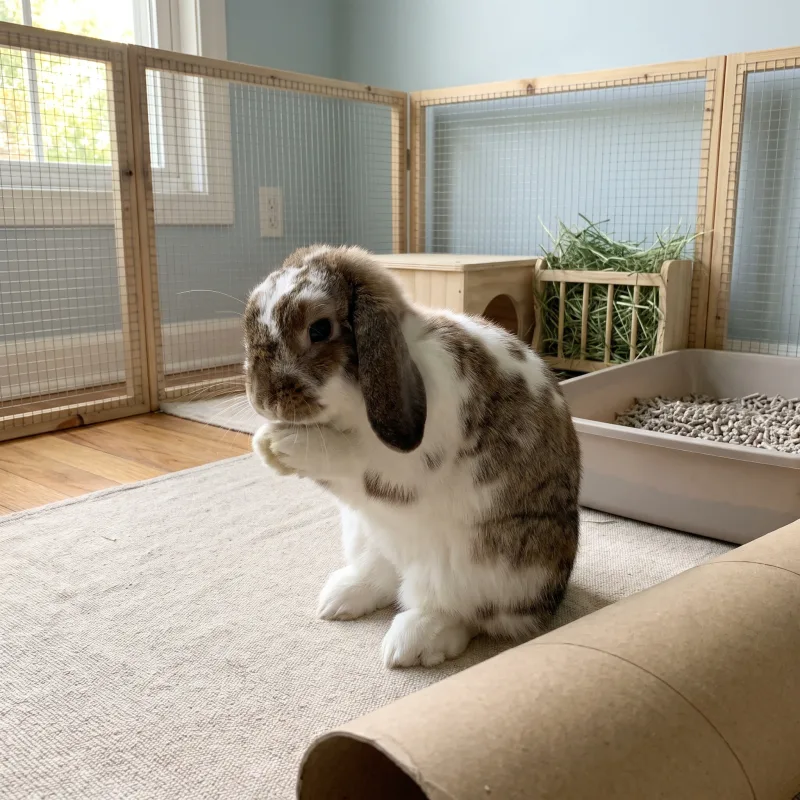
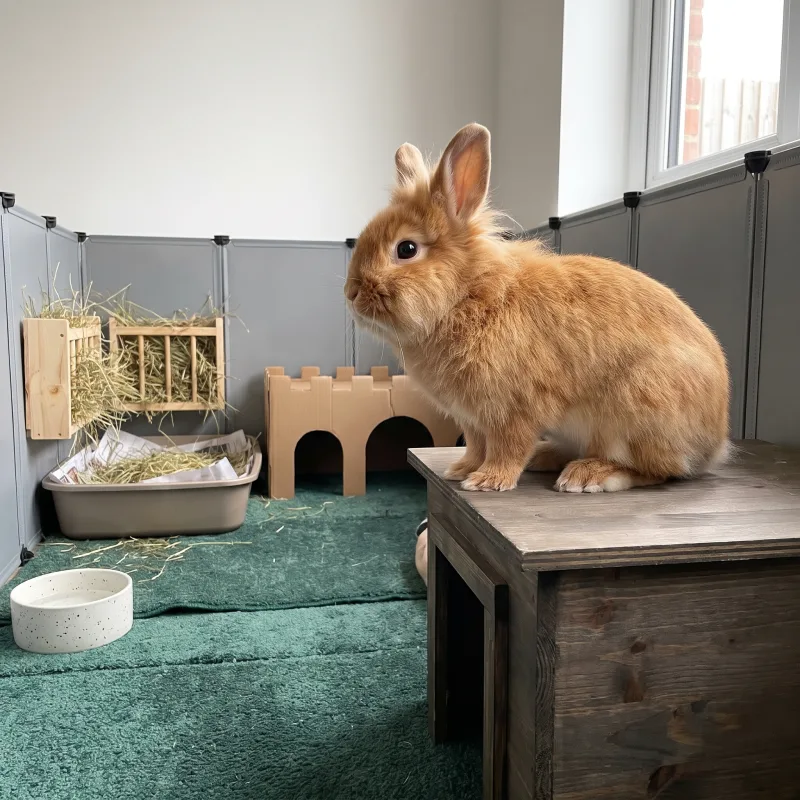
- Add hides, tunnels, platforms, digging boxes, and a litter tray, which most Mini Rex learn to use quickly once neutered.
Supplies
Setup
- Housing and secure exercise space
- Litter trays, bowls, carrier, hides
Ongoing
- Grass hay by the bale or the largest box available
- Plain uniform adult rabbit pellets (no seeds, no coloured bits)
- Mixed leafy greens for daily feeding
- Heavy ceramic water bowl (tip-proof)
- Hay rack or hay-filled litter tray
Show 3 more
- Eggcup or small scale for measuring pellets
- Untreated willow or apple chews
- Airtight bin to keep pellets fresh
Safe substrate: Paper-based litter in the tray, topped with hay · Fleece or washable mats on the living floor · Straw for outdoor warmth
Care routine
Daily
- Check droppings and appetite
- Check the rear for soiling and flystrike (twice a day in warm weather)
- Company and time out
- Fresh greens and a measured pellet portion
- Fresh water
- Spot-clean the enclosure
- Top up unlimited hay
- Watch them while they are awake
Show 8 more
Every few days
- Change the litter trayevery 2 days
- Check the coat and remove loose furevery 3 days
Weekly
- Deep-clean and change bedding
- Hands-on health check
- Rotate enrichment
- Weigh-in
Monthly
- Check supplies and dates
Less often
- Trim nailsevery 6 weeks
Vet: Annual exam, vaccinations and dental check, every 12 months (every 6 months from 5 years old)
Tools
Care in depth
Diet
Unlimited grass hay, daily leafy greens, a measured ration of plain pellets (no more than about 0.4 oz per lb25 g per kg)
- Unlimited grass hay such as Timothy should make up at least 85% of the diet, wearing down the continuously growing teeth and keeping the gut moving.
- Add a daily portion of varied leafy greens and a small measured ration of plain pellets, no more than about 0.9 oz (an eggcup) per 2.2 pounds25 g (an eggcup) per kilogram of body weight a day (roughly 1.2-1.8 oz35-50 g for a Mini Rex), with fresh water always available, ideally from a bowl.
- Avoid muesli mixes, sugary treats, and more than occasional fruit, which drive selective feeding, obesity, and dental disease.
- Extra weight is doubly harmful in a Mini Rex because it presses the thinly furred hocks into the floor.
- Introduce any diet change gradually to protect the sensitive gut from stasis.
Health
Signs of good health, and the common problems
- Sore hocks (pododermatitis) is this breed's signature risk: rex fur leaves the feet with little protective padding, so check the hocks weekly for thinning fur, redness, or scabs and improve the flooring at the first sign.
- Obesity, overgrown nails, damp bedding, and dirty litter all make hock sores dramatically worse.
- Gut stasis is a life-threatening emergency whenever a rabbit stops eating or passing droppings: call a rabbit-savvy vet straight away, not later in the day.
- Vaccinate against RHDV2 (in the UK and Europe also against myxomatosis and RHDV1, where those vaccines exist), neuter to prevent uterine cancer in does and ease bonding, and register with a rabbit-experienced vet early for annual dental and weight checks.
- The velvet coat itself needs almost no brushing, and stiff brushes can damage it.
- Strip loose fur during moults with damp hands or a soft grooming mitt instead.
Is this urgent?
8 warning signs and how fast to act, 6 of them right away
A rabbit that stops eating is an emergency, not a wait-and-see. Nothing else on this page is as time-critical.
Go now
Today
Two rabbits are the minimum, and a bonded pair will also tell you when something is wrong: a rabbit sitting apart from its partner is worth a second look.
This is general guidance for a healthy adult, not a diagnosis. An exotics vet who knows your animal always overrides it, and the time to find one is before you need one.
Bedding and substrate
3 safe, 1 with a caveat, 3 to avoid
Rabbits need a clean, dry, non-slip floor plus a separate deep litter tray. The two jobs need two materials.
Safe
With a caveat
Never
Check and clean the rear at least twice a day in warm weather, for every rabbit. A soiled or damp rear is what flystrike needs.
Top resources for more info
Independent creators and organisations we would send a friend to. We have no affiliation with any of them, and nothing here is sponsored. Links checked 2026-10-22.
YouTubers
Sites
Rabbits, side by side
Same axes, same care guides: the honest way to choose between types.