Children's Python
Antaresia childreni
Compact, hardy Australian python for beginnersBeginner
- Lifespan
- 20-30 years
- Size
- 2.5-3.3 ft75-100 cm
- Social needs
- Solitary
- Time
- Low - feed every 1-2 weeks, spot-clean
- Cost
- Low to Medium
- Diet
- Carnivore - frozen/thawed rodents
Overview
What is this animal?
- Children's pythons are small Australian pythons named after the naturalist John George Children, not after suitability for children.
- They stay under about 39 inchesa metre and adapt well to captivity, making them one of the more manageable pythons.
- Hardy, long-lived, and even-tempered, they suit those wanting a smaller constrictor.
- Captive-bred animals are widely available and they tolerate a reasonable range of conditions.
Temperament
- Children's pythons are generally placid and tolerate regular handling, becoming calm and easy to manage as adults.
- Hatchlings can be nippy and food-driven but settle with gentle, consistent contact.
Show 2 more
- They have a strong feeding response, so wash your hands and use tongs at mealtimes.
- Being nocturnal, they are more active in the evening, but most adapt well to daytime handling once used to their keeper.
A good fit for
- Beginners wanting a small python
- Keepers seeking a long-lived pet
- Those wanting a python that fits a 4 ft120 cm enclosure
- People wanting a hardy, even-tempered snake
Common mistakes to avoid
- Strong feeding response when young
- Decades-long commitment - plan ahead
- Low humidity causes shedding problems
- Name does not mean ideal for children
Enclosure
Minimum 5.5 sq ft0.5 m² of floor · 39 x 20 x 30 in100 x 50 x 75 cm
Must be housed alone. Solitary
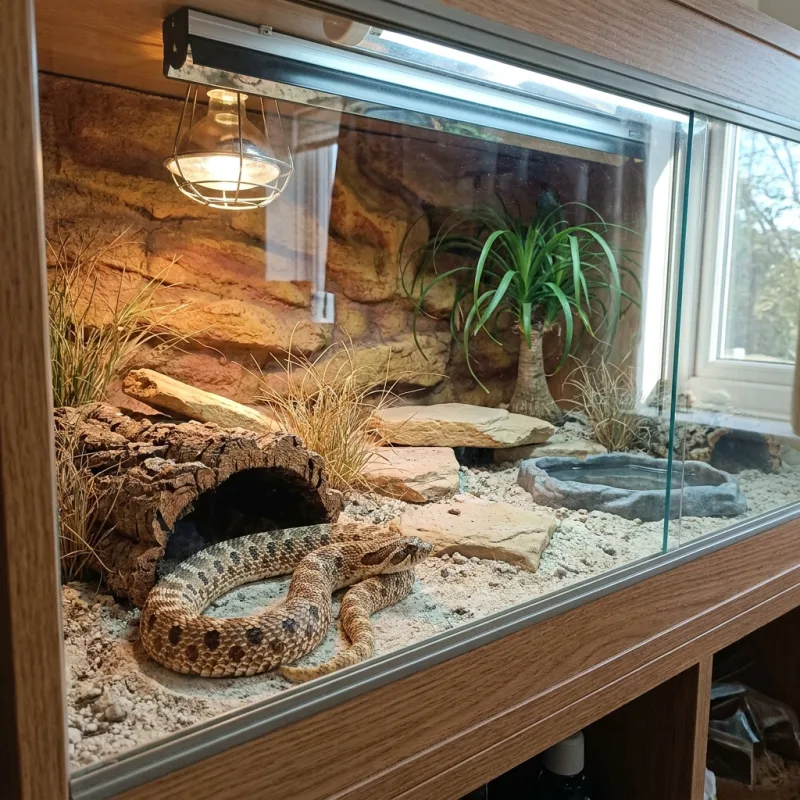
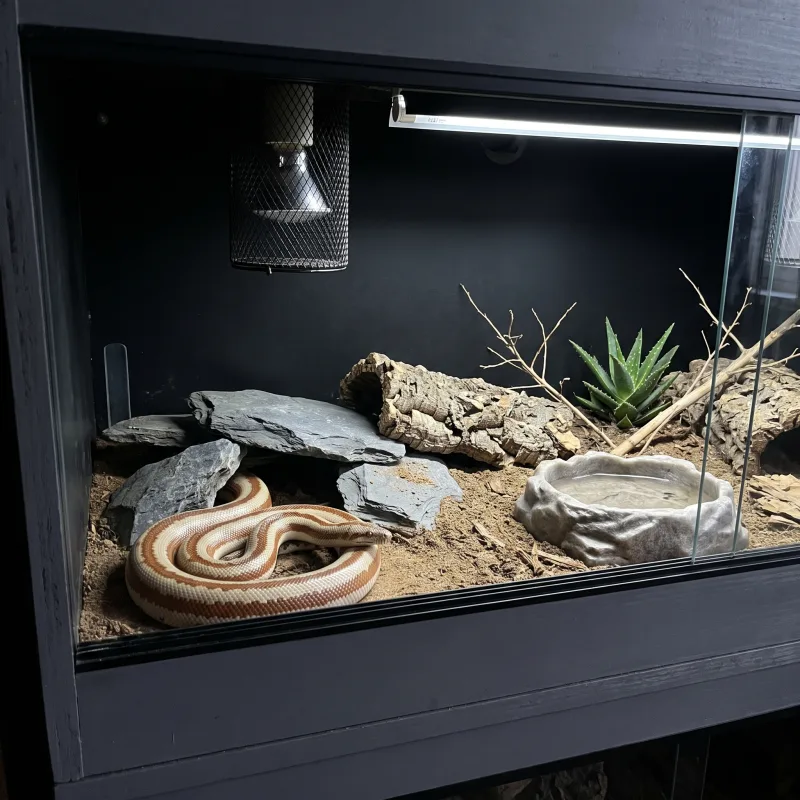
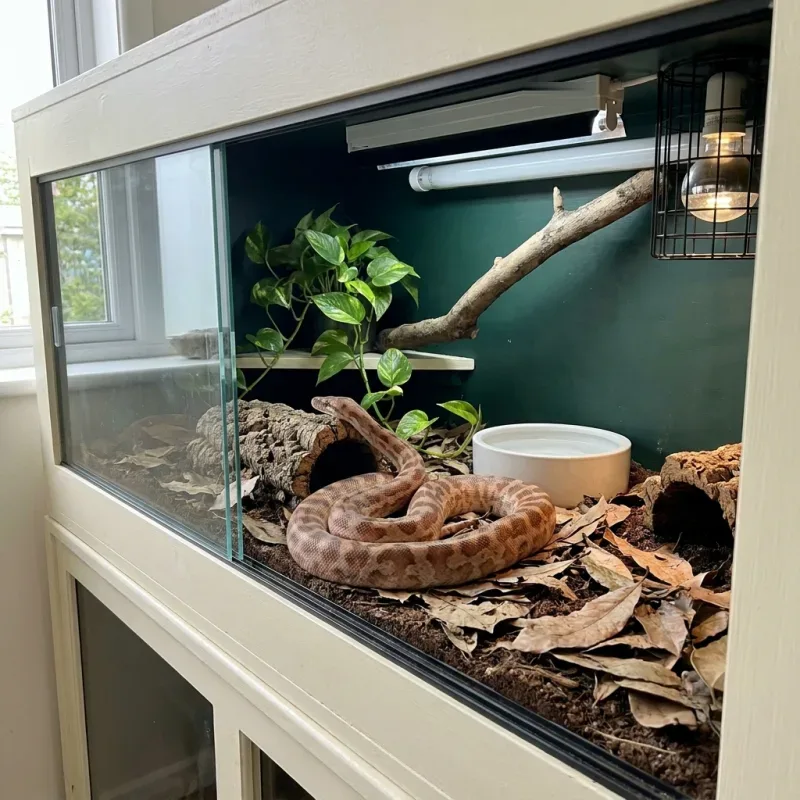
- An adult needs a vivarium at least as long as the snake, half as wide and three quarters as tall: at least 39 x 20 x 30 in100 x 50 x 75 cm for a 39-inch1 m adult, which a standard 4 x 2 ft120 x 60 cm enclosure at least 2.5 ft75 cm tall meets.
- Give it good ventilation and a secure lid; larger is better.
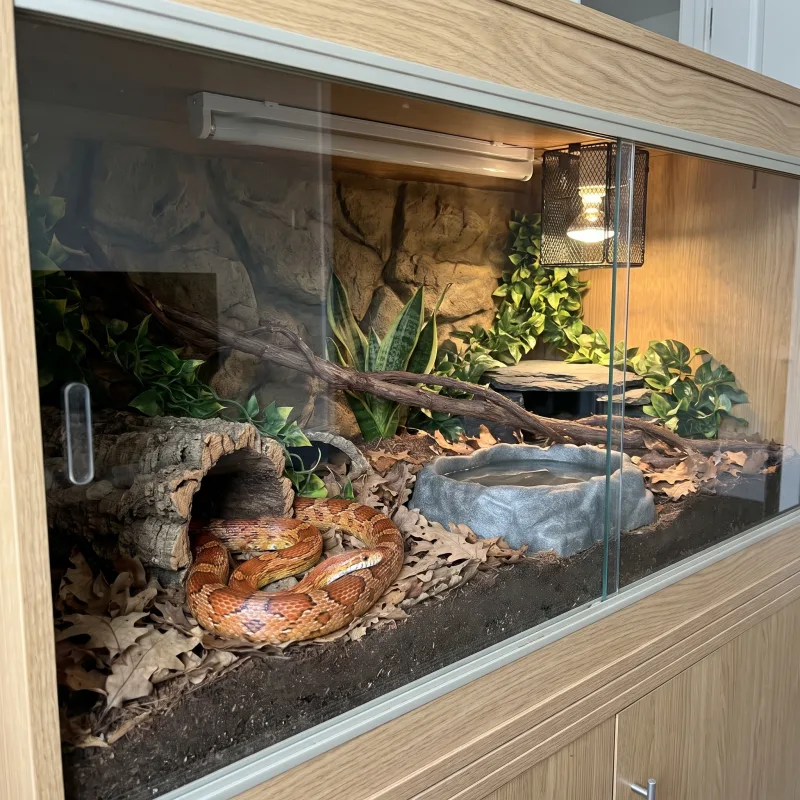
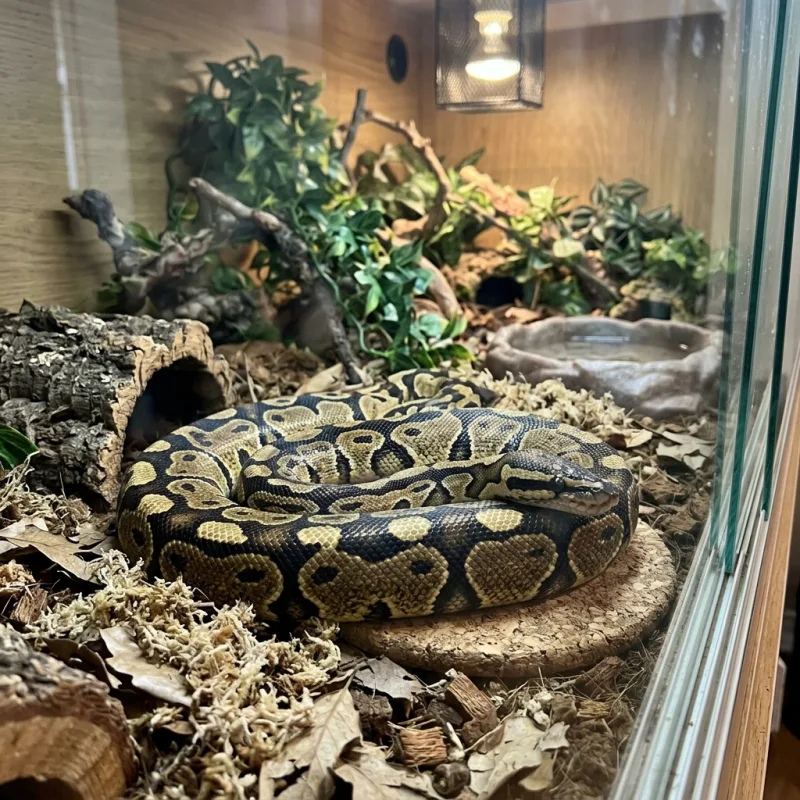
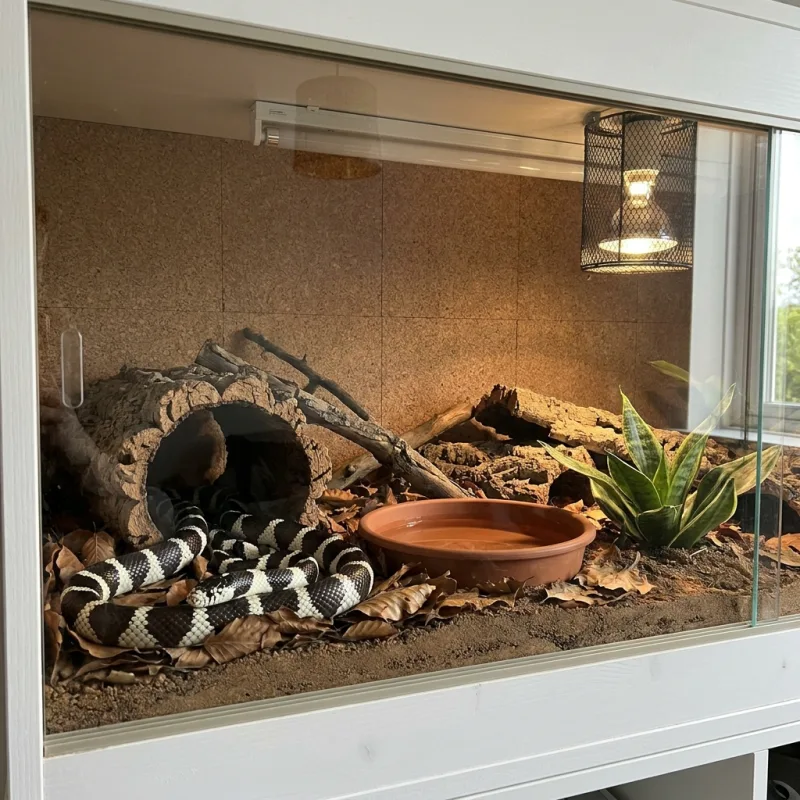
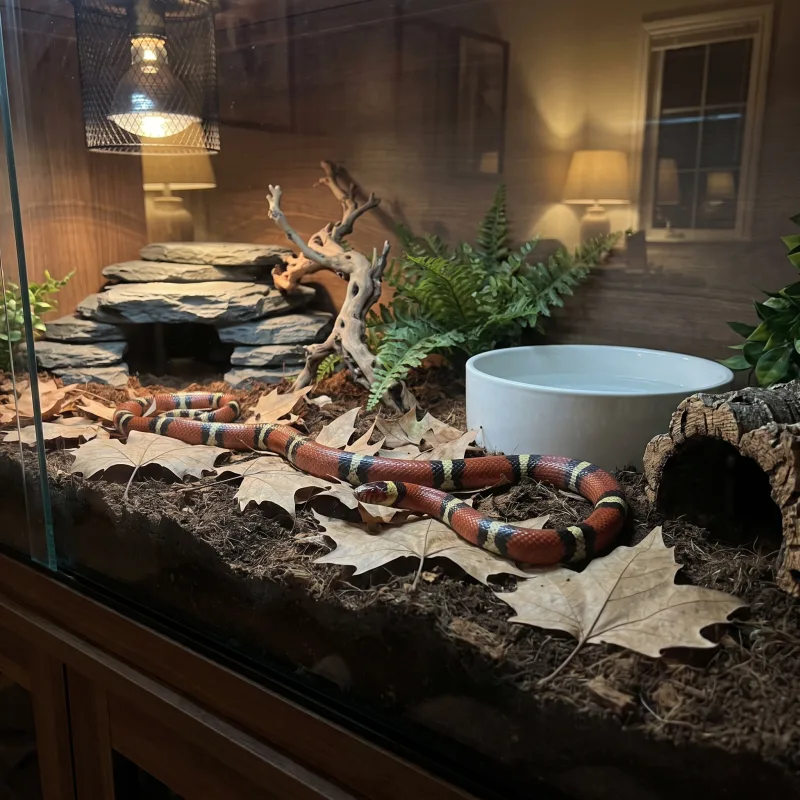
- Provide a hide at each end, a sturdy branch for occasional climbing, and a substrate such as aspen, cypress mulch, or coir.
Show 3 more
- Maintain a basking area of 88-91°F31-33°C and a cool side of 75-79°F24-26°C using a thermostat.
- Keep humidity around 50-60%, raised during sheds.
- A modest nighttime temperature drop is natural and tolerated.
Supplies
Setup
- Enclosure, sized for the adult snake
- Heating and thermostat
- Thermometers and hygrometer
- Substrate, hides at both ends, water bowl
Ongoing
- Frozen rodents in the right size for your snake
- Freezer container or bin dedicated to feeder storage
- Long blunt-tipped feeding tongs
- Sealable bags or a thawing tub for warming prey
- Heavy, tip-proof water bowl (big enough to soak in for most species; a small bowl on the cool side for rosy and sand boas, which are kept dry)
Show 2 more
- Digital kitchen scale for tracking weight
- Digital thermometer for checking prey temperature
Safe substrate: Cypress mulch · Aspen shavings · Topsoil and coco fibre mix
Care routine
Daily
- Check temperatures and humidity
- Look the animal over
- Spot-clean waste and uneaten food
Every few days
- Fresh water bowlevery 3 days
- Short handling sessionevery 3 days
Weekly
- Check every latch and vent
- Watch for a shed cycle
Show 7 more
Every few weeks
- Check for mitesevery 2 weeks
- Feed an adult a thawed prey item (hatchlings and juveniles about weekly)every 2 weeks
- Weigh-inevery 2 weeks
Monthly
- Deep-clean decor, glass and bowls
- Test thermostats, lamps and guards
Less often
- Refresh the substrateevery 3 months
- Check the UVB lamp's age and replace it if due (if one is fitted)every 6 months
Vet: Annual exam and faecal check, every 12 months
Tools
Care in depth
Diet
Carnivore - frozen/thawed rodents
- Children's pythons are carnivores fed appropriately sized frozen-thawed rodents about as wide as the snake.
- Hatchlings start on pinky mice; adults take adult mice or small rats every 7-14 days.
- They are reliable feeders and often eager, so use tongs and feed in a controlled way.
- As nocturnal hunters they may respond best to evening feeding.
- Avoid overfeeding adults to maintain healthy body condition.
Health
Signs of good health, and the common problems
- These pythons are hardy but can develop respiratory infections in cold or damp conditions and shedding problems if humidity is too low.
- Their long lifespan means a multi-decade commitment to consistent care.
- Keep the enclosure clean, with correct temperatures and a humid hide during sheds.
- Quarantine new arrivals and screen for mites.
- Annual veterinary checks help monitor weight and condition over their long life.
Is this urgent?
5 warning signs and how fast to act, 2 of them right away
Most snake worry is about feeding, and most feeding worry is misplaced. Check the guide for this species' normal fast before treating a refusal as illness.
Go now
Today
Soon
This is general guidance for a healthy adult, not a diagnosis. An exotics vet who knows your animal always overrides it, and the time to find one is before you need one.
Bedding and substrate
5 safe, 1 with a caveat, 2 to avoid
For snakes the substrate has to hold the right humidity for the shed, and let the animal get fully under it.
Safe
With a caveat
Never
Stuck shed and retained eyecaps are usually a humidity failure during the blue phase, not a substrate failure afterwards.
Top resources for more info
Independent creators and organisations we would send a friend to. We have no affiliation with any of them, and nothing here is sponsored. Links checked 2026-10-22.
YouTubers
Sites
Snakes, side by side
Same axes, same care guides: the honest way to choose between types.