Common Garter Snake
Thamnophis sirtalis
Active, diurnal, fish-loving small snakeBeginner
- Lifespan
- 8-14 years
- Size
- 18-51 in45-130 cm (varies)
- Social needs
- Best kept singly; prone to cannibalism at feeding time
- Time
- Medium - feed every 3-7 days
- Cost
- Low to Medium
- Diet
- Carnivore - fish, worms, rodents
Overview
What is this animal?
- Common garter snakes are small, fast, diurnal snakes that are active and engaging to watch, unlike many shy nocturnal species.
- They are widespread across North America and come in many regional colour forms.
- They have a weak rear-fang saliva that is harmless to humans, and they are semi-aquatic, enjoying water.
- Their daytime activity makes them appealing, though their varied diet and faster metabolism set them apart from rodent-only snakes.
Temperament
- Garter snakes are alert, quick, and curious, often more nervous than rodent-eating colubrids.
- Many musk readily when first handled but settle with regular gentle contact.
Show 3 more
- Their daytime activity makes them rewarding to observe.
- They rarely bite, and their mild rear-fang saliva is harmless to most people.
- Handle gently and briefly at first, letting the snake move through your hands rather than restraining it tightly.
A good fit for
- Keepers wanting an active daytime snake
- Those who can provide a varied diet
- Beginners happy with frequent feeding
- People wanting a smaller, engaging species
Common mistakes to avoid
- Goldfish and other thiaminase-rich fish cause thiamine deficiency
- Faster metabolism needs frequent feeding
- Can be musky and nervous when handled
- Needs good ventilation and a clean water area
Enclosure
Minimum 8 sq ft0.72 m² of floor · 47 x 24 x 24 in120 x 60 x 60 cm
Usually kept alone. Best kept singly; prone to cannibalism at feeding time
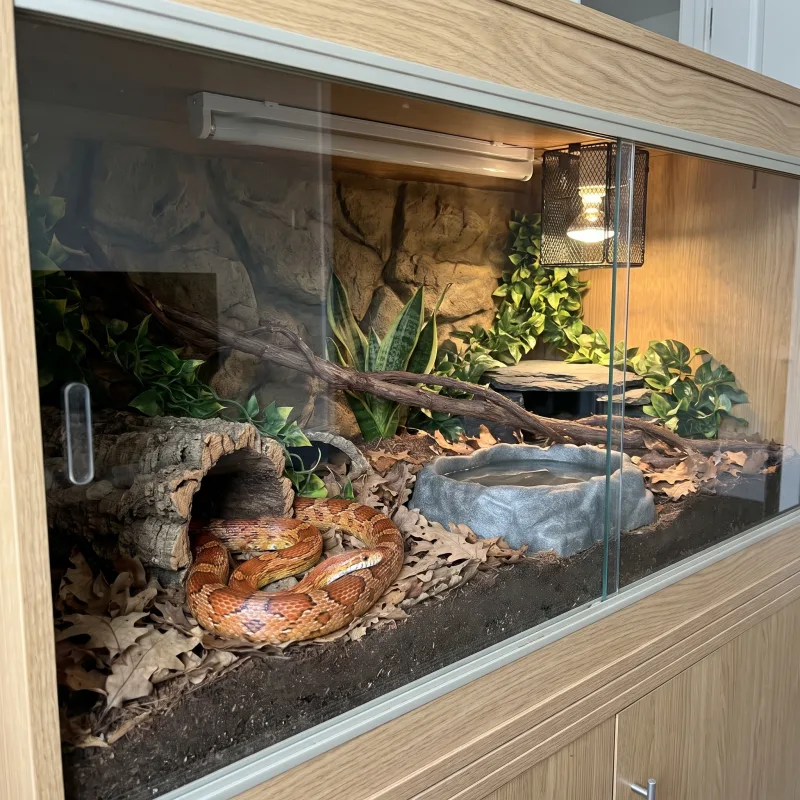
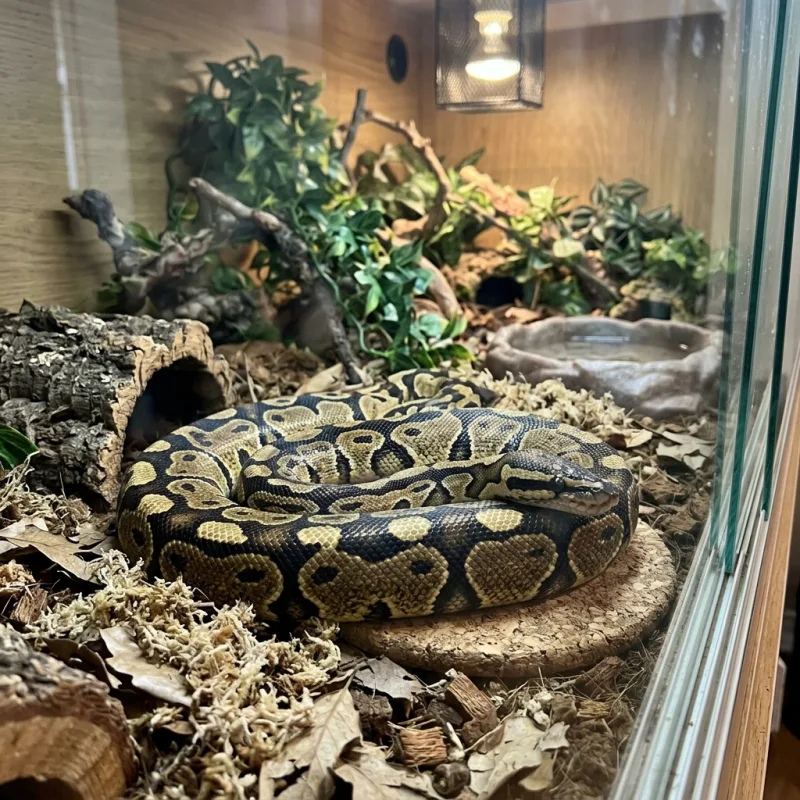
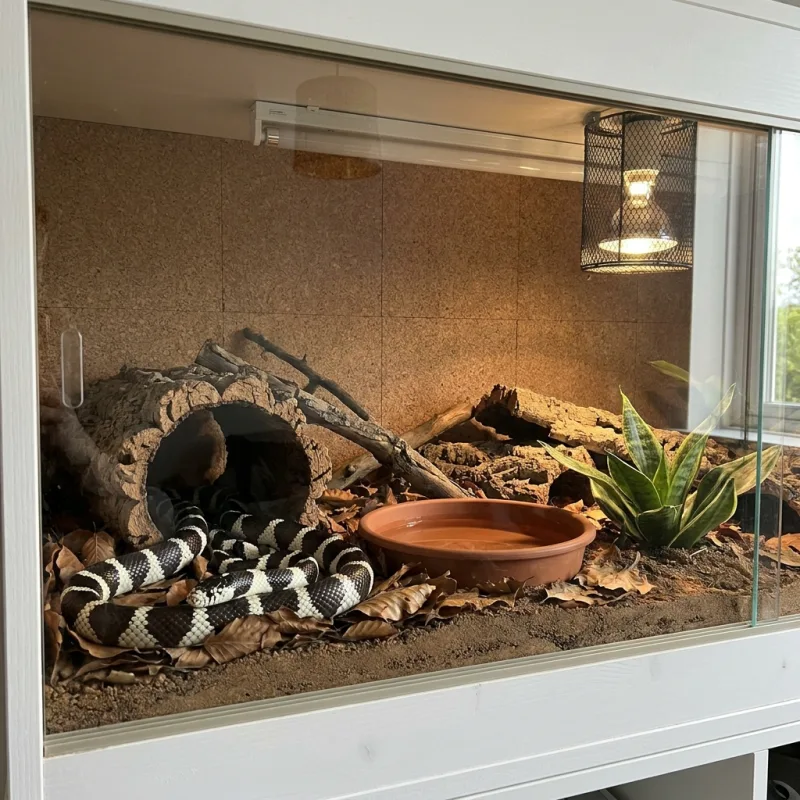
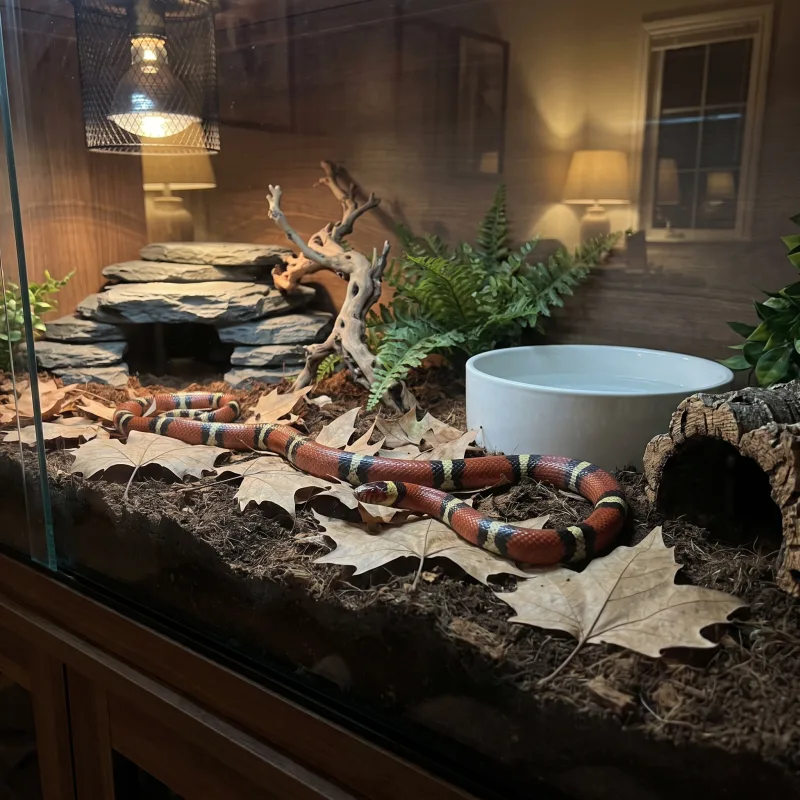
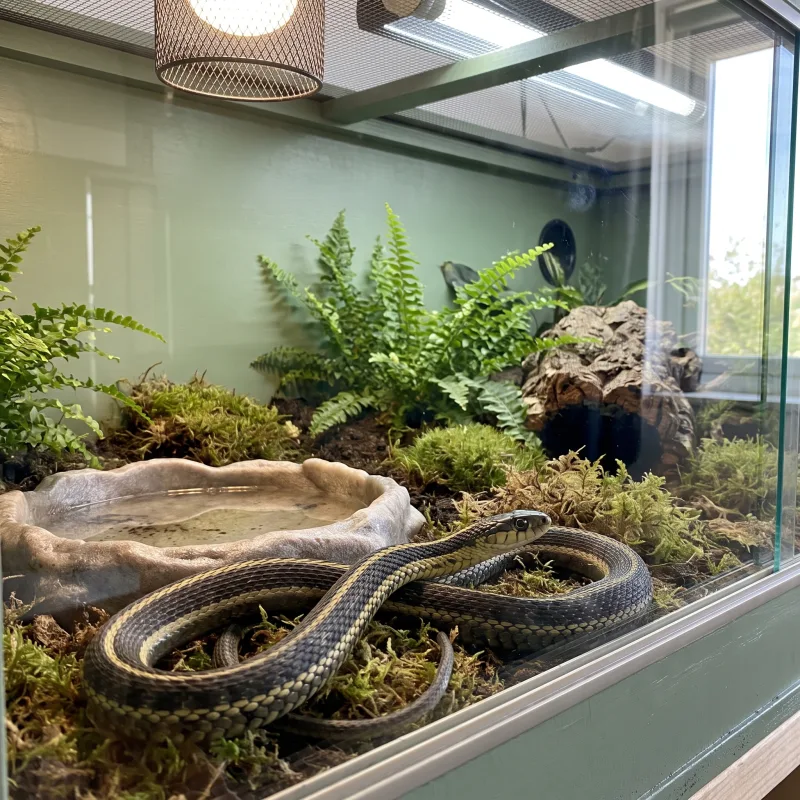
- A single adult needs at least 4 x 2 x 2 ft120 x 60 x 60 cm, with plenty of cover, climbing branches and a large water area, as they enjoy soaking and swimming.
- Common garters are prone to cannibalism at feeding time, so one snake per enclosure is the safe default; anyone who does keep more should choose same-size adults, always feed them apart, and add at least 2.2 sq ft0.2 m² (about 18 x 18 in45 x 45 cm) of floor for every extra snake.
- Use an absorbent substrate kept clean, since frequent meals mean frequent waste.
Show 2 more
- Provide a basking spot of 82-86°F28-30°C and a cooler side around 70-75°F21-24°C, with low-level UVB beneficial for these diurnal baskers.
- Keep humidity moderate and ensure good ventilation to prevent respiratory problems.
Supplies
Setup
- Enclosure, sized for the adult snake
- Heating and thermostat
- Thermometers and hygrometer
- Substrate, hides at both ends, water bowl
Ongoing
- Frozen rodents in the right size for your snake
- Freezer container or bin dedicated to feeder storage
- Long blunt-tipped feeding tongs
- Sealable bags or a thawing tub for warming prey
- Heavy, tip-proof water bowl (big enough to soak in for most species; a small bowl on the cool side for rosy and sand boas, which are kept dry)
Show 2 more
- Digital kitchen scale for tracking weight
- Digital thermometer for checking prey temperature
Safe substrate: Cypress mulch · Aspen shavings · Topsoil and coco fibre mix
Care routine
Daily
- Check temperatures and humidity
- Look the animal over
- Spot-clean waste and uneaten food
Every few days
- Fresh water bowlevery 3 days
- Short handling sessionevery 3 days
- Feed fish, earthworms or small mice (adults every 4-7 days, juveniles every 3-5)every 4 days
Show 8 more
Weekly
- Check every latch and vent
- Watch for a shed cycle
Every few weeks
- Check for mitesevery 2 weeks
- Weigh-inevery 2 weeks
Monthly
- Deep-clean decor, glass and bowls
- Test thermostats, lamps and guards
Less often
- Refresh the substrateevery 3 months
- Check the UVB lamp's age and replace it if due (if one is fitted)every 6 months
Vet: Annual exam and faecal check, every 12 months
Tools
Care in depth
Diet
Carnivore - fish, worms, rodents
- Garter snakes have a varied carnivorous diet of fish, earthworms, and rodents.
- Do not feed goldfish or rosy red minnows: they contain thiaminase, which destroys vitamin B1 and causes a neurological deficiency.
- Use thiaminase-free fish such as guppies or platies instead, and offer earthworms (never red wigglers) and whole rodent prey for balance; a thiamine supplement is a sensible safeguard for a snake that eats a lot of fish.
- Their fast metabolism means feeding juveniles every 3-5 days and adults every 4-7 days, with worm- and fish-fed snakes at the shorter end and rodent-fed snakes at the longer.
- A varied diet is essential to long-term health and prevents nutritional deficiencies.
Health
Signs of good health, and the common problems
- Garter snakes are prone to vitamin and thiamine deficiencies from poor diets, and to respiratory infections in damp, poorly ventilated setups.
- Frequent feeding makes a clean enclosure especially important to prevent bacterial problems.
- Feed a varied, balanced diet and supplement where needed.
- Maintain good hygiene and ventilation.
- Their shorter lifespan and faster metabolism call for attentive feeding and prompt veterinary care for any lethargy or breathing changes.
Is this urgent?
5 warning signs and how fast to act, 2 of them right away
Most snake worry is about feeding, and most feeding worry is misplaced. Check the guide for this species' normal fast before treating a refusal as illness.
Go now
Today
Soon
This is general guidance for a healthy adult, not a diagnosis. An exotics vet who knows your animal always overrides it, and the time to find one is before you need one.
Bedding and substrate
5 safe, 1 with a caveat, 2 to avoid
For snakes the substrate has to hold the right humidity for the shed, and let the animal get fully under it.
Safe
With a caveat
Never
Stuck shed and retained eyecaps are usually a humidity failure during the blue phase, not a substrate failure afterwards.
Top resources for more info
Independent creators and organisations we would send a friend to. We have no affiliation with any of them, and nothing here is sponsored. Links checked 2026-10-22.
YouTubers
Sites
Snakes, side by side
Same axes, same care guides: the honest way to choose between types.