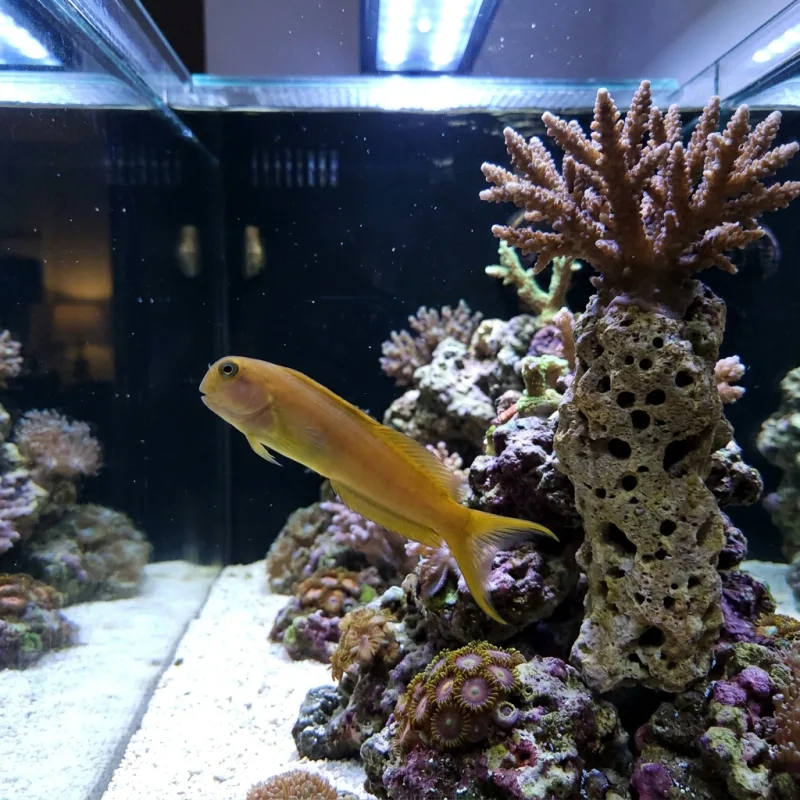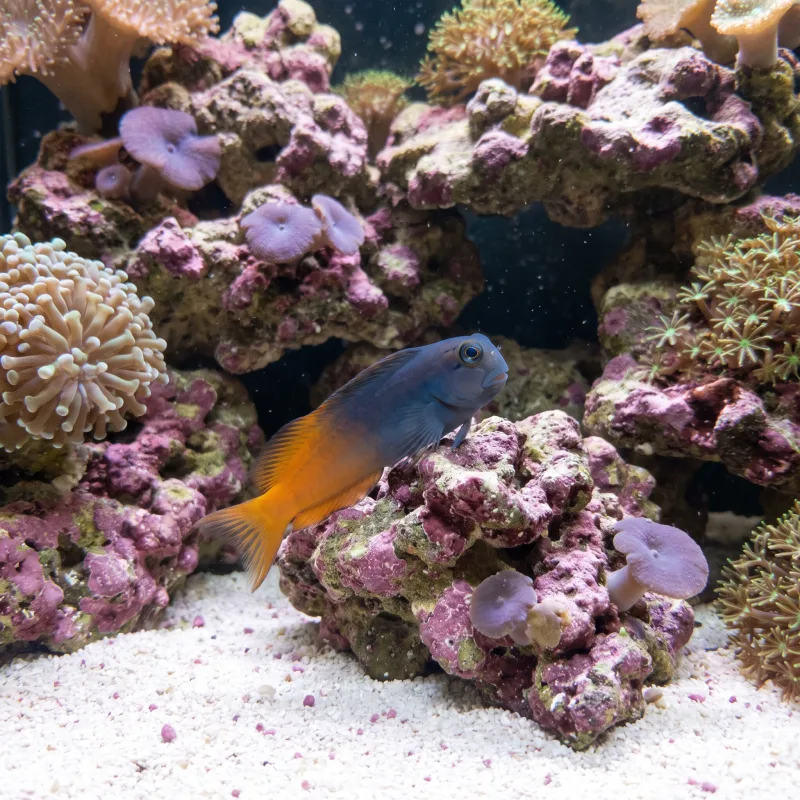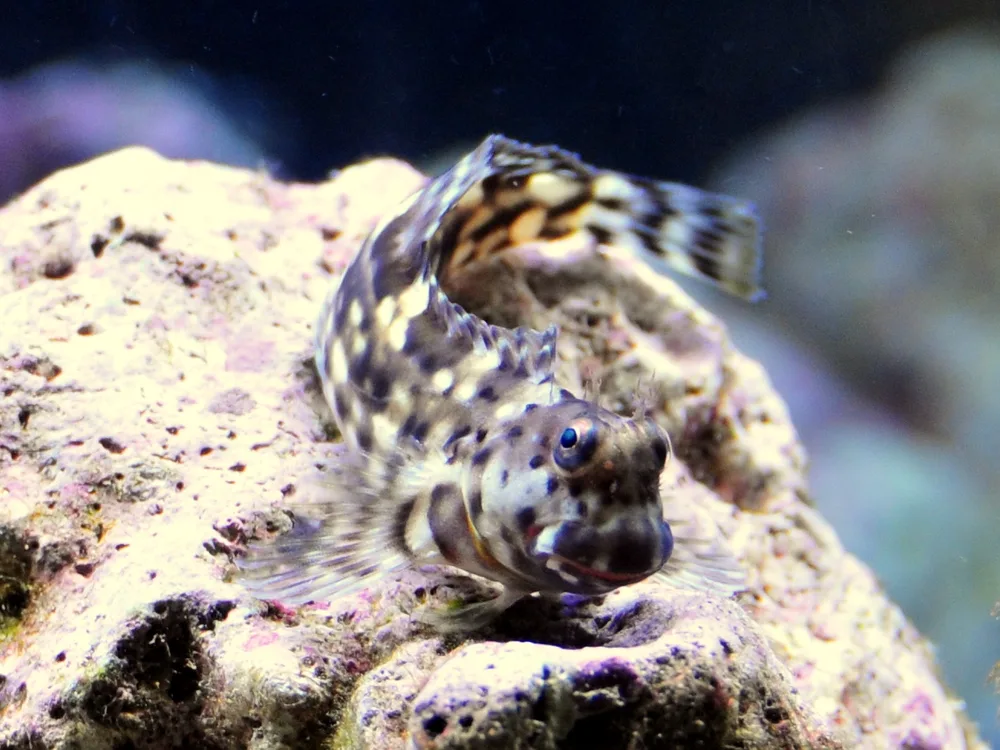
Denis Cheong (Zylantha) · CC BY-SA 4.0 · Wikimedia Commons (cropped)
Lawnmower Blenny
Salarias fasciatus
Comical algae grazer with plenty of personalityBeginner
- Lifespan
- 4-6 years
- Size
- 4-5 in10-13 cm
- Social needs
- One per tank unless the system is large
- Time
- Low
- Cost
- High
- Diet
- Herbivore, marine algae
Overview
What is this animal?
- The Lawnmower Blenny is a hardy, characterful herbivore named for its habit of grazing algae off rock and glass.
- With perching pectoral fins, expressive eyes, and constant activity, it is a popular beginner reef fish.
- It is reef-safe and useful for nuisance algae, but it needs an established tank with a real algae supply.
- Keepers must be ready to supplement food once the algae is grazed down.
Temperament
- Peaceful toward most tankmates but territorial toward other blennies and similar bottom-dwelling fish.
- Keep only one lawnmower blenny per tank unless the system is large, to avoid squabbling.
Show 2 more
- It is an amusing, interactive fish that perches openly, hops between rocks, and shifts colour with mood.
- It generally ignores corals and invertebrates, making it a reliable, peaceful reef community member.
A good fit for
- Beginners wanting a hardy, fun fish
- Reef tanks with nuisance algae
- Keepers who will supplement with nori
- Community reefs needing a peaceful grazer
Common mistakes to avoid
- Starves in tanks lacking enough algae
- Watch for a pinched, concave belly
- Keeping two blennies together causes fights
- Adding to a brand-new, algae-free tank
Enclosure
Minimum 79 gallons300 litres
One of its kind per tank; other compatible species can share it. One per tank unless the system is large
- House in a mature reef of at least 80 gallons300 L with plenty of live rock covered in algae film and perches to rest on.
- Retail guides often quote 30 gallons114 L, but starvation is this fish's commonest cause of death, and a tank that small has little algae-growing rock to feed it.
- An established tank with diatom and green algae growth provides natural grazing.
Show 2 more
- Keep temperature 75-81°F24-27°C, salinity 1.024-1.026, pH 8.1-8.4, and ammonia and nitrite at zero.
- A tank that is too clean or too new will leave this grazer underfed.
Supplies
Setup
- Tank, stand and sump, about 80-90 US gallons300-340 litres
- Return pump and powerheads
- Protein skimmer
- Reef lighting
- Rock and sand
Show 2 more
- Salt mix, refractometer and test kits
- Quarantine tank
Ongoing
- Dried marine algae (nori) sheets
- Magnetic or suction veg clip
- Spirulina flake and algae pellets
- Frozen mysis shrimp
- Frozen enriched brine shrimp
Show 2 more
- Marine flake or small pellet
- Small thawing cup and strainer
Safe substrate: Aragonite sand · Dry or cured live rock
Care routine
Daily
- Check salinity, temperature and flow
- Feed
- Head-count and look everyone over
- Top up evaporation with fresh water
Every few days
- Offer nori on a clipevery 2 days
- Service the skimmer and filter socksevery 3 days
Show 8 more
Weekly
- Check the belly profile
- Clean the glass
- Test the water
- Water change
Monthly
- Calibrate the refractometer
- Check salt, RO/DI and reagents
Less often
- Deep-clean pumps and powerheadsevery 3 months
- Replace RO/DI filter mediaevery 6 months
Health review: Quarterly belly-profile review, every 3 months
Tools
Care in depth
Diet
Herbivore, marine algae
- Primarily a herbivore, it grazes hair algae, diatoms, and film algae from rock and glass.
- Once natural algae is depleted, supplement with dried nori, seaweed sheets, spirulina flakes, and algae-based pellets.
- Many lawnmower blennies slowly starve in tanks without enough algae, so a sunken belly signals the need to feed more vegetable matter.
- Some will eventually accept meaty frozen foods as well.
Health
Signs of good health, and the common problems
- Hardy and relatively disease-resistant compared with many marine fish, but it still benefits from quarantine and stable water.
- The most common cause of death is starvation in tanks with insufficient algae rather than illness.
- Watch the belly profile: a pinched, concave stomach means it is not getting enough food.
- Provide constant grazing material and supplemental nori to keep weight and energy up.
Is this urgent?
6 warning signs and how fast to act, 3 of them right away
In a reef, stability matters more than any single target number. A parameter moving fast does more damage than a parameter sitting slightly off.
Go now
Today
Quarantine every new animal, including corals and inverts. It is the single practice that separates a reef that lasts from a reef that restarts.
This is general guidance for a healthy adult, not a diagnosis. An exotics vet who knows your animal always overrides it, and the time to find one is before you need one.
Bedding and substrate
2 safe, 3 with a caveat, 2 to avoid
In a marine system the rock and the sand are life support, and how you start them decides the first six months.
Safe
With a caveat
Never
This is our general list for saltwater fish. We have not built one specific to Blennies yet.
Top resources for more info
Independent creators and organisations we would send a friend to. We have no affiliation with any of them, and nothing here is sponsored. Links checked 2026-10-22.
YouTubers
Sites
Blennies, side by side
Same axes, same care guides: the honest way to choose between types.