Cherry Shrimp
Neocaridina davidi
Hardy red cleanup crew for nano tanksBeginner
- Lifespan
- 1-2 years
- Size
- 1-1.5 in2.5-4 cm
- Social needs
- Social; keep a colony of 10+
- Time
- Low
- Cost
- Low
- Diet
- Omnivore scavenger (biofilm, algae, shrimp foods)
Overview
What is this animal?
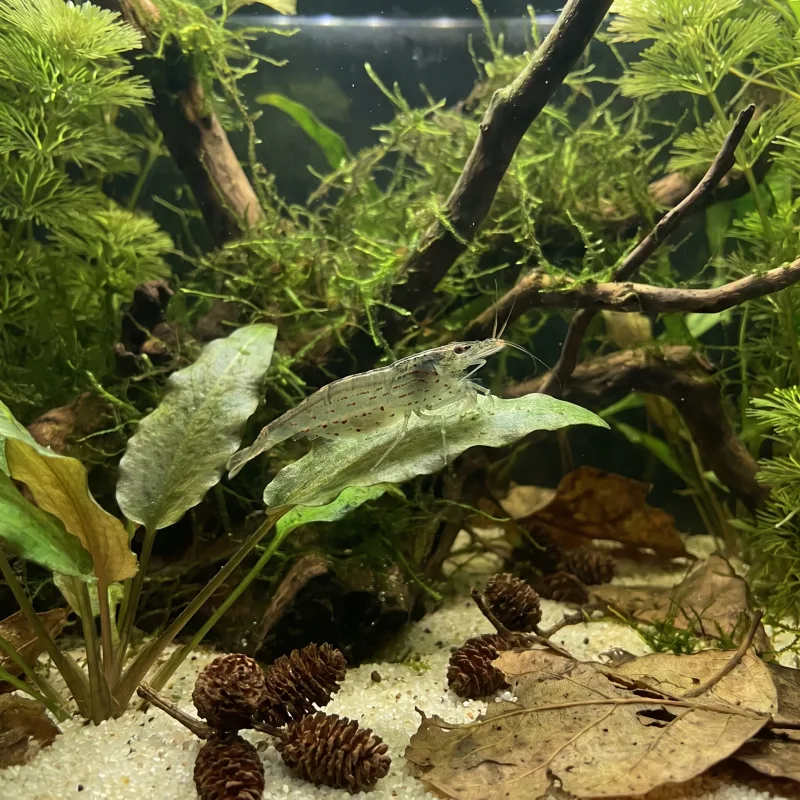
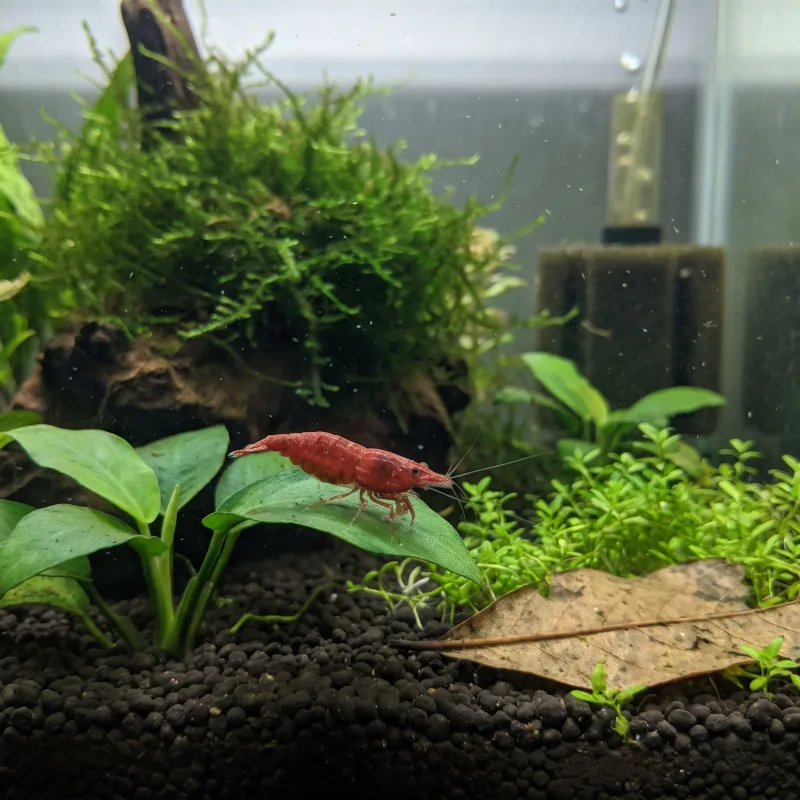
- The cherry shrimp is a small, hardy freshwater invertebrate, a selectively bred colour form of Neocaridina davidi known for its bright red shell and easy care.
- It is one of the best beginner invertebrates and a popular nano-tank species.
- Reaching just an inch or twoa few centimetres, cherry shrimp graze biofilm and algae, breed readily, and form colourful colonies.
- They are sensitive to copper and unstable water but otherwise undemanding, making them a good introduction to keeping freshwater shrimp.
Temperament
- Cherry shrimp are peaceful, social grazers that do best in colonies and feel secure in numbers, so start with at least ten.
- They spend their days foraging over plants and surfaces and pose no threat to other inhabitants.
Show 3 more
- Keep them in a species tank or with very small, peaceful fish, as most fish will eat shrimplets and some will hunt adults.
- Avoid all aggressive or larger fish.
- They breed prolifically; cross-breeding with other Neocaridina colours dulls their bright hues over generations.
A good fit for
- Nano and planted-tank keepers
- Beginners new to freshwater invertebrates
- Those wanting a natural algae cleanup crew
- Aquarists interested in easy shrimp breeding
Common mistakes to avoid
- Any copper, from medications or decor, is lethal
- Adding shrimp to an immature, unstable tank
- Fish tankmates eating shrimplets and adults
- Overfeeding fouling the small water volume
Enclosure
Minimum 10 gallons38 litres, for a group of 10
Cannot be kept alone. The minimum is 10, and the space above is for that group.
- A stable, mature, planted tank of at least 10 US gallons38 litres suits a cherry shrimp colony; they survive in smaller tanks, but a colony is far more stable in this much water, with cool to warm temperatures of 64-79°F18-26°C and neutral to slightly alkaline water of moderate hardness.
- They need plenty of biofilm, so an established tank is essential.
- Provide moss, plants and surfaces for grazing, and gentle, shrimp-safe filtration with intake guards to protect tiny young.
Show 2 more
- Keep ammonia and nitrite at zero and avoid any copper, which is lethal.
- Stable parameters and a cycled tank matter more than precise numbers.
Supplies
Setup
- Tank and stand
- Filter
- Heater and thermometer
- Substrate, plants and decor
- Liquid test kit
- Dechlorinator and starter supplies
Ongoing
- Specialised shrimp pellets or sticks
- Courgette and spinach for blanching
- Mineral or GH supplement for shell health
- Small feeding dish to keep food off the substrate
- Fine net or tweezers for removing leftovers
Safe substrate: Fine, smooth sand · Smooth, rounded fine gravel (not for loaches or sand-sifting cichlids; sand is better for corydoras) · Bare bottom (quarantine and grow-out only)
Care routine
Daily
- Check temperature and equipment
- Head-count and look everyone over
Every few days
- Feed small amounts (target-feed bamboo shrimp into the current)every 2 days
- Top up evaporationevery 3 days
Weekly
- Small, matched water change
- Test hardness as well as nitrogen
- Wipe the front glass only
Show 5 more
Every few weeks
- Trim and thin the plantsevery 2 weeks
Monthly
- Check labels for copper
- Check supplies and reagent dates
- Replace or recharge chemical media, if you use any (skip it in a blackwater tank)
- Rinse the filter media
Health review: Quarterly colony and mineral review, every 3 months
Tools
Care in depth
Diet
Omnivore scavenger (biofilm, algae, shrimp foods)
- Cherry shrimp are omnivorous scavengers that graze biofilm and algae continuously, supplemented with specialised shrimp pellets, blanched vegetables such as spinach and courgette, and occasional protein.
- A mature, biofilm-rich tank meets most of their needs.
- Feed only tiny amounts every day or two, removing uneaten food to protect water quality.
- Overfeeding fouls the water and is a common beginner mistake.
- A varied diet supports colour, moulting and breeding; calcium and stable hardness aid healthy shell formation.
Health
Signs of good health, and the common problems
- Cherry shrimp are hardy but acutely sensitive to copper, ammonia, nitrite and sudden parameter swings, all of which cause failed moults and death.
- Most losses trace to medications containing copper, unstable water, or adding shrimp to an immature tank.
- Avoid copper-based fish treatments entirely, acclimatise new shrimp very slowly by drip, and keep water stable and well cycled.
- Moulting problems often indicate insufficient calcium or fluctuating hardness.
- In clean, stable conditions a colony stays healthy and reproduces steadily.
Is this urgent?
7 warning signs and how fast to act, 4 of them right away
In a shrimp tank the patient is usually the water. Test before you treat: many fish medications harm shrimp, and dosing a healthy tank for a disease it does not have makes things worse.
Go now
Today
Soon
Never add new animals to a tank that is not fully cycled, and never treat blind. Read every medication, algaecide and plant treatment for copper before it goes in. A test kit is cheaper than the colony.
This is general guidance for a healthy adult, not a diagnosis. An exotics vet who knows your animal always overrides it, and the time to find one is before you need one.
Bedding and substrate
3 safe, 4 with a caveat, 2 to avoid
Substrate in an aquarium is a filter as much as a floor. Most of the biology lives in and on it.
Safe
With a caveat
Never
This is our general list for freshwater fish. We have not built one specific to Shrimp yet.
Top resources for more info
Independent creators and organisations we would send a friend to. We have no affiliation with any of them, and nothing here is sponsored. Links checked 2026-10-22.
YouTubers
Sites
Shrimp, side by side
Same axes, same care guides: the honest way to choose between types.