Guppy
Poecilia reticulata
Colourful livebearer that breeds readilyBeginner
- Lifespan
- 2-3 years
- Size
- 1.2-2.4 in3-6 cm
- Social needs
- Social; keep 6+ together
- Time
- 10-15 min daily; weekly water change
- Cost
- Low
- Diet
- Omnivore (flake, micro-pellet, veg, live foods)
Overview
What is this animal?
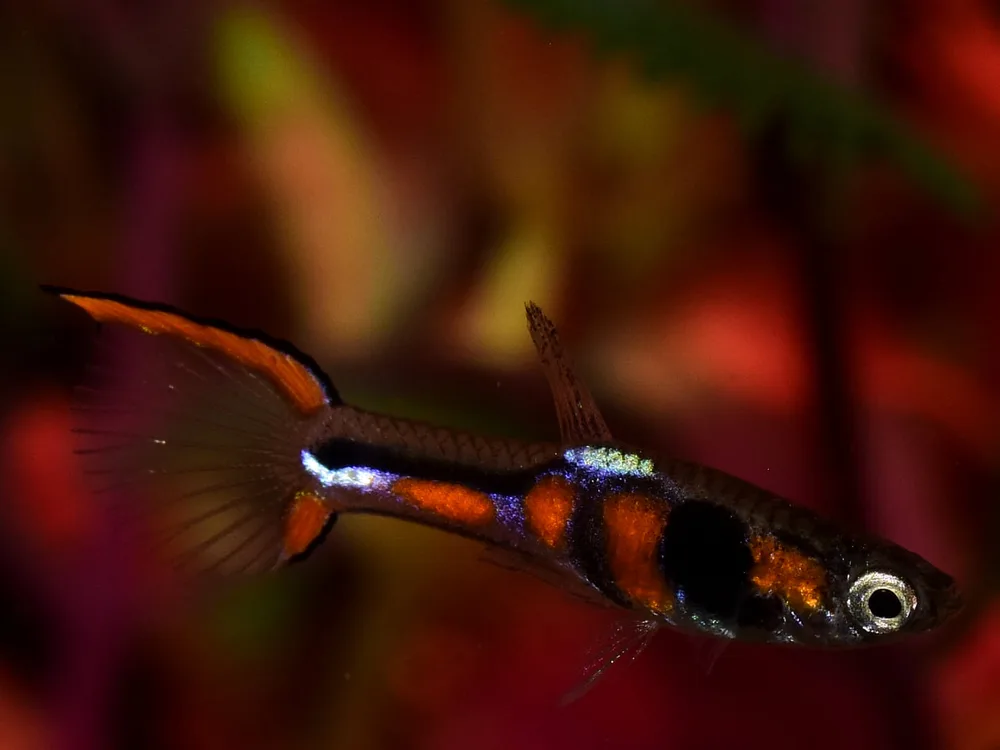
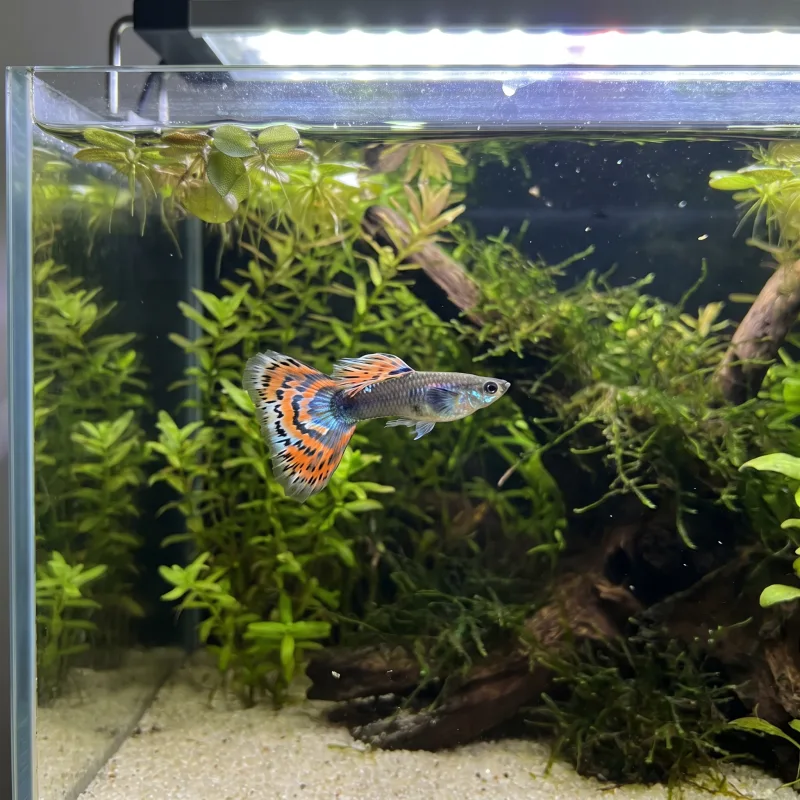
- Guppies are small, peaceful livebearers native to northeastern South America, with males known for their patterned tails.
- Hardy and adaptable, they are among the most widely kept aquarium fish.
- They breed readily in the home aquarium, which is part of their appeal and also their main pitfall.
- A mixed-sex tank quickly fills with fry, so plan for population control or a single-sex group before you buy.
Temperament
- Guppies are sociable, active, and peaceful, best kept in groups of six or more where they shoal loosely.
- Males court females persistently, so keep at least two, and better three, females to every male, or a males-only group of six to ten.
Show 2 more
- They mix well with other calm community species but may have their fins nipped by boisterous tankmates.
- A mixed group will produce fry continuously, which adults will eat unless plenty of cover is provided.
A good fit for
- Absolute beginners and children's first tanks
- Community aquariums with peaceful species
- Keepers who enjoy colour and breeding
- Planted 24 in60 cm community aquariums
Common mistakes to avoid
- Unplanned breeding overwhelming the tank
- Buying weak, mass-bred stock prone to disease
- Keeping males with too few females
- Assuming hardiness means dirty water is fine
Enclosure
Minimum 15 gallons57 litres, for a group of 6
Cannot be kept alone. The minimum is 6, and the space above is for that group.
- A heated, filtered, cycled tank of at least 15 US gallons57 litres and 24 in60 cm long suits a group: Practical Fishkeeping gives a 24 x 12 x 12 in60 x 30 x 30 cm tank as the minimum for a group of guppies.
- A mixed-sex group that is allowed to breed needs more.
- Hold the temperature at 72-79°F22-26°C.
Show 4 more
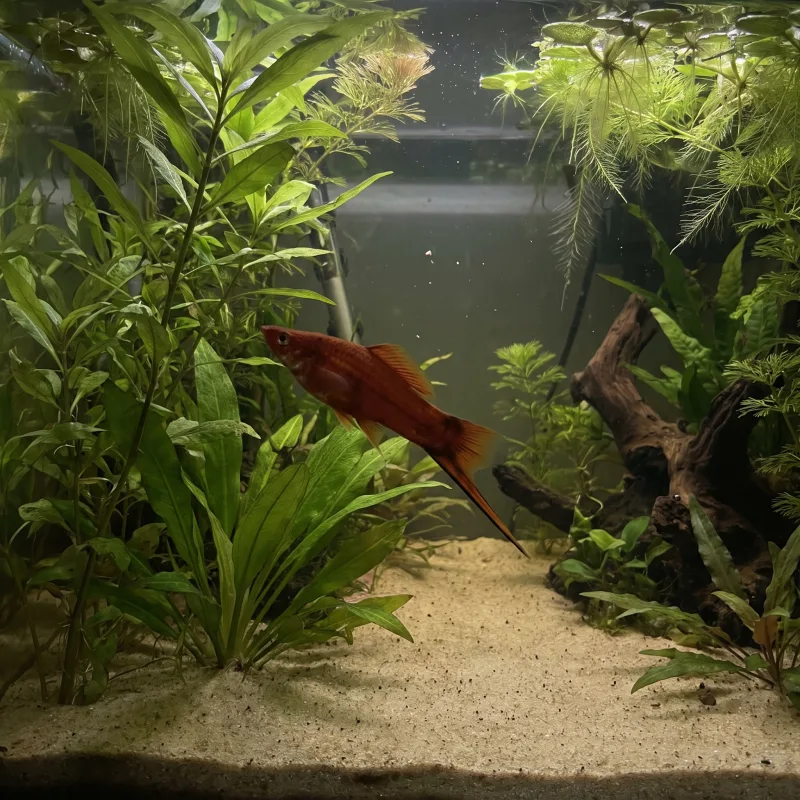
- Guppies prefer slightly hard, alkaline water and appreciate planting for cover and for fry to hide among.
- They are gentle swimmers and dislike strong currents.
- Keep nitrate low with weekly partial water changes, as guppies are sensitive to dirty water despite their reputation for toughness.
- A secure lid prevents the occasional jumper from escaping.
Supplies
Setup
- Tank and stand
- Filter
- Heater and thermometer
- Substrate, plants and decor
- Liquid test kit
- Dechlorinator and starter supplies
Ongoing
- Quality tropical flake or micro-pellet
- Spirulina or vegetable flake
- Frozen brine shrimp and daphnia
- Frozen or freeze-dried bloodworm
- Veg clip for courgette and spinach
Show 2 more
- Baby brine shrimp hatchery or frozen equivalent for fry
- Fine net for removing leftovers
Safe substrate: Fine, smooth sand · Smooth, rounded fine gravel (not for loaches or sand-sifting cichlids; sand is better for corydoras) · Bare bottom (quarantine and grow-out only)
Care routine
Daily
- Check temperature and equipment
- Feed
- Head-count and look everyone over
Every few days
- Top up evaporationevery 3 days
Weekly
- Test the water
- Water change and gravel vacuum
- Wipe the front glass only
Show 5 more
Every few weeks
- Trim and thin the plantsevery 2 weeks
Monthly
- Check supplies and reagent dates
- Replace or recharge chemical media, if you use any (skip it in a blackwater tank)
- Review the fry plan
- Rinse the filter media
Health review: Quarterly stocking and health review, every 3 months
Tools
Care in depth
Diet
Omnivore (flake, micro-pellet, veg, live foods)
- Guppies are omnivores and do best on a varied diet.
- Offer a quality flake or micro-pellet as the staple, rotating in blanched vegetables, spirulina, and frequent treats of frozen or live brine shrimp, daphnia, and bloodworms for colour and condition.
- Feed small amounts once or twice daily, only what is cleared in a minute or two.
- Their small stomachs make overfeeding easy, which fouls water and contributes to obesity and bloating in well-stocked tanks.
Health
Signs of good health, and the common problems
- Mass-bred guppies can be genetically weak, so buy from reputable sources and quarantine new arrivals.
- Common problems include fin rot, ich, and protozoan ailments that follow chilling or unstable parameters.
- Stable warmth and clean water prevent most issues.
- Watch for clamped fins, white spots, or a wasting, hollow belly that can signal internal parasites.
- Acclimatise slowly to avoid temperature and pH shock, and avoid overcrowding, which is a frequent trigger for outbreaks.
Is this urgent?
6 warning signs and how fast to act, 3 of them right away
In a fish tank the patient is usually the water. Test before you treat: dosing a healthy tank for a disease it does not have makes things worse.
Go now
Today
Soon
Never add a new fish to a tank that is not fully cycled, and never treat blind. A test kit is cheaper than the fish.
This is general guidance for a healthy adult, not a diagnosis. An exotics vet who knows your animal always overrides it, and the time to find one is before you need one.
Bedding and substrate
3 safe, 4 with a caveat, 2 to avoid
Substrate in an aquarium is a filter as much as a floor. Most of the biology lives in and on it.
Safe
With a caveat
Never
This is our general list for freshwater fish. We have not built one specific to Guppy yet.
Top resources for more info
Independent creators and organisations we would send a friend to. We have no affiliation with any of them, and nothing here is sponsored. Links checked 2026-10-22.
YouTubers
Sites
Other Freshwater Fish worth knowing
Same axes, same care guides: the honest way to compare them.