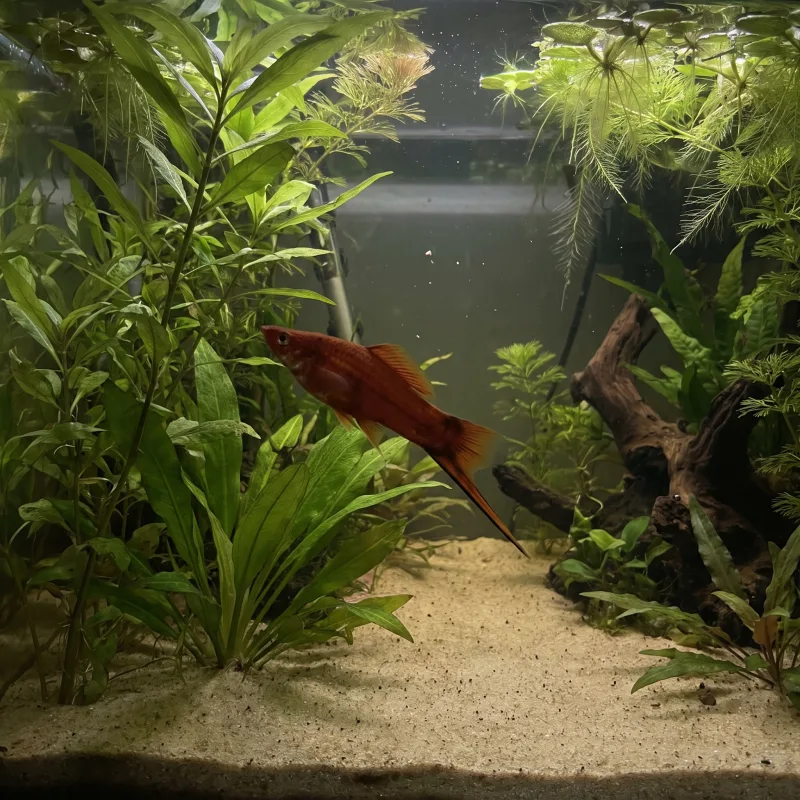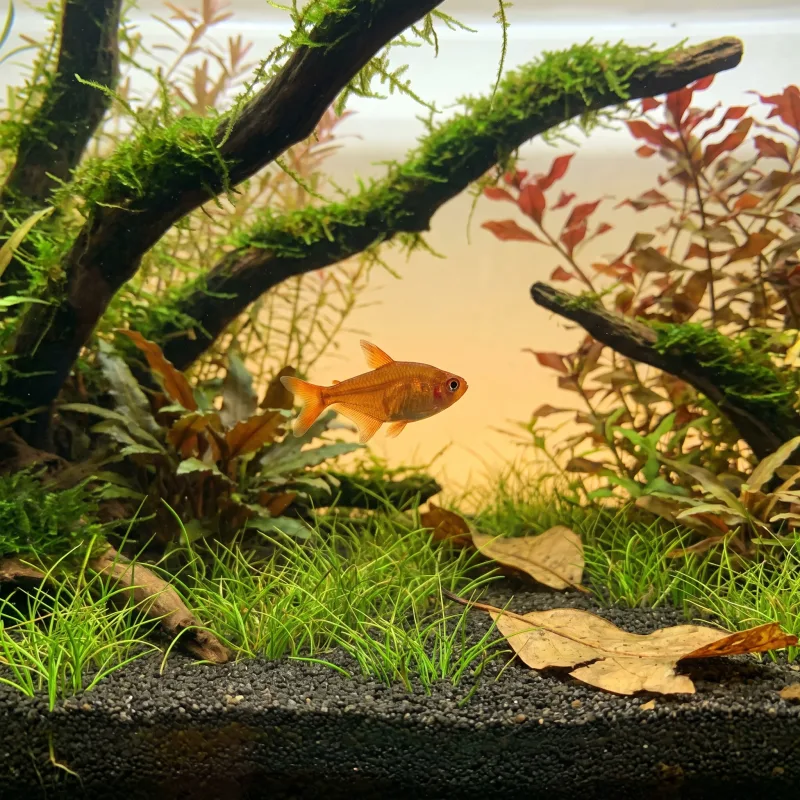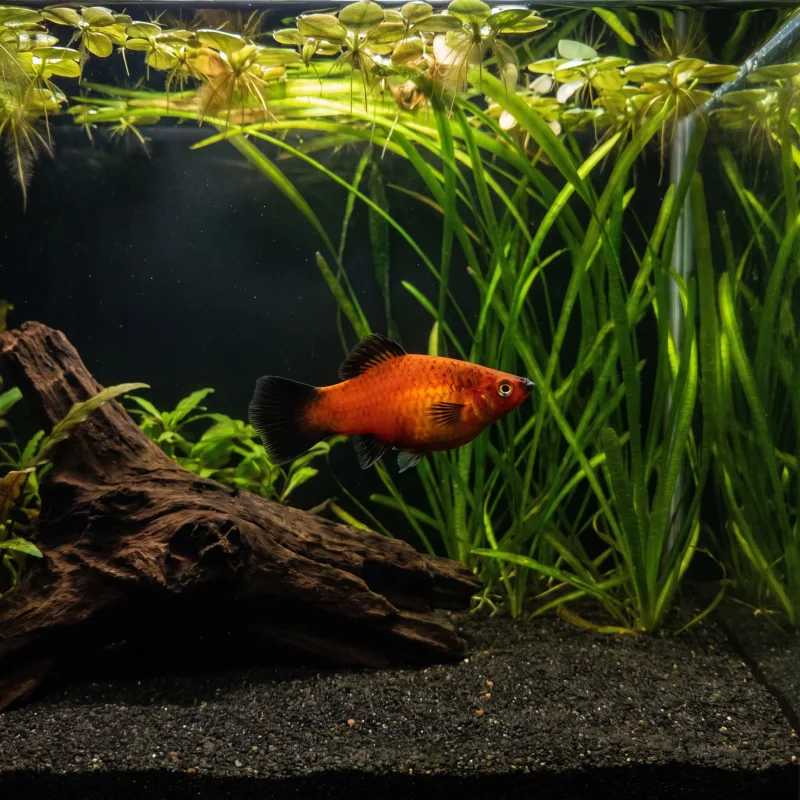
Platy
Xiphophorus maculatus
Hardy, colourful community livebearerBeginner
- Lifespan
- 3-4 years
- Size
- 1.5-2.5 in4-6 cm
- Social needs
- Social; keep 5+, more females than males
- Time
- 10-15 min daily; weekly water change
- Cost
- Low
- Diet
- Omnivore (flake, pellet, veg, live foods)
Overview
What is this animal?
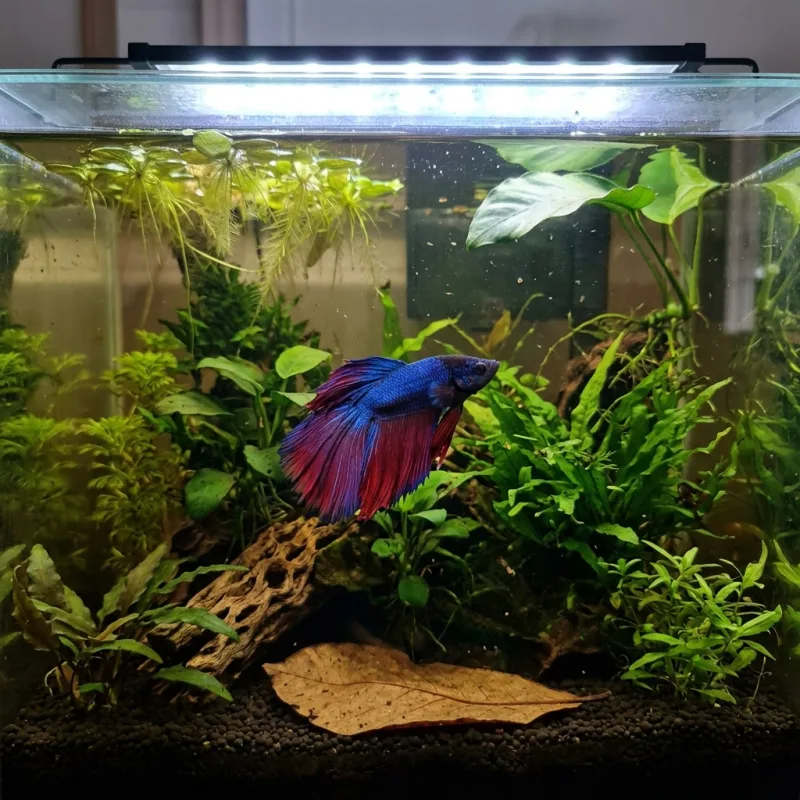
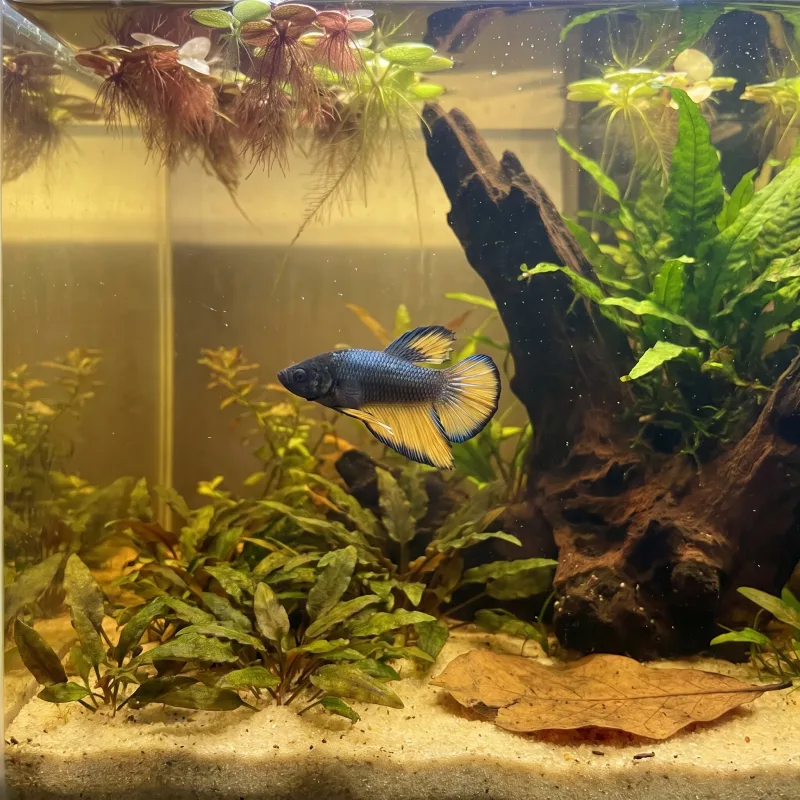
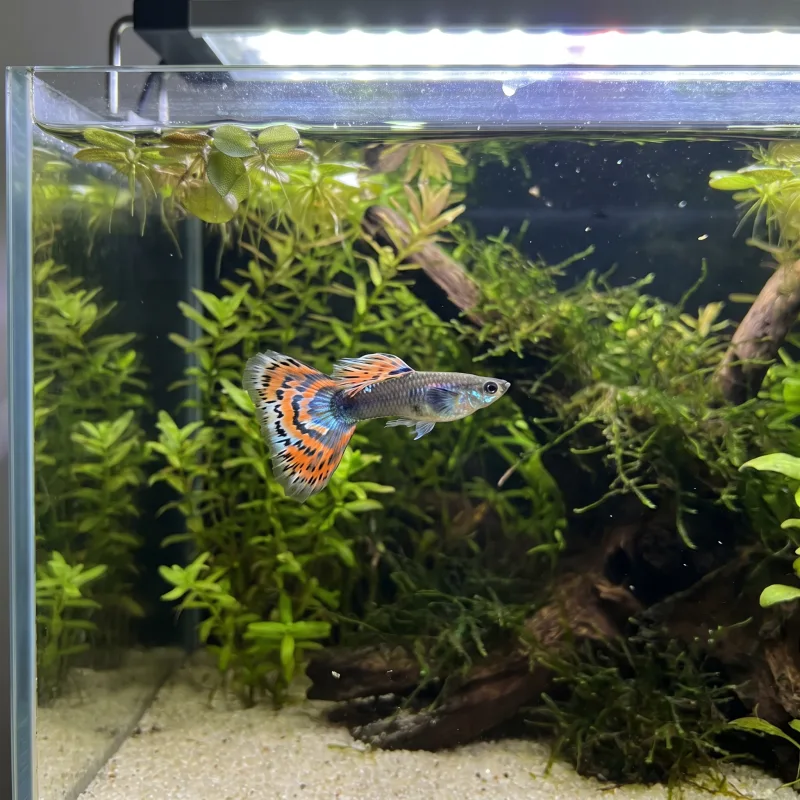
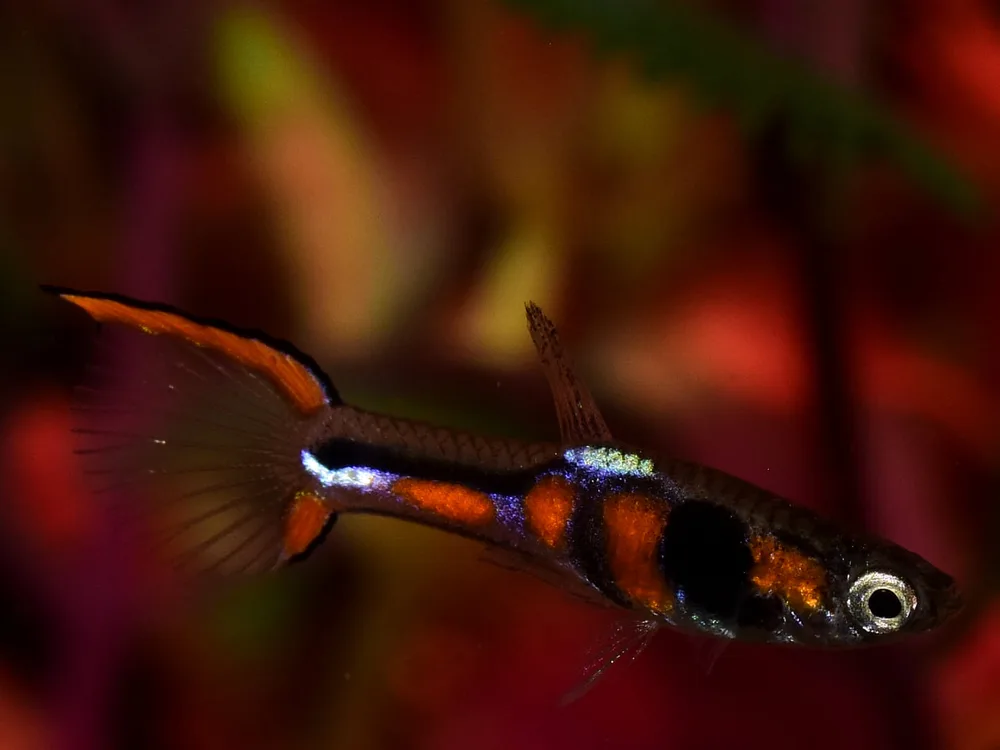
- Platies are stout, good-natured livebearers from Central America, bred into many colours and patterns such as sunset, wagtail, and mickey-mouse.
- Their hardiness and easy temperament make them a staple of beginner community tanks.
- Like their relatives the swordtail and molly, they breed readily and give birth to live fry.
- They are forgiving of minor mistakes but still need a properly cycled, heated tank to reach their full lifespan in good health.
Temperament
- Platies are peaceful, sociable, and active, suiting most calm community tankmates.
- They shoal loosely rather than tightly and are confident enough to occupy the middle and upper water without hiding.
Show 2 more
- Males can pester females, so keep at least two females to every male; one male with four females makes a good small group.
- They are ready breeders, and a mixed group will steadily produce fry, which adults will eat unless dense planting offers the young somewhere to hide.
A good fit for
- Beginner community aquariums
- Keepers wanting hardy, colourful fish
- Children's first properly set-up tanks
- Planted tanks needing gentle algae grazers
Common mistakes to avoid
- Keeping in soft, acidic water
- Overfeeding leading to obesity and constipation
- Unplanned breeding from mixed-sex groups
- Skipping cycling and assuming hardiness covers it
Enclosure
Minimum 17 gallons64 litres, for a group of 5
Cannot be kept alone. The minimum is 5, and the space above is for that group.
- Provide a cycled, heated, filtered tank of at least 17 US gallons (65 litres (which in US sizes means a standard 20-gallon76-litre) and 24 in60 cm long for a small group, kept at 68-79°F20-26°C.
- Platies favour slightly hard, alkaline water and an open swimming area framed by planting for cover and fry refuge.
- They are adaptable but dislike soft, acidic water and unstable parameters.
Show 2 more
- Maintain low nitrate with weekly partial water changes.
- A secure lid is wise, and their active nature means they appreciate length of tank over height.
Supplies
Setup
- Tank and stand
- Filter
- Heater and thermometer
- Substrate, plants and decor
- Liquid test kit
- Dechlorinator and starter supplies
Ongoing
- Quality tropical flake or micro-pellet
- Spirulina or vegetable flake
- Frozen brine shrimp and daphnia
- Frozen or freeze-dried bloodworm
- Veg clip for courgette and spinach
Show 2 more
- Baby brine shrimp hatchery or frozen equivalent for fry
- Fine net for removing leftovers
Safe substrate: Fine, smooth sand · Smooth, rounded fine gravel (not for loaches or sand-sifting cichlids; sand is better for corydoras) · Bare bottom (quarantine and grow-out only)
Care routine
Daily
- Check temperature and equipment
- Feed
- Head-count and look everyone over
Every few days
- Top up evaporationevery 3 days
Weekly
- Test the water
- Water change and gravel vacuum
- Wipe the front glass only
Show 5 more
Every few weeks
- Trim and thin the plantsevery 2 weeks
Monthly
- Check supplies and reagent dates
- Replace or recharge chemical media, if you use any (skip it in a blackwater tank)
- Review the fry plan
- Rinse the filter media
Health review: Quarterly stocking and health review, every 3 months
Tools
Care in depth
Diet
Omnivore (flake, pellet, veg, live foods)
- Platies are omnivores with a notable appetite for vegetable matter.
- Feed a quality flake or pellet as the base, and regularly include spirulina, blanched greens, and algae alongside frozen or live treats like daphnia and bloodworms for balance.
- Offer small amounts once or twice daily, clearing within a couple of minutes.
- They readily overeat, and obesity and constipation are common in well-fed platies, so include fibre-rich greens and avoid heavy continuous feeding.
Health
Signs of good health, and the common problems
- Hardy by nature, platies stay healthy with clean, stable water but are prone to the usual livebearer issues when neglected: ich, fin rot, and constipation from poor diet.
- Stable warmth and good filtration prevent most problems.
- Mass-produced stock can carry weaker genetics, so source carefully and quarantine new fish.
- Watch for a swollen belly, stringy faeces, or loss of appetite, often signs of dietary or parasite trouble that respond to corrected feeding and parameters.
Is this urgent?
6 warning signs and how fast to act, 3 of them right away
In a fish tank the patient is usually the water. Test before you treat: dosing a healthy tank for a disease it does not have makes things worse.
Go now
Today
Soon
Never add a new fish to a tank that is not fully cycled, and never treat blind. A test kit is cheaper than the fish.
This is general guidance for a healthy adult, not a diagnosis. An exotics vet who knows your animal always overrides it, and the time to find one is before you need one.
Bedding and substrate
3 safe, 4 with a caveat, 2 to avoid
Substrate in an aquarium is a filter as much as a floor. Most of the biology lives in and on it.
Safe
With a caveat
Never
This is our general list for freshwater fish. We have not built one specific to Platy yet.
Top resources for more info
Independent creators and organisations we would send a friend to. We have no affiliation with any of them, and nothing here is sponsored. Links checked 2026-10-22.
YouTubers
Sites
Other Freshwater Fish worth knowing
Same axes, same care guides: the honest way to compare them.