Discus
Symphysodon aequifasciatus
Demanding, disc-shaped Amazon cichlidsAdvanced
- Lifespan
- 10-15 years
- Size
- 6-8 in15-20 cm diameter
- Social needs
- Strongly social; keep 6+ together
- Time
- High (warm water, frequent large changes)
- Cost
- High
- Diet
- Omnivore (frozen foods, discus pellets, beefheart-based mixes, some plant matter)
Overview
What is this animal?
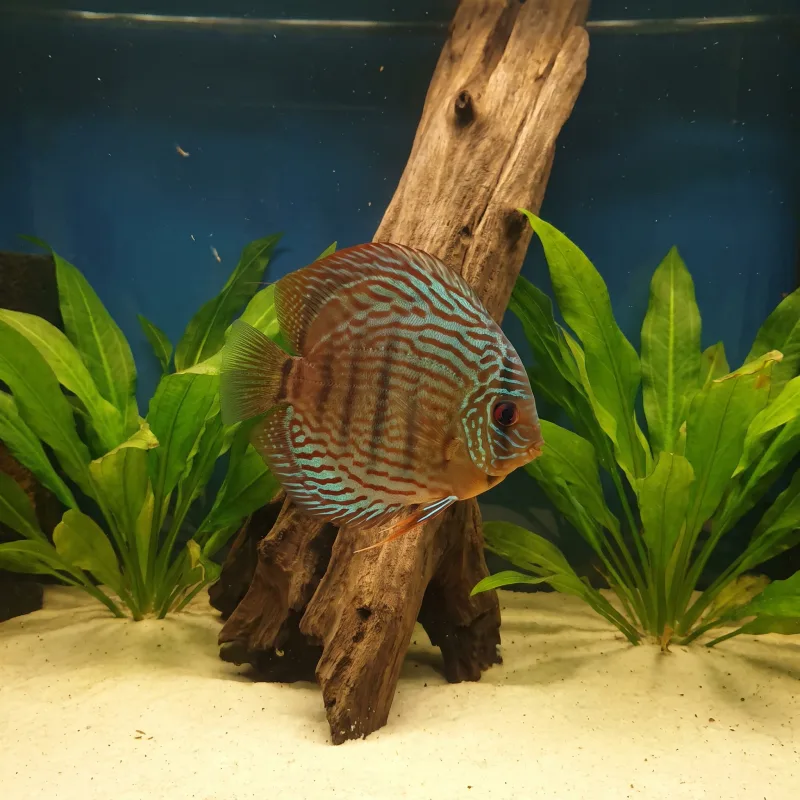
- Discus are large, disc-shaped cichlids from the slow, warm, soft blackwaters of the Amazon, and are among the most demanding aquarium fish.
- Their calm appearance hides exacting requirements that frustrate beginners.
- Reaching 6-8 in15-20 cm across and living over a decade, they need clean warm water, careful diet and the company of their own kind.
- Discus reward dedicated keepers with strong colour but decline quickly under neglect, which places them firmly in advanced territory.
Temperament
- Discus are peaceful, shy and intensely social, and suffer if kept alone or in too small a group; six or more lets them form a stable hierarchy and feel secure.
- Lone or paired discus often become withdrawn and stressed.
Show 2 more
- Keep them only with calm, warm-water tankmates such as cardinal tetras and corydoras that tolerate high temperatures, avoiding boisterous or nippy fish.
- Their timid nature means they are easily outcompeted at feeding time, so choose companions with care.
A good fit for
- Experienced aquarists seeking a challenge
- Keepers able to do frequent large water changes
- Those wanting a striking centrepiece group
- Hobbyists who source captive-bred stock
Common mistakes to avoid
- Keeping too few, causing chronic stress
- Unstable or cool water below 82°F28°C
- Skipping quarantine and importing disease
- Boisterous tankmates outcompeting timid discus
Enclosure
Minimum 75 gallons284 litres, for a group of 6
Cannot be kept alone. The minimum is 6, and the space above is for that group.
- Discus need a tall, deep, fully matured tank of at least 75 US gallons284 L and 4 ft120 cm long for a group of six, kept very warm at 82-86°F28-30°C, soft and acidic (pH 6.0-7.0) with low nitrate.
- They are intolerant of pollution and unstable parameters.
- Use gentle filtration, subdued lighting, driftwood and tall plants to mimic flooded forest.
Show 2 more
- Frequent large water changes, often several times weekly, are needed to keep nitrate minimal.
- Quarantine and stability are critical; even small swings in temperature or chemistry cause stress and disease.
Supplies
Setup
- Tank and stand, 75 US gallons284 litres or more
- Filter
- Heater and thermometer
- Substrate, plants and decor
- Liquid test kit
- Dechlorinator and starter supplies
Ongoing
- Quality cichlid pellet sized to your species
- Tropical flake as a secondary staple
- Frozen bloodworm, brine shrimp and daphnia
- Spirulina or vegetable flake
- Live blackworms for conditioning (optional)
Show 3 more
- Small thawing cup
- Turkey baster for target-feeding shy fish
- Fine net for removing leftovers
Safe substrate: Fine, smooth sand · Smooth, rounded fine gravel (not for loaches or sand-sifting cichlids; sand is better for corydoras) · Bare bottom (quarantine and grow-out only)
Care routine
Daily
- Check temperature and equipment
- Feed
- Head-count and look everyone over
Every few days
- Top up evaporationevery 3 days
Show 8 more
Weekly
- Check territories and pairing
- Partial water change, 25-30% weekly (discus: several changes a week)
- Test the water
- Wipe the front glass only
Every few weeks
- Trim and thin the plantsevery 2 weeks
Monthly
- Check supplies and reagent dates
- Replace or recharge chemical media, if you use any (skip it in a blackwater tank)
- Rinse the filter media
Health review: Quarterly water and territory review, every 3 months
Tools
Care in depth
Diet
Omnivore (frozen foods, discus pellets, beefheart-based mixes, some plant matter)
- Discus are protein-hungry omnivores fed a varied menu of frozen bloodworm, brine shrimp, specialised discus pellets and traditional beefheart-based mixes.
- Young, growing fish need feeding several times daily, which adds to the water-change burden.
- Varied, quality feeding supports colour and growth, but heavy protein loads the water, so feeding and water management go hand in hand.
- Avoid overfeeding and remove uneaten food promptly.
- Feed measured portions to keep the warm, sensitive water clean.
Health
Signs of good health, and the common problems
- Discus are delicate and stress-prone, vulnerable to discus plague, hexamita and hole-in-the-head, gill flukes and bacterial infections, almost always linked to water quality or imported-stock disease.
- Darkening colour, clamped fins and stringy white faeces signal trouble.
- Strict quarantine of new fish, clean warm water and a low-stress group setting prevent most problems.
- Sudden hiding, refusal to eat and rapid breathing call for immediate investigation.
- Sourcing captive-bred fish from reputable breeders substantially reduces disease risk.
Is this urgent?
6 warning signs and how fast to act, 3 of them right away
In a fish tank the patient is usually the water. Test before you treat: dosing a healthy tank for a disease it does not have makes things worse.
Go now
Today
Never add a new fish to a tank that is not fully cycled, and never treat blind. A test kit is cheaper than the fish.
This is general guidance for a healthy adult, not a diagnosis. An exotics vet who knows your animal always overrides it, and the time to find one is before you need one.
Bedding and substrate
3 safe, 4 with a caveat, 2 to avoid
Substrate in an aquarium is a filter as much as a floor. Most of the biology lives in and on it.
Safe
With a caveat
Never
This is our general list for freshwater fish. We have not built one specific to Cichlids yet.
Top resources for more info
Independent creators and organisations we would send a friend to. We have no affiliation with any of them, and nothing here is sponsored. Links checked 2026-10-22.
YouTubers
Sites
Cichlids, side by side
Same axes, same care guides: the honest way to choose between types.