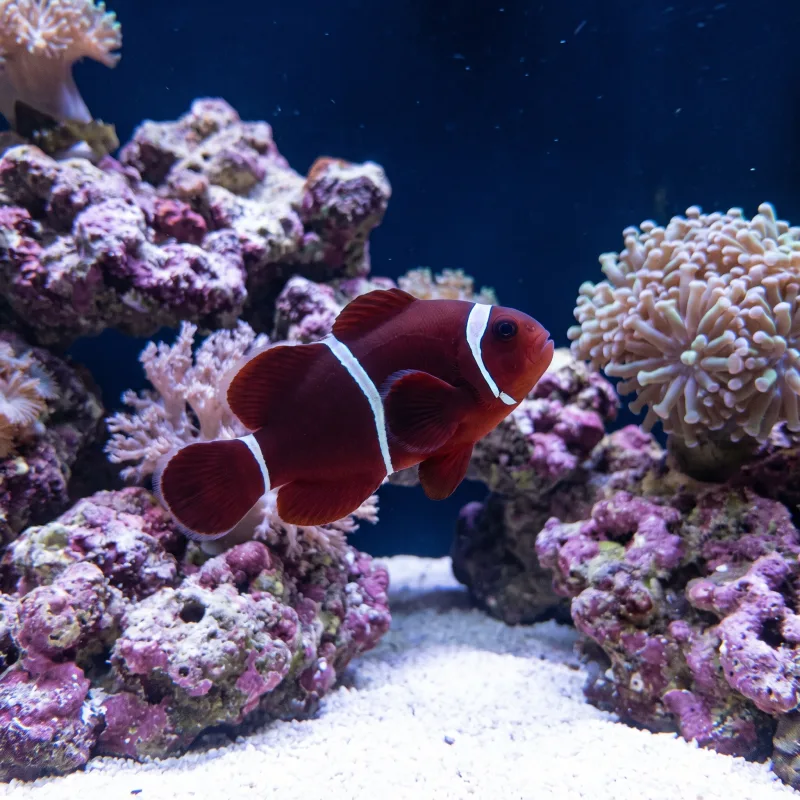
Maroon Clownfish
Amphiprion biaculeatus
Large, boldly coloured and notably aggressive clownfishIntermediate
- Lifespan
- 10-15 years
- Size
- 6-7 in15-17 cm female
- Social needs
- Solitary or one bonded pair only
- Time
- Daily feeding; weekly testing/changes
- Cost
- High
- Diet
- Omnivore (meaty frozen, pellets, algae)
Overview
What is this animal?
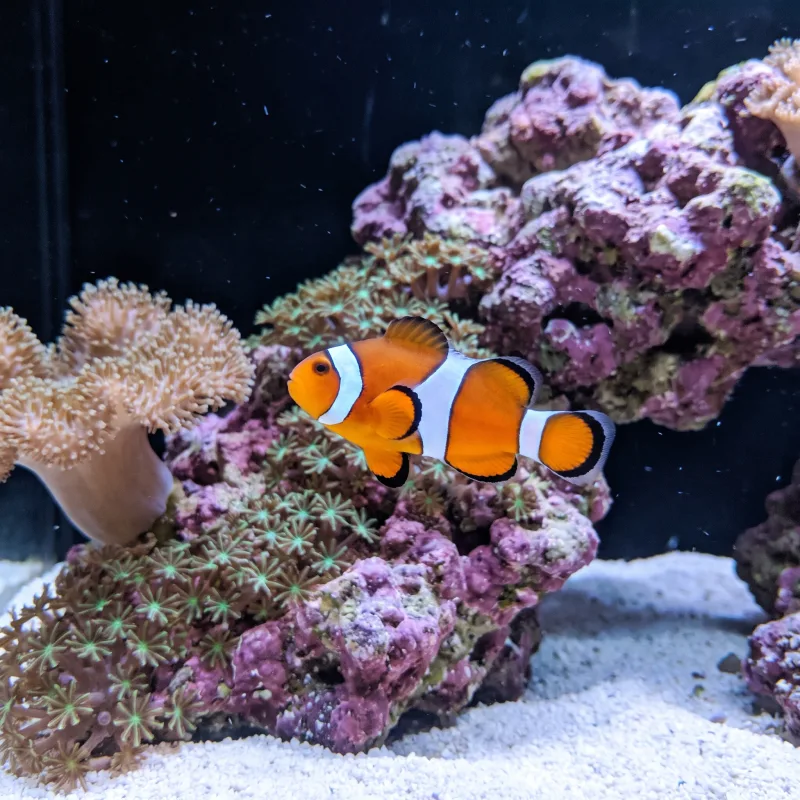
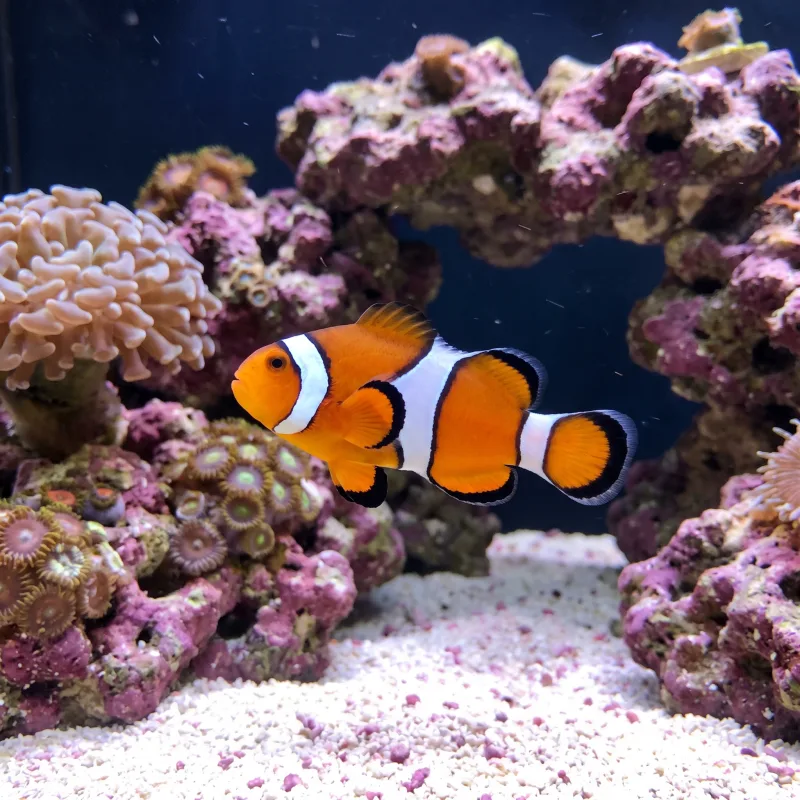
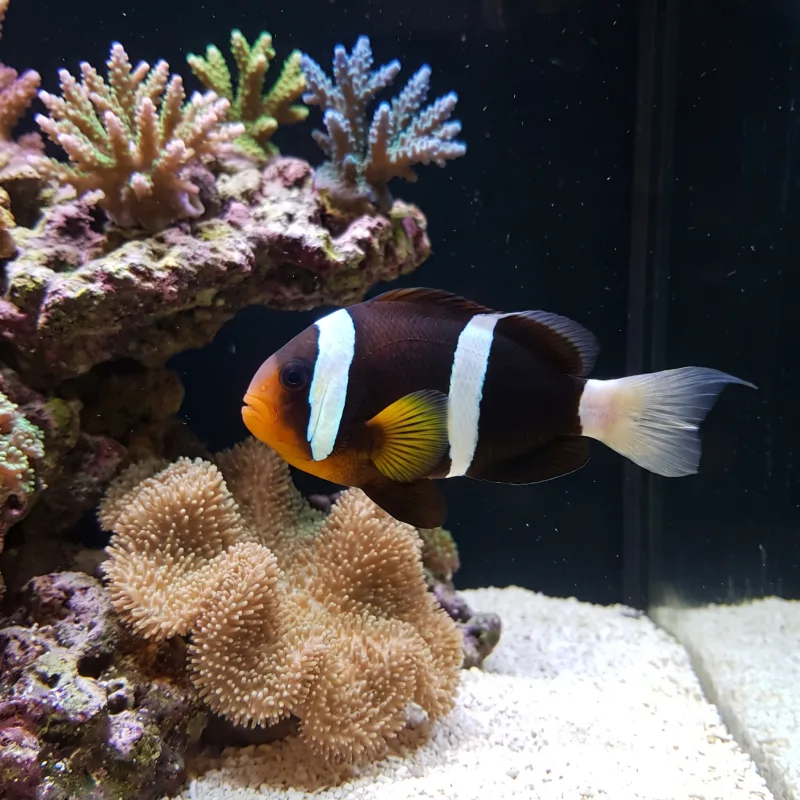
- The Maroon is the largest and most aggressive clownfish, with deep maroon-red colour and white or gold stripes.
- The female grows much larger than the male and dominates the pair.
- It is hardy and long-lived, but its temperament makes it unsuitable for peaceful community tanks.
Show 4 more
- Note that the former genus Premnas was merged into Amphiprion in 2021, so older sources list it as Premnas biaculeatus.
- With this clownfish, size and attitude matter.
- A large female harasses tankmates, nips hands during maintenance, and bullies smaller fish.
- Choose it for its appearance only if you can give it space and select tankmates carefully.
Temperament
- The Maroon is the most belligerent clownfish, with females in particular defending a large territory and bullying tankmates and even the aquarist's hand.
- It is reef-safe with corals but a threat to small, peaceful fish.
Show 2 more
- Keep a single fish or one young bonded pair only; never mix it with other clownfish species.
- Because of its size and aggression it suits a larger, carefully stocked tank where calmer or similarly bold tankmates can hold their own.
A good fit for
- Keepers wanting a large, bold clownfish
- Larger reef or FOWLR tanks
- Aquarists who can manage aggression
- Single-specimen or bonded-pair setups
Common mistakes to avoid
- Underestimating adult size and aggression
- Mixing with other clownfish species
- Keeping two unbonded adults together
- Too-small tank causing constant bullying
Enclosure
Minimum 79 gallons300 litres
Fine alone or with company. Solitary or one bonded pair only
- Provide at least 80 gal300 L, in a tank at least 39 in100 cm from end to end, for the adult size and territorial range, with robust live rock structure.
- Keep salinity 1.024-1.026, temperature 75-80°F24-27°C, pH 8.1-8.4, and nitrate below 20 ppm in a fully cycled system.
- A secure lid prevents jumping.
Show 3 more
- Introduce a true bonded pair while young, or keep a single fish, since unbonded adults fight viciously.
- Add the Maroon last so it cannot claim the whole tank before tankmates settle.
- Strong, stable conditions keep this large clownfish healthy long-term.
Supplies
Setup
- Tank, stand and sump, about 80-90 US gallons300-340 litres
- Return pump and powerheads
- Protein skimmer
- Reef lighting
- Rock and sand
Show 2 more
- Salt mix, refractometer and test kits
- Quarantine tank
Ongoing
- Quality small marine pellet
- Frozen mysis shrimp
- Frozen enriched brine shrimp
- Algae-based marine flake
- Vitamin or HUFA soaking supplement
Show 2 more
- Small thawing cup and strainer
- Turkey baster for target-feeding
Safe substrate: Aragonite sand · Dry or cured live rock
Care routine
Daily
- Check salinity, temperature and flow
- Feed small marine portions
- Head-count and look everyone over
- Top up evaporation with fresh water
Every few days
- Service the skimmer and filter socksevery 3 days
Show 8 more
Weekly
- Clean the glass
- Test the water
- Watch the pair's pecking order
- Water change
Monthly
- Calibrate the refractometer
- Check salt, RO/DI and reagents
Less often
- Deep-clean pumps and powerheadsevery 3 months
- Replace RO/DI filter mediaevery 6 months
Health review: Quarterly review with a pair check, every 3 months
Tools
Care in depth
Diet
Omnivore (meaty frozen, pellets, algae)
- Maroons are hearty omnivores.
- Feed a marine pellet staple plus meaty frozen foods such as mysis and chopped seafood, with some algae-based food for balance.
- Adults have big appetites, so feed once or twice daily without overfeeding the tank.
- They accept prepared foods readily, especially captive-bred specimens.
- A varied diet supports their colour and immune strength.
- Soak frozen foods in vitamins occasionally and do not let uneaten food foul the water.
Health
Signs of good health, and the common problems
- Like all clownfish they are prone to marine ich and Brooklynella when stressed, but their hardiness makes serious illness uncommon in stable water.
- Quarantine new fish and keep salinity and temperature steady to avoid outbreaks.
- Watch for scratching, white spots, or laboured breathing.
- Their aggression can also injure tankmates, so monitor other fish for fin damage rather than the robust Maroon itself.
- Good husbandry keeps them healthy for well over a decade.
Is this urgent?
6 warning signs and how fast to act, 3 of them right away
In a reef, stability matters more than any single target number. A parameter moving fast does more damage than a parameter sitting slightly off.
Go now
Today
Quarantine every new animal, including corals and inverts. It is the single practice that separates a reef that lasts from a reef that restarts.
This is general guidance for a healthy adult, not a diagnosis. An exotics vet who knows your animal always overrides it, and the time to find one is before you need one.
Bedding and substrate
2 safe, 3 with a caveat, 2 to avoid
In a marine system the rock and the sand are life support, and how you start them decides the first six months.
Safe
With a caveat
Never
This is our general list for saltwater fish. We have not built one specific to Clownfish yet.
Top resources for more info
Independent creators and organisations we would send a friend to. We have no affiliation with any of them, and nothing here is sponsored. Links checked 2026-10-22.
YouTubers
Sites
Clownfish, side by side
Same axes, same care guides: the honest way to choose between types.