Mongolian Gerbil
Meriones unguiculatus
A desert rodent driven to dig and burrowBeginner
- Lifespan
- 3-4 years
- Size
- 4-6 in10-15 cm body, plus tail
- Social needs
- Social; keep same-sex pairs or small groups
- Time
- Daily feeding and checks; spot-clean every few days
- Cost
- Low
- Diet
- Quality gerbil seed/grain mix plus occasional protein
Overview
What is this animal?
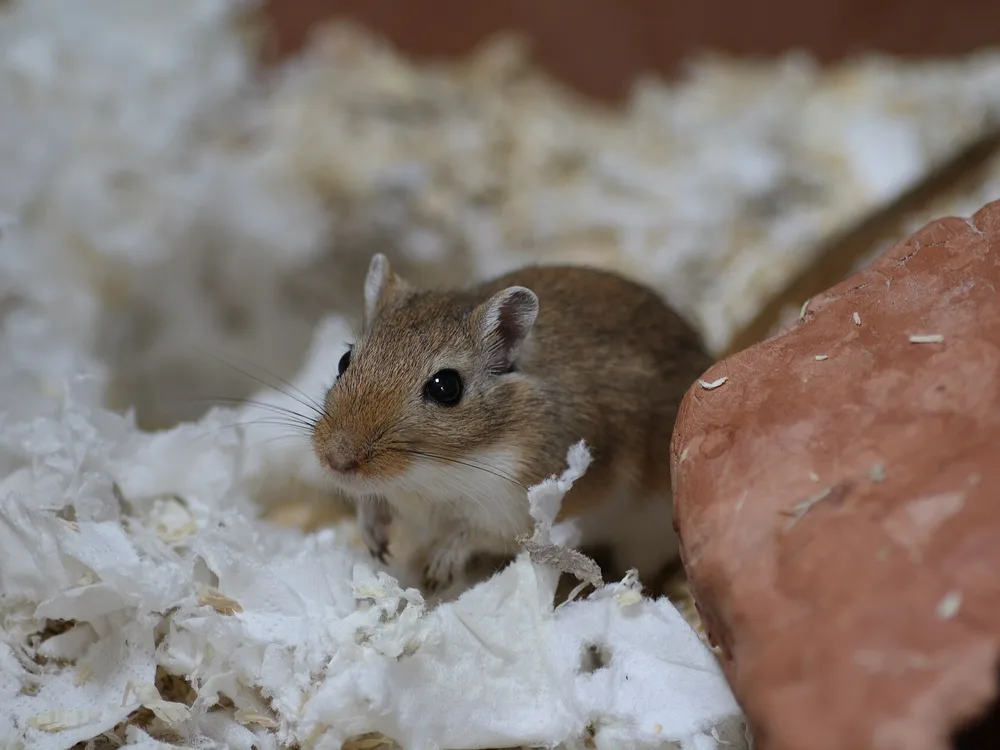
- The Mongolian gerbil is a small desert rodent that is active in short bursts through the day and night.
- Hardy, clean and fairly low-odour, it is a good beginner pet for those who enjoy watching natural behaviour.
- Gerbils are strongly driven to dig and tunnel, so their care centres on deep substrate for burrowing.
- They are social and should not be kept entirely alone.
Temperament
- Gerbils are curious and busy and rarely aggressive toward people.
- They tame readily, often coming to the hand to investigate, and are engaging to watch as they dig, store food and groom each other.
Show 2 more
- They are social and should live in compatible same-sex pairs or small groups, ideally littermates introduced young.
- Falling out (declanning) can occur, so monitor group harmony and do not house unfamiliar adults together carelessly.
A good fit for
- Beginners wanting an active rodent
- Keepers interested in digging behaviour
- Those wanting a low-odour pet
- Owners able to house a pair
Common mistakes to avoid
- Shallow substrate preventing natural burrowing
- Plastic cages they chew through
- Handling by the tail, causing injury
- Keeping a single, lonely gerbil
Enclosure
Minimum 5.5 sq ft0.5 m² of floor, for the pair · 39 x 20 x 31 in100 x 50 x 80 cm
Cannot be kept alone. The minimum is 2, and the space above is for that group.
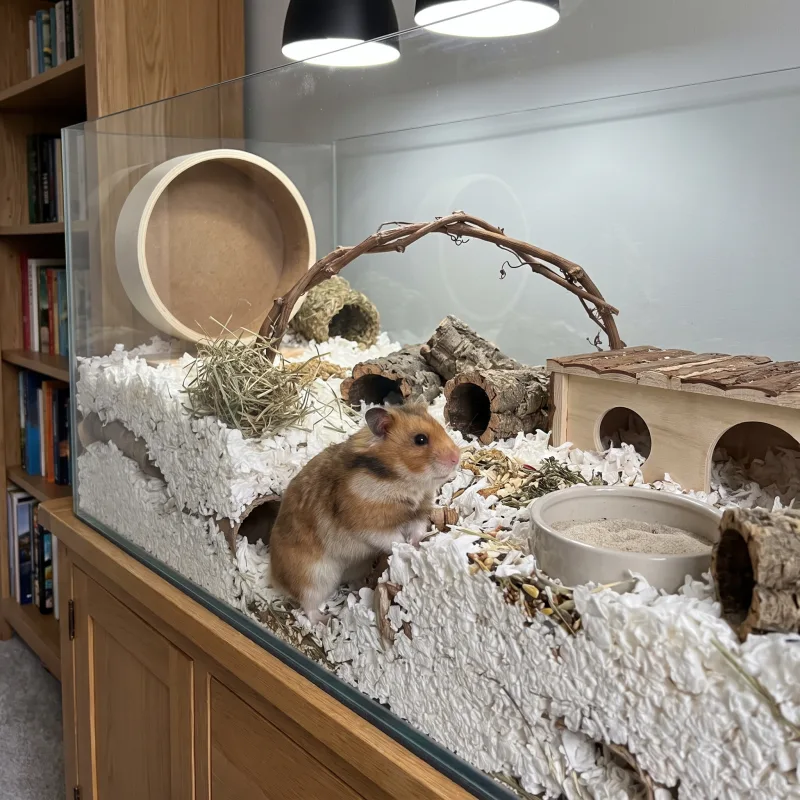
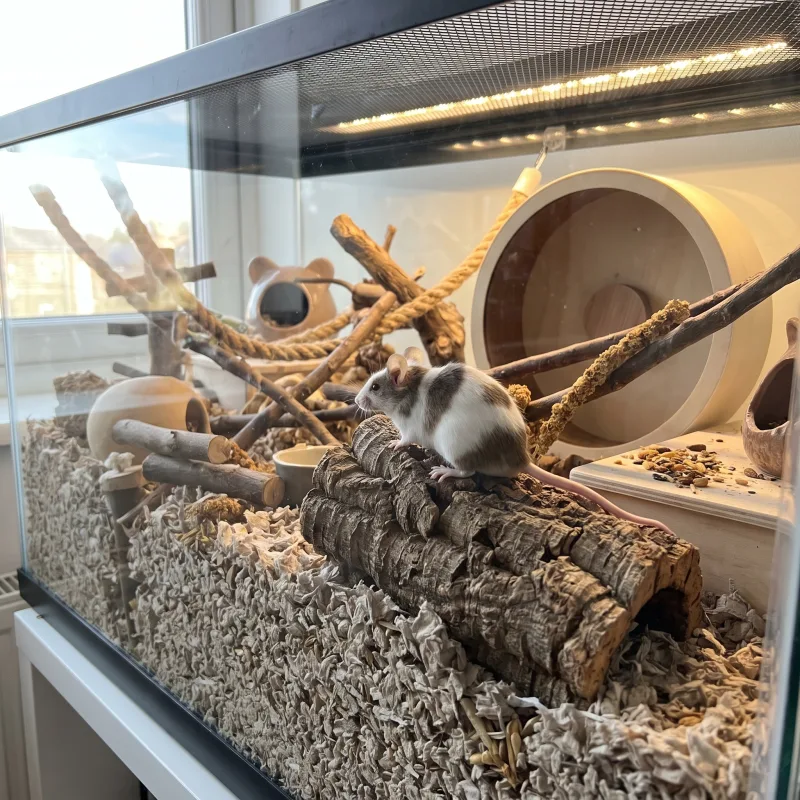
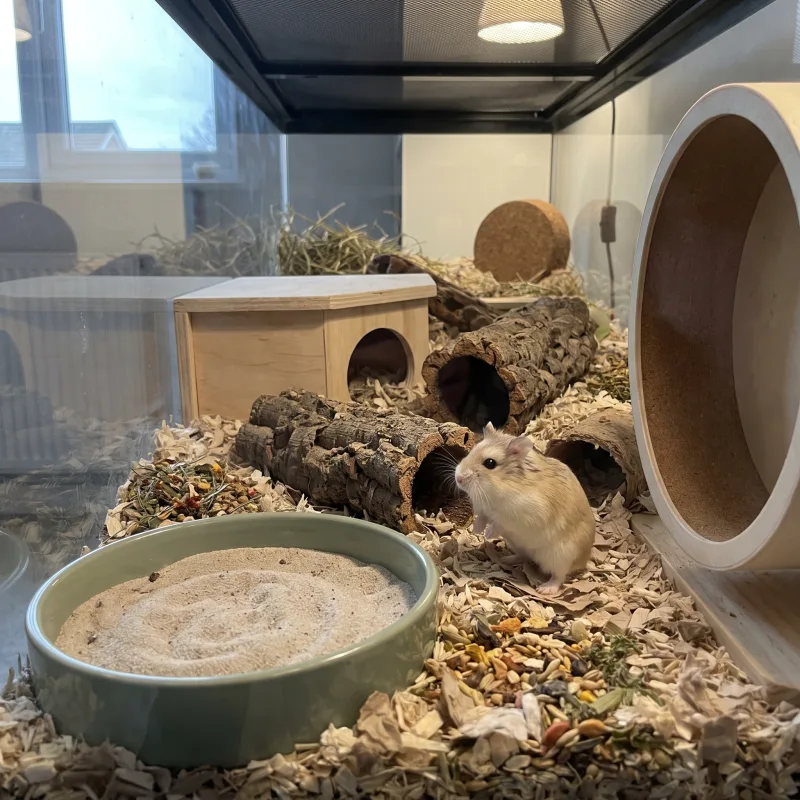
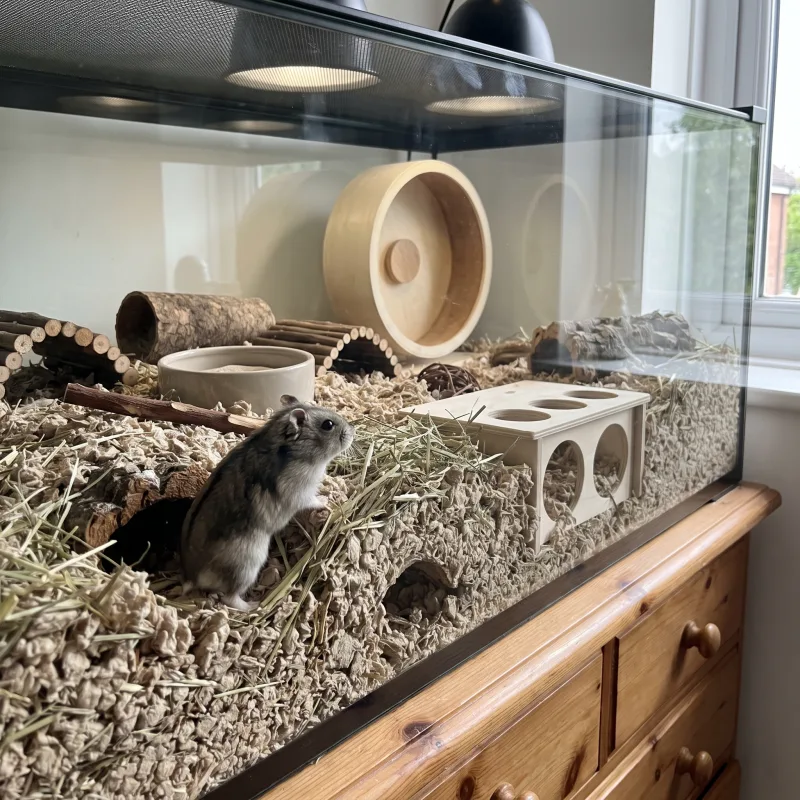
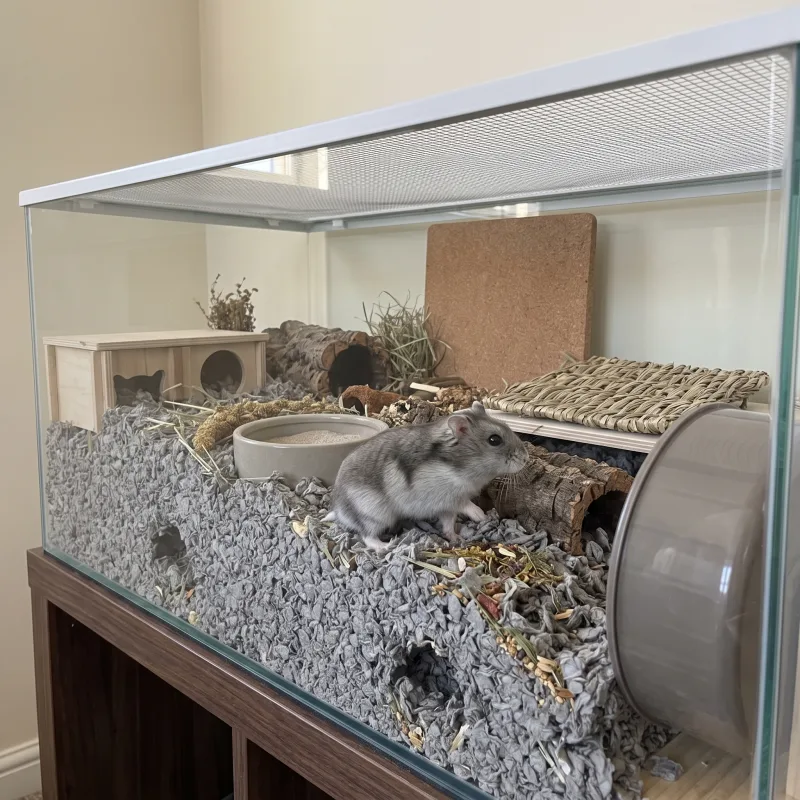
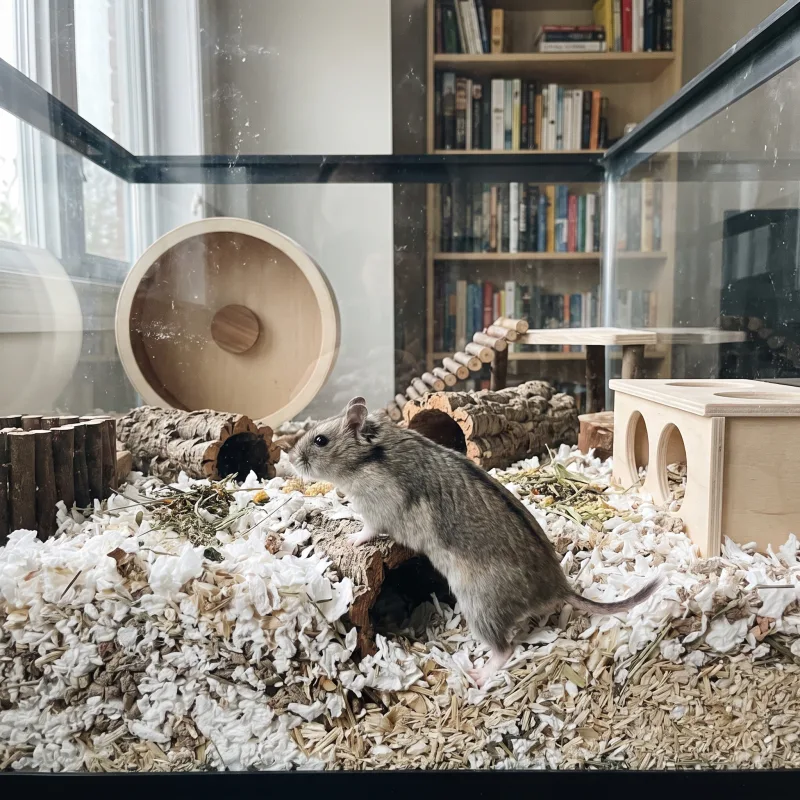
- A gnaw-proof tank of at least 39 x 20 in100 x 50 cm of floor with solid sides about 20 in50 cm high (around 66 gallons250 litres; Wood Green's minimum for two) suits a pair.
- Top it with a mesh topper at least 12 in30 cm high, as TVT, the German veterinary association for animal welfare, advises: the tank holds 16 in40 cm or more of substrate for real burrow systems, the depth TVT, Swiss Animal Protection and the Swiss veterinary office ask for, and the topper leaves room above it for the gerbils to stand, run and use a wheel.
- Avoid plastic-only cages, which they quickly chew through.
Show 2 more
- Mix paper-based bedding with hay for stable tunnels, and add a sand bath, wooden chews and a solid-surface wheel of 8 in20 cm or more in diameter.
- Keep them at room temperature, out of direct sun and away from damp.
Supplies
Setup
- Enclosure of an adequate size
- Water bottles, bowls, hides and enrichment
- Carrier and travel box
- Digital kitchen scale
Ongoing
- Quality gerbil seed-and-grain mix
- Dried or live mealworms and small roaches
- Loose meadow hay for burrowing and fibre
- Water bottle with a bottle brush
- Small ceramic dish for fresh food
Show 2 more
- Untreated wooden chews
- Kitchen scale for weekly weigh-ins
Safe substrate: Deep paper and aspen mix, 16 in40 cm or more · Plain chinchilla bathing sand · Hay woven through the substrate
Care routine
Daily
- Company and time out
- Feed and clear yesterday's leftovers
- Fresh water
- Watch them while they are awake
Every few days
- Spot-clean the enclosureevery 3 days
Show 9 more
Weekly
- Change the sand bath
- Fresh cardboard and wood
- Hands-on health check
- Rotate enrichment
- Weigh-in
Every few weeks
- Top up deep substrateevery 2 weeks
- Full cleanevery 3 weeks
Monthly
- Check nails and teeth
- Check supplies and dates
Vet: Annual exam, every 12 months (every 6 months from 2 years old)
Tools
Care in depth
Diet
Quality gerbil seed/grain mix plus occasional protein
- Feed a quality gerbil mix of seeds and grains, scattered to encourage natural foraging.
- Supplement occasionally with a little fresh vegetable, a mealworm or other small protein source, and offer hay for fibre and enrichment.
- Fresh water must always be available from a bottle.
- Limit fatty sunflower seeds, avoid sugary foods and citrus, and keep fruit to a rare, seedless sliver.
- As desert animals gerbils drink little, but they still need constant access to clean water.
Health
Signs of good health, and the common problems
- Gerbils are generally robust but can suffer tail-skin injuries if handled by the tail tip, so always scoop them from the body.
- Overgrown teeth, scent-gland tumours and stress-related seizures can occur.
- Watch for a sore nose: redness around the nostrils that can progress to hair loss and weeping, crusted skin.
- It is driven mainly by porphyrin-rich secretions from the Harderian gland, which rise with stress such as overcrowding and with humidity above about 50 percent; a sand bath helps clear them from the fur, and rubbing, bar-chewing and dirty bedding make it worse.
- Staphylococcal infection often follows, so it needs a vet, not just a bedding change.
- Monitor weight and activity, and seek an exotics vet promptly for lethargy, lumps or breathing changes.
Is this urgent?
11 warning signs and how fast to act, 7 of them right away
Small mammals are prey animals. They mask pain and illness by instinct, so by the time something is obvious it is usually already advanced.
Go now
Today
Soon
Have the number of an exotics-competent practice saved before you need it. Most general small-animal clinics do not treat rabbits or rodents out of hours, and finding one at 11pm is not realistic.
This is general guidance for a healthy adult, not a diagnosis. An exotics vet who knows your animal always overrides it, and the time to find one is before you need one.
Bedding and substrate
3 safe, 1 with a caveat, 3 to avoid
Gerbils tunnel. Substrate depth is not enrichment for them, it is the enclosure.
Safe
With a caveat
Never
Top resources for more info
Independent creators and organisations we would send a friend to. We have no affiliation with any of them, and nothing here is sponsored. Links checked 2026-10-22.
Sites
Other Small Pets worth knowing
Same axes, same care guides: the honest way to compare them.