Mystery Snail
Pomacea diffusa
Candy-shelled grazer with a built-in snorkelBeginner
- Lifespan
- 1-2 years; up to ~3 kept cool
- Size
- 1.5-2 in4-5 cm shell (golf-ball size)
- Social needs
- Happy alone or in groups
- Time
- Low
- Cost
- Low
- Diet
- Omnivore grazer; needs feeding, not just algae
Overview
What is this animal?
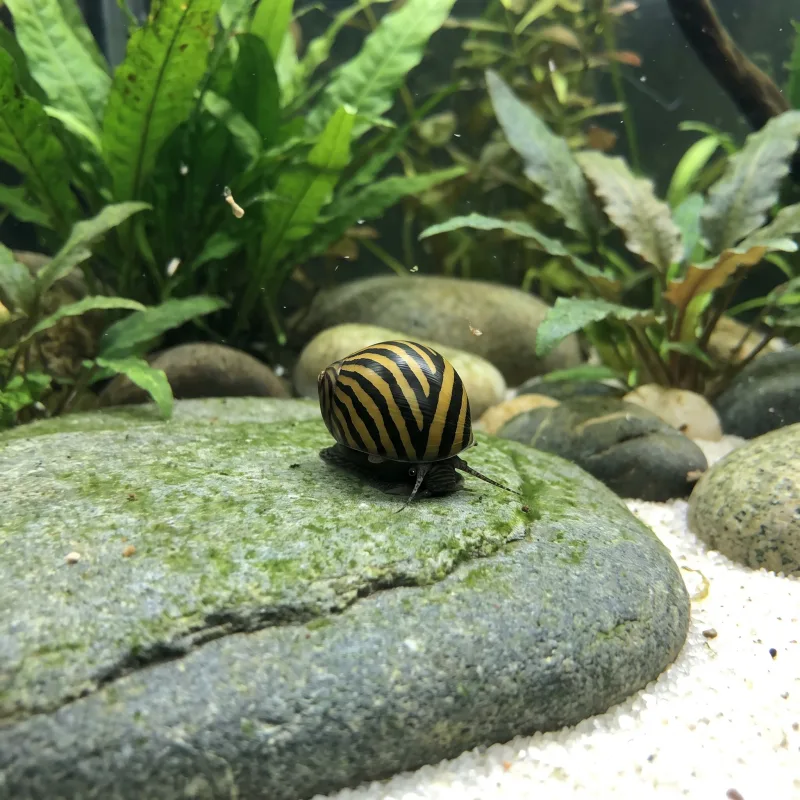
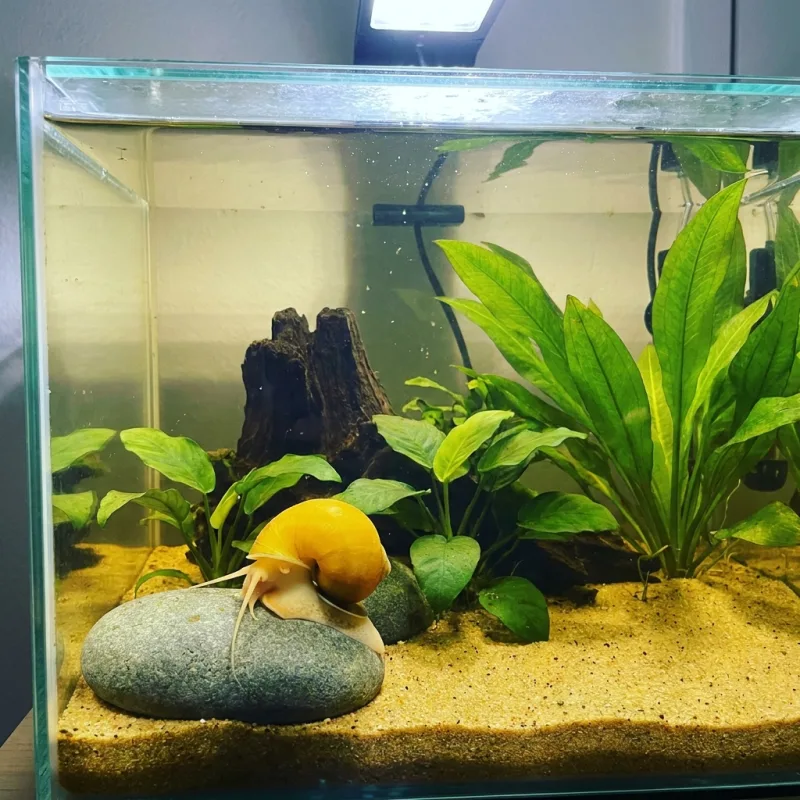
- The mystery snail is a golf-ball-sized apple snail bred in gold, blue, ivory, purple, and magenta, and it is far more animal than most people expect from a snail.
- It cruises the glass on a broad foot, sweeps the water with long swaying tentacles, and extends a snorkel-like siphon to the surface to breathe air.
- Most animals sold under the old name Pomacea bridgesii are now classed as Pomacea diffusa, but the care is identical.
Show 6 more
- It is a genuine beginner invertebrate, with two caveats that catch new keepers.
- It must actually be fed, because unlike a nerite it cannot live on tank algae alone.
- It also needs hard, calcium-rich, copper-free water, or its shell slowly dissolves.
- Unlike pest bladder and ramshorn snails, mystery snails have separate sexes and lay their eggs in visible clutches above the waterline, so numbers only grow if you leave clutches to hatch.
- A female from a mixed shop tank can still lay fertile clutches for months from stored sperm.
- Unlike its invasive relative the channeled apple snail, a fed mystery snail leaves healthy plants alone.
Temperament
- Completely peaceful and unexpectedly engaging, a mystery snail patrols every surface of the tank, snorkels at the waterline, and drops off the glass to parachute down to food.
- Many keepers find theirs learns feeding time and heads for the usual spot.
Show 5 more
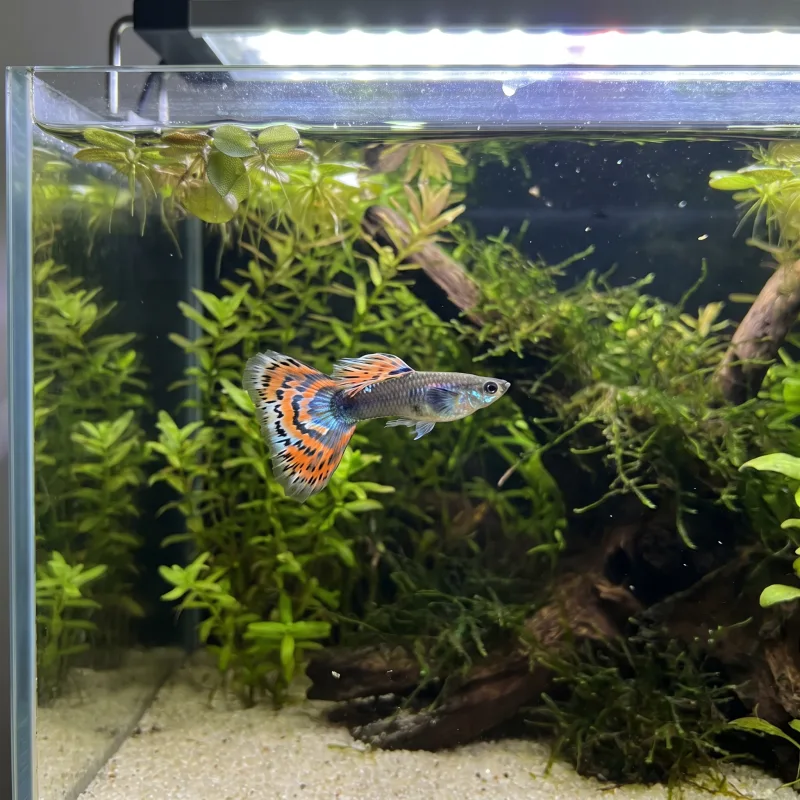
- It suits calm community fish such as tetras, rasboras, corydoras, and livebearers.
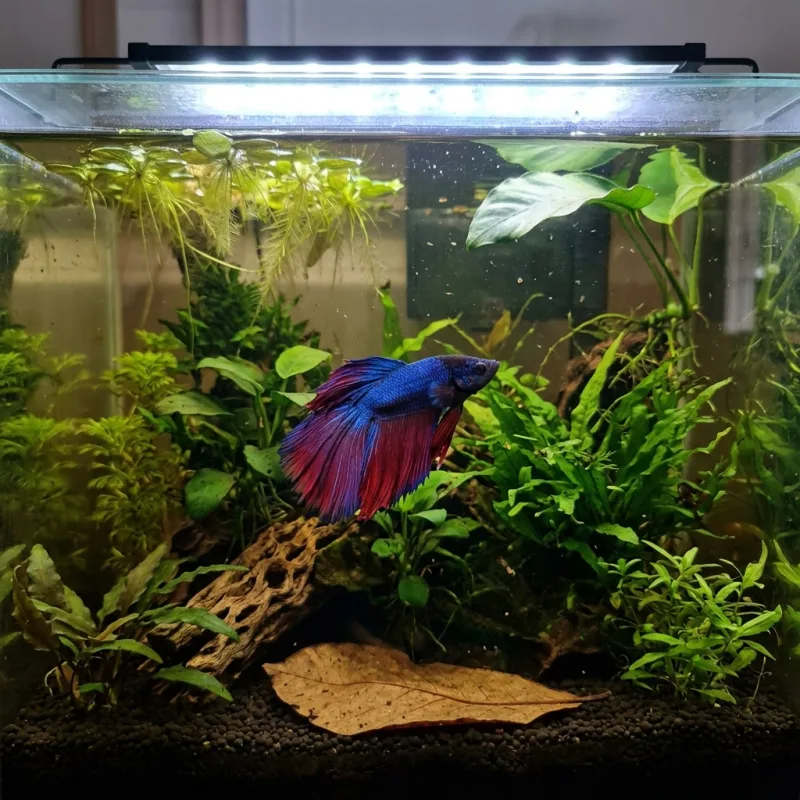
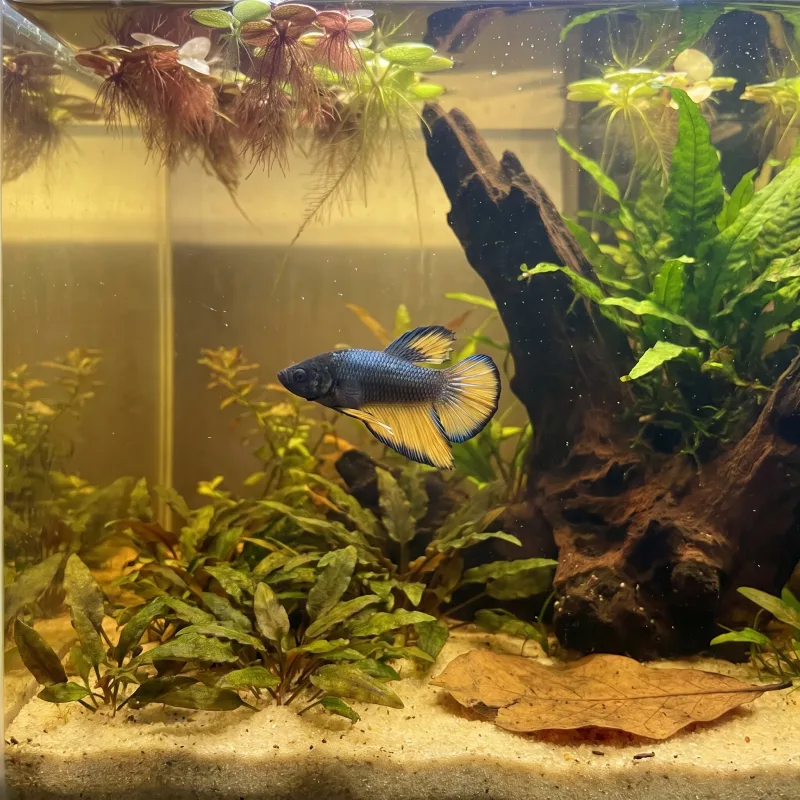
- Avoid tankmates that pick at its tentacles or eat snails outright, including tiger barbs, some bettas, loaches, puffers, assassin snails, and large cichlids.
- A constantly harassed snail stays sealed in its shell and quietly starves.
- It is equally content alone or in a group, provided the tank has 10 gallons38 litres for the first snail and 5 gallons19 litres more for each extra.
- Keep in mind that any mixed-sex group will produce egg clutches, and a lone female can lay fertile eggs for months from stored sperm.
A good fit for
- Beginners wanting a first aquarium invertebrate
- Peaceful community tanks needing a scavenger
- Planted tanks: fed snails leave plants alone
- Keepers who want snails without a pest explosion
- Anyone who wants a watchable, interactive snail
Common mistakes to avoid
- Copper in medications and fertilisers: lethal
- Soft, acidic, low-KH water pits the shell permanently
- Starves if expected to live on algae alone
- Escapes without a tight lid over an air gap
- Pink egg clutches above the waterline: act within days
- Short lifespan, and warm tanks shorten it further
Enclosure
Minimum 10 gallons38 litres
Fine alone or with company. Happy alone or in groups
- Allow at least 10 gallons38 litres of cycled, mature water for one snail and about 5 gallons19 litres more for each extra snail, so a pair belongs in 15 gallons57 litres or more.
- These snails carry a surprisingly heavy bioload for their size, so err larger and run real filtration rather than crowding them.
- A tight-fitting lid is not optional, because they climb above the waterline and a snail that escapes overnight dries out and dies.
Show 6 more
- Leave a 0.8-2 in2-5 cm air gap under the lid, since they surface to breathe and females lay eggs in that gap.
- Keep the water at 68-78°F20-26°C, with the cooler end of that range noticeably lengthening lifespan by slowing the metabolism.
- Aim for pH 7.0-8.0 and moderately hard water of GH 8 or above (roughly 150ppm and up), and keep some carbonate hardness (KH) to hold the pH steady, because soft acidic water permanently etches and pits the shell.
- They are as sensitive to ammonia and nitrite as any fish, so never add one to an uncycled tank.
- Any copper in the water is lethal, so check medications and some plant fertilisers before dosing.
- Expect them to occasionally let go of the glass and free-fall to the substrate, which looks alarming and is completely normal.
Supplies
Setup
- Tank and stand
- Filter
- Heater and thermometer
- Substrate, plants and decor
- Liquid test kit
- Dechlorinator and starter supplies
Ongoing
- Sinking algae wafers
- Invertebrate or snail-specific pellets
- Cuttlebone or a calcium block for aquarium use
- Courgette, spinach and green beans for blanching
- Veg clip or stainless skewer
Show 2 more
- Mineral or GH supplement for hard water
- Fine net or tweezers for removing leftovers
Safe substrate: Fine, smooth sand · Smooth, rounded fine gravel (not for loaches or sand-sifting cichlids; sand is better for corydoras) · Bare bottom (quarantine and grow-out only)
Care routine
Daily
- Check temperature and equipment
- Head-count and look everyone over
Every few days
- Feed, or check there is algae left to grazeevery 2 days
- Top up evaporationevery 3 days
Show 11 more
Weekly
- Check for egg clutches
- Check the lid and air gap
- Check the shell
- Keep a calcium source in the tank
- Test the water
- Water change and gravel vacuum
- Wipe the front glass only
Every few weeks
- Trim and thin the plantsevery 2 weeks
Monthly
- Check supplies and reagent dates
- Replace or recharge chemical media, if you use any (skip it in a blackwater tank)
- Rinse the filter media
Health review: Quarterly shell and calcium review, every 3 months
Tools
Care in depth
Diet
Omnivore grazer; needs feeding, not just algae
- This is a scavenging omnivore, not a self-sufficient algae eater, and slow starvation of snails expected to clean the tank is the most common way keepers get it wrong.
- Feed sinking algae wafers, invertebrate pellets, and blanched vegetables such as zucchini, spinach, and green beans several times a week.
- It will also tidy up biofilm, soft film algae, and any fish food that reaches the bottom.
- Calcium is a dietary requirement, because the shell is built from it.
- Offer cuttlebone, calcium-enriched snail foods, or homemade calcium-rich snail jello alongside hard water.
- Smooth, solid new growth at the shell lip shows the diet and water are right.
- Remove uneaten vegetable leftovers within 24 hours before they foul the water.
- A well-fed mystery snail ignores live plants, while a hungry one may start rasping the softest leaves.
Health
Signs of good health, and the common problems
- The shell is the health report.
- Pits, erosion, and thin white patches mean the water is too soft or the diet lacks calcium, and existing damage never repairs, it can only be stopped.
- A healthy snail also pulls fully into its shell and seals the operculum, its trapdoor, snugly shut.
- A snail hanging limply out of its shell and unresponsive to touch is in serious trouble.
- Copper is the great snail killer, so read the label of every medication before treating a tank that houses one.
- Floating at the surface is usually just trapped air in the lung and resolves on its own.
- Before discarding a motionless snail, smell it, because a dead snail smells unmistakably foul within hours while a dormant one, which can stay closed for a day or two, smells of nothing.
- Be honest about the timescale, since 1-2 years is a full life for this species, warm tropical tanks push it toward the short end, and only a cool tank tends to reach three.
- Females lay pink egg clutches above the waterline; remove and freeze unwanted clutches well before they hatch, which usually takes two to four weeks depending on temperature, because an average clutch holds 200-600 eggs.
- Never release snails or eggs into local waterways, because apple snails are serious invasives and release is illegal.
Is this urgent?
6 warning signs and how fast to act, 3 of them right away
In a snail tank the patient is usually the water, and the shell is the long-term health record. Test before you treat: many fish medications harm snails.
Go now
Today
Soon
Never add new animals to a tank that is not fully cycled, and never treat blind. Read every medication, algaecide and plant treatment for copper before it goes in.
This is general guidance for a healthy adult, not a diagnosis. An exotics vet who knows your animal always overrides it, and the time to find one is before you need one.
Bedding and substrate
3 safe, 4 with a caveat, 2 to avoid
Substrate in an aquarium is a filter as much as a floor. Most of the biology lives in and on it.
Safe
With a caveat
Never
This is our general list for freshwater fish. We have not built one specific to Snails yet.
Top resources for more info
Independent creators and organisations we would send a friend to. We have no affiliation with any of them, and nothing here is sponsored. Links checked 2026-10-22.
Sites
Snails, side by side
Same axes, same care guides: the honest way to choose between types.