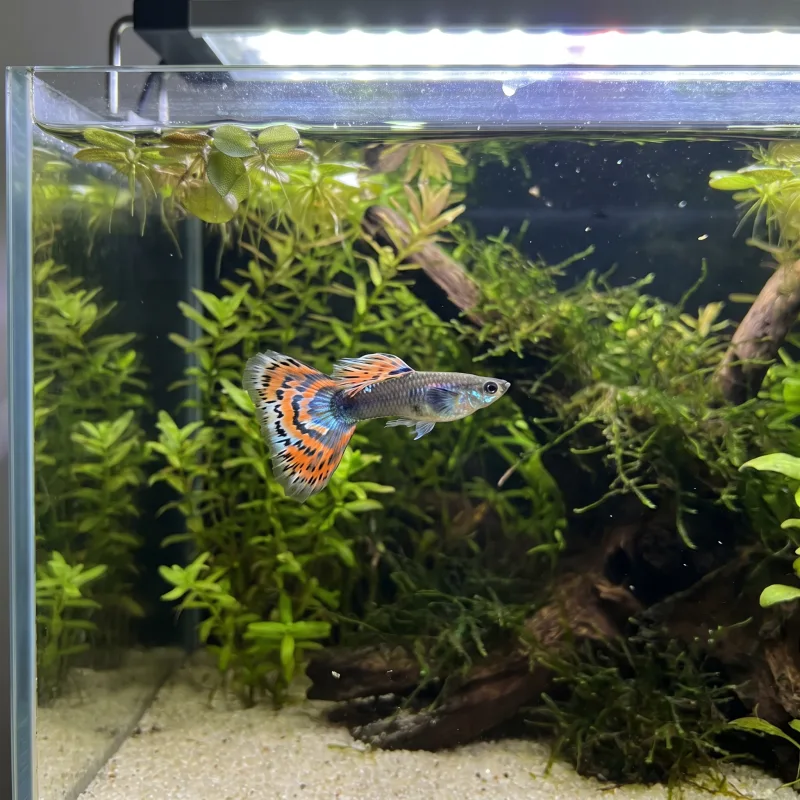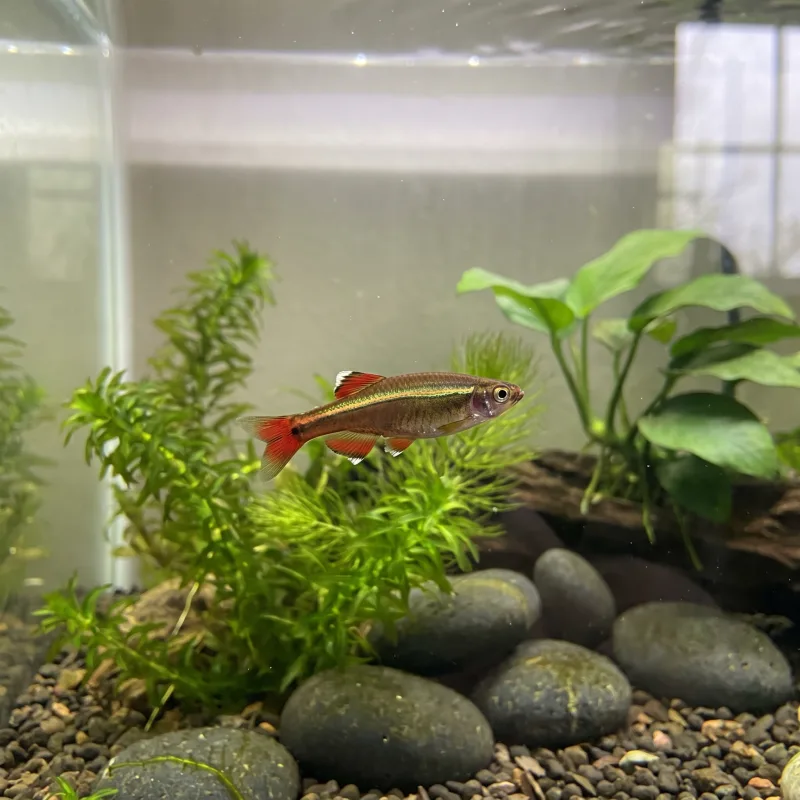
White Cloud Mountain Minnow
Tanichthys albonubes
Cold-tolerant minnow for unheated tanksBeginner
- Lifespan
- 3-5 years
- Size
- 1.2-1.5 in3-4 cm
- Social needs
- Shoaler; keep 10+ together
- Time
- Low; daily feeding, weekly water change
- Cost
- Low
- Diet
- Omnivore; flakes, micro pellets, frozen foods
Overview
What is this animal?
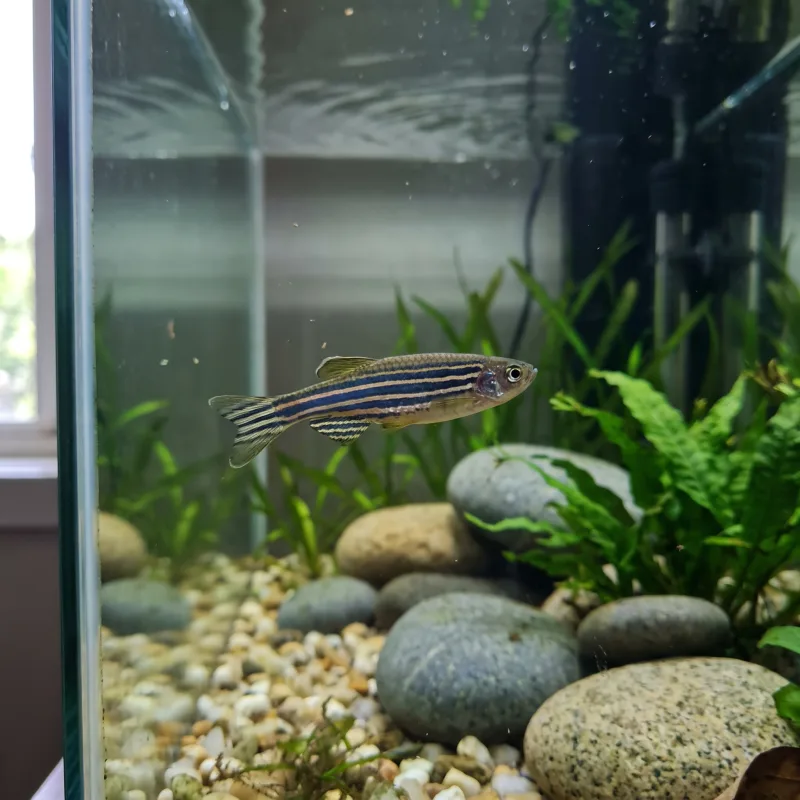
- The white cloud mountain minnow is a small, hardy fish from cool mountain streams near Guangzhou in southern China, marked with a red-and-iridescent stripe.
- It is now rare in its native range but breeds readily and thrives in aquariums.
- It is one of the few common community fish that needs no heater, tolerating cool room temperatures with ease.
- Forgiving and beginner-friendly, it is a good first shoaling fish, though it dislikes prolonged tropical warmth.
Temperament
- Peaceful, active and confident, white clouds shoal loosely and look best in good numbers, where males flare their fins at one another harmlessly.
- They are too gentle to bother any reasonable tankmate.
Show 2 more
- They suit calm, cool-water communities and pair well with other temperate species.
- Avoid housing them with warmth-loving tropicals whose needs conflict, or with large fish that may eat them.
A good fit for
- Beginners and first aquariums
- Unheated, cool-room or temperate setups
- Outdoor ponds in mild climates
- Peaceful cool-water community tanks
Common mistakes to avoid
- Keeping them in warm tropical tanks long term
- Keeping too few, dulling colour and behaviour
- Open tanks they can jump from
- Pairing with warmth-loving or large fish
Enclosure
Minimum 15 gallons57 litres, for a group of 10
Cannot be kept alone. The minimum is 10, and the space above is for that group.
- A shoal of ten or more needs at least 15 US gallons57 litres on a base of about 24 x 12 in60 x 30 cm, filtered, with no heater required; many keeper guides accept a 10-gallon38-litre tank, but Seriously Fish gives the 24 x 12 in60 x 30 cm base as the minimum.
- They thrive at 61-72°F16-22°C and suffer at sustained tropical temperatures, making them well suited to unheated rooms and some outdoor ponds in mild climates.
- They are active swimmers that appreciate length, gentle current and planted edges.
- Tolerant of a wide range of water chemistry, they need only a stable, well-cycled tank and a secure lid, as they can jump.
Supplies
Setup
- Tank and stand
- Filter
- Thermometer, plus a heater only if the room runs below the species' range
- Substrate, plants and decor
- Liquid test kit
- Dechlorinator and starter supplies
Ongoing
- Quality tropical flake or micro-pellet
- Frozen daphnia
- Frozen brine shrimp
- Frozen or freeze-dried bloodworm (chopped fine; whole bloodworm is too large for celestial pearl danios)
- Frozen cyclops or baby brine shrimp (for celestial pearl danios)
Show 3 more
- Spirulina or vegetable flake
- Small feeding spoon for measured pinches
- Fine net for removing leftovers
Safe substrate: Fine, smooth sand · Smooth, rounded fine gravel (not for loaches or sand-sifting cichlids; sand is better for corydoras) · Bare bottom (quarantine and grow-out only)
Care routine
Daily
- Check temperature and equipment
- Feed
- Head-count and look everyone over
Every few days
- Top up evaporationevery 3 days
Show 8 more
Weekly
- Check the lid
- Test the water
- Water change and gravel vacuum
- Wipe the front glass only
Every few weeks
- Trim and thin the plantsevery 2 weeks
Monthly
- Check supplies and reagent dates
- Replace or recharge chemical media, if you use any (skip it in a blackwater tank)
- Rinse the filter media
Health review: Quarterly temperature and stocking review, every 3 months
Tools
Care in depth
Diet
Omnivore; flakes, micro pellets, frozen foods
- White clouds are easy-going omnivores that feed at the surface and in midwater.
- A quality flake or micro-pellet serves as a reliable staple, rotated with frozen or live daphnia, brine shrimp and bloodworm to support their colours.
- Feed small amounts once or twice daily, only what is eaten quickly.
- They forage actively and rarely refuse food, so measured portions and the occasional fasting day keep the water clean and the fish in good condition.
Health
Signs of good health, and the common problems
- Among the hardiest aquarium fish, white clouds suffer few ailments when kept cool and clean.
- Most problems, such as ich or fin rot, follow overheating, poor water quality or stress rather than inherent fragility.
- Keeping them at tropical temperatures long term shortens their lives and dulls their colour, so avoid heating the tank.
- Quarantine new stock, maintain weekly partial water changes, and fit a lid to prevent jumps.
Is this urgent?
6 warning signs and how fast to act, 3 of them right away
In a fish tank the patient is usually the water. Test before you treat: dosing a healthy tank for a disease it does not have makes things worse.
Go now
Today
Soon
Never add a new fish to a tank that is not fully cycled, and never treat blind. A test kit is cheaper than the fish.
This is general guidance for a healthy adult, not a diagnosis. An exotics vet who knows your animal always overrides it, and the time to find one is before you need one.
Bedding and substrate
3 safe, 4 with a caveat, 2 to avoid
Substrate in an aquarium is a filter as much as a floor. Most of the biology lives in and on it.
Safe
With a caveat
Never
This is our general list for freshwater fish. We have not built one specific to Danios & Minnows yet.
Top resources for more info
Independent creators and organisations we would send a friend to. We have no affiliation with any of them, and nothing here is sponsored. Links checked 2026-10-22.
YouTubers
Sites
Danios & Minnows, side by side
Same axes, same care guides: the honest way to choose between types.