Bearded Dragon
Pogona vitticeps
Diurnal lizard with high heat and UVB needsIntermediate
- Lifespan
- 10-15 years
- Size
- 16-24 in40-60 cm
- Social needs
- Solitary; house singly
- Time
- Medium; daily feed, UVB, cleaning
- Cost
- High
- Diet
- Omnivore (insects + greens)
Overview
What is this animal?
- The bearded dragon, from the arid woodlands of central Australia, is a diurnal lizard that often recognises its keeper and basks openly.
- Its boldness and expressive behaviour make it a popular pet, but its high heat and UVB demands mean it is neither cheap nor low-effort to keep well.
- A full-grown beardie is a substantial animal needing a large, powerful setup.
Show 2 more
- Many are sold to unprepared owners in enclosures that are too small with inadequate lighting, which leads to chronic illness.
- With correct husbandry they are interactive and relatively forgiving.
Temperament
- Bearded dragons are typically calm, confident and among the more handleable reptiles, often tolerating regular interaction.
- They communicate with arm-waving and head-bobbing and adapt well to routine, which makes them engaging pets.
Show 3 more
- They must be housed alone.
- They are territorial and not social; cohabiting causes stress, dominance behaviour, food competition, injury and even cannibalism among juveniles.
- Do not keep two together regardless of sex or size, even if they appear to tolerate each other at first.
A good fit for
- Keepers wanting an interactive, handleable lizard
- Families with reptile experience
- Those who can fund a large, high-powered setup
- Owners committed to a daily routine
Common mistakes to avoid
- Undersized enclosures and weak UVB
- Housing two or more together
- Calcium/UVB neglect causing bone disease
- Over-feeding fatty insects to adults
Enclosure
Minimum 17 sq ft1.62 m² of floor · 6 x 3 x 3 ft1.8 x 0.9 x 0.9 m
Must be housed alone. Solitary; house singly
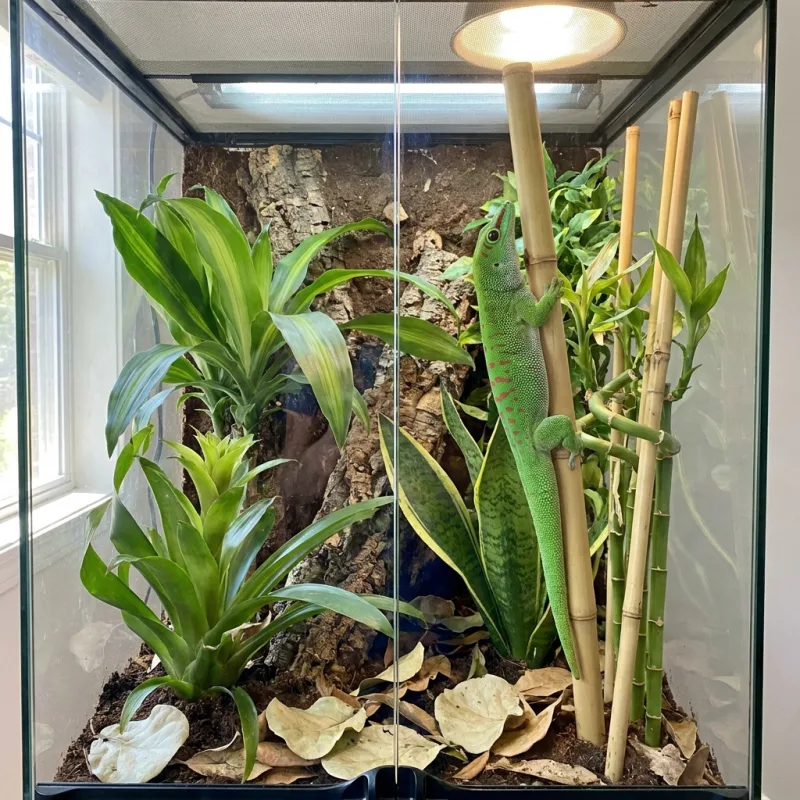
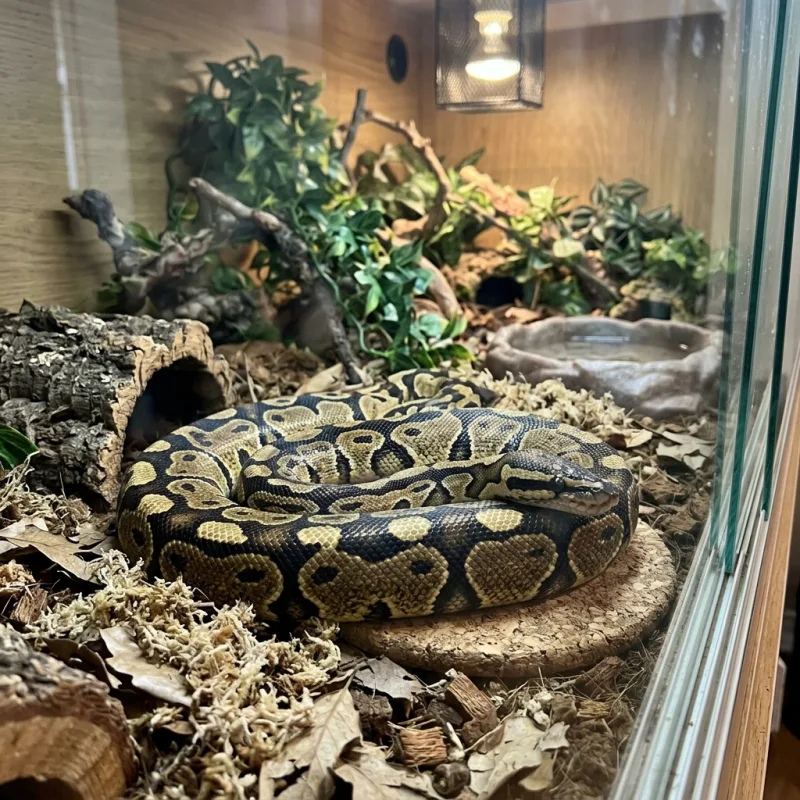
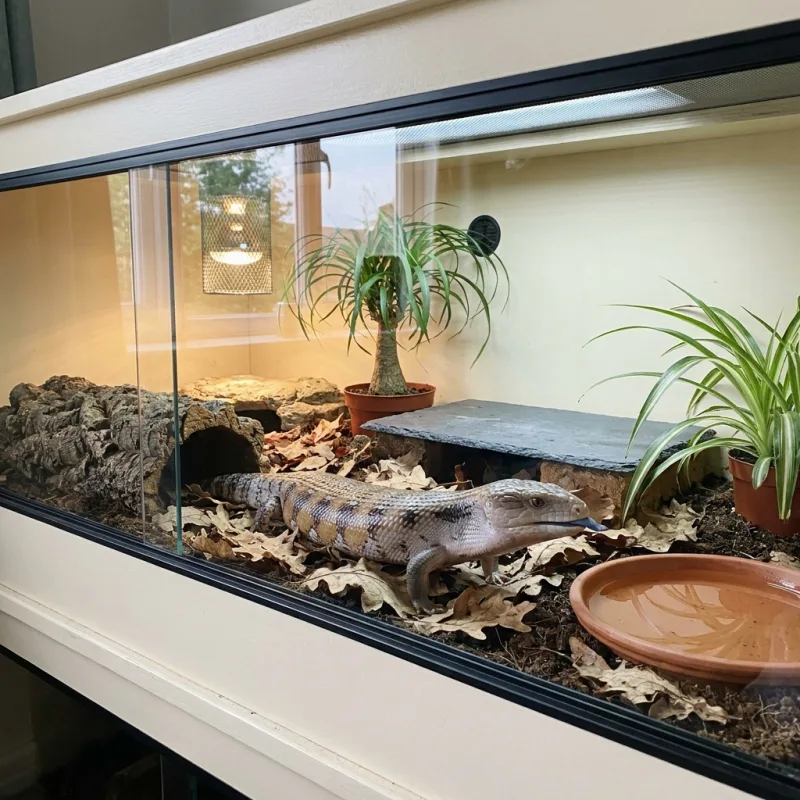
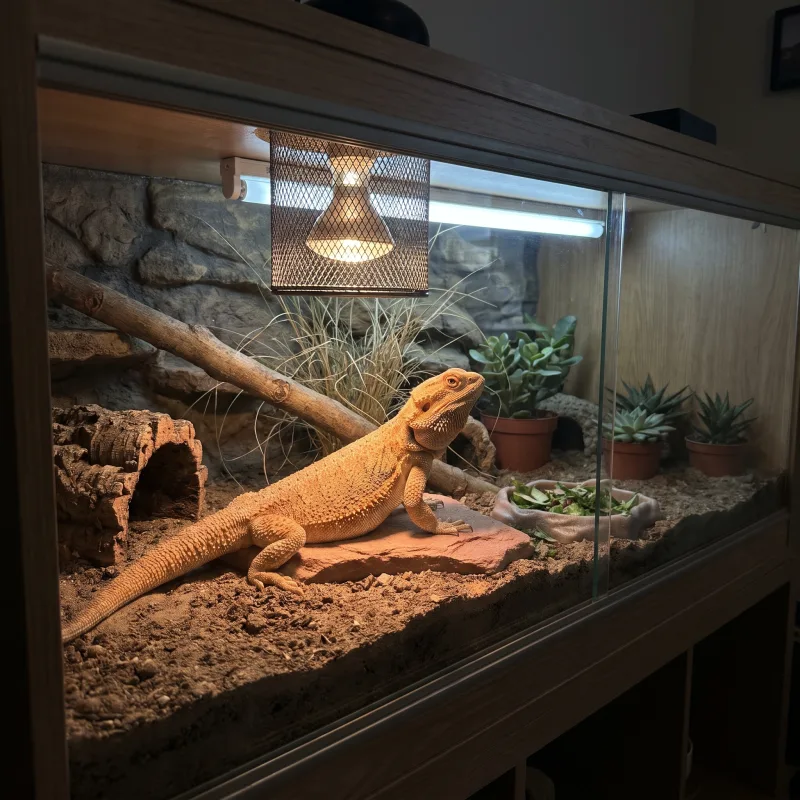
- An adult needs a vivarium of at least 6 x 3 x 3 ft1.8 x 0.9 x 0.9 m, larger if possible, with branches to climb and a strong thermal gradient.
- Provide a basking surface of 100-108°F38-42°C under a halogen heat lamp at one end and a cool end around 75-79°F24-26°C, all on thermostats and timers.
- Temperatures can fall to room temperature at night.
Show 2 more
- A high-output UVB source (such as a T5 12% tube) covering roughly two-thirds of the enclosure is essential for vitamin D3 synthesis and preventing metabolic bone disease; replace tubes on schedule as output fades.
- Use a firm naturalistic substrate or tile, provide hides and basking branches, and spot-clean daily.
Supplies
Setup
- Enclosure, 6 x 3 x 3 ft1.8 x 0.9 x 0.9 m or larger
- Basking fixture, bulbs and dimming thermostat
- Linear UVB fixture and T5 HO bulb
- Digital thermometers with probes, and an infrared thermometer
- Substrate, hides, basking rock, decor
Ongoing
- Live dubia roaches, locusts or crickets
- Dark leafy greens (collard, mustard, dandelion) for the daily salad
- Plain calcium powder without D3
- Calcium with D3 and a reptile multivitamin
- Feeder insect gut-load and a ventilated tub
Show 3 more
- Shallow salad dish and a shallow water dish
- Blunt-tipped feeding tongs
- Kitchen scale for tracking growth and weight
Safe substrate: Topsoil and play sand mix · Slate or unpolished stone tile · Paper towel or newspaper
Care routine
Daily
- Check the basking surface temperature
- Check the droppings
- Fresh greens daily, insects to plan
- Fresh water bowl
- Look the animal over
- Spot-clean waste and uneaten food
Every few days
- Short handling sessionevery 3 days
Show 5 more
Every few weeks
- Weigh-inevery 2 weeks
Monthly
- Deep-clean decor, glass and bowls
- Test thermostats, lamps and guards
Less often
- Refresh the substrateevery 3 months
- Replace the UVB tubeevery 12 months
Vet: Annual exam and faecal check, every 12 months (every 6 months from 8 years old)
Tools
Care in depth
Diet
Omnivore (insects + greens)
- Bearded dragons are omnivores whose dietary balance shifts with age.
- Juveniles eat mostly gut-loaded, calcium-dusted live insects such as locusts, dubia roaches and crickets, fed daily, plus finely chopped greens.
- Adults eat predominantly leafy greens and vegetables, with insects a few times a week.
- Offer a wide variety of dark leafy greens and avoid relying on lettuce, spinach or fruit.
- Dust insects with calcium and a multivitamin appropriately.
- Provide fresh water.
- Obesity from over-feeding fatty insects and impaction are common, as is metabolic bone disease when UVB or calcium is neglected.
Health
Signs of good health, and the common problems
- Signs of health include bright eyes, an upright stance, strong grip and a good appetite.
- Metabolic bone disease, caused by inadequate UVB or calcium, is common and shows as tremors, soft jaw, swollen limbs or a rubbery posture.
- Impaction, parasites (notably coccidia) and respiratory infections also occur.
- Brumation, a winter slow-down, is natural in adults but should be distinguished from illness, ideally with veterinary input.
- Any lethargy, weight loss or unusual lumps warrants an exotics vet.
- Regular faecal checks and correct lighting prevent most serious problems.
Is this urgent?
4 warning signs and how fast to act, 1 of them right away
Most bearded dragon illness is a lighting or temperature problem wearing a symptom.
Go now
Today
Replace UVB on a calendar, not on appearance: a T8 or compact tube roughly every 6 months, a T5 HO roughly every 12. Visible brightness tells you nothing about UVB output.
This is general guidance for a healthy adult, not a diagnosis. An exotics vet who knows your animal always overrides it, and the time to find one is before you need one.
Bedding and substrate
3 safe, 1 with a caveat, 5 to avoid
For a desert lizard the floor should be dry on top and firm enough to hold a burrow; anything chosen to hold humidity is the wrong material.
Safe
With a caveat
Never
Impaction is far more often a temperature problem than a substrate problem: an animal that cannot reach its digestive temperature will not pass what it swallows, whatever it is standing on.
Top resources for more info
Independent creators and organisations we would send a friend to. We have no affiliation with any of them, and nothing here is sponsored. Links checked 2026-10-22.
YouTubers
Sites
Other Reptiles worth knowing
Same axes, same care guides: the honest way to compare them.