Greek Tortoise
Reptiles · Tortoises

Greek Tortoise

Testudo graeca

Variable spur-thighed tortoise needing warm, dry careIntermediate

Lifespan
50+ years
Size
6-10 in (subspecies vary)
Social needs
Best housed singly; not social
Time
Medium; daily feed, seasonal care, lifetime
Cost
Medium
Diet
Herbivore (weeds, wild plants)

Overview

What is this animal?

  • The Greek or spur-thighed tortoise is a wide-ranging Mediterranean and Middle Eastern species, named for the small spurs on its thighs.
  • It is a complex group of subspecies that vary in size, climate needs and brumation behaviour, so identifying the correct type matters for proper care.
  • Like its Testudo relatives, it is a long-lived, decades-long responsibility that can outlast its owner.
Show 2 more
  • Many are captive-bred and protected; some desert-origin forms are sensitive to cold and damp.
  • Choosing a known captive-bred animal with the right paperwork avoids both legal and welfare problems.

Temperament

  • Greek tortoises are generally calm, steady and curious, foraging and basking through the day in a quiet, undemanding way.
  • They tolerate gentle, brief handling but do not enjoy being picked up, and show their personality best when left to roam a well-furnished enclosure.
Show 3 more
  • They are not social and are best housed singly.
  • Males can be aggressive, ramming and biting and pestering females, and mixed groups commonly suffer stress, injury and food competition.
  • Single housing protects both the tortoise's health and its behaviour.

A good fit for

  • Keepers in warm, dry climates with outdoor space
  • People wanting a classic Mediterranean tortoise
  • Owners ready for a lifelong, even inherited, pet
  • Those who will research their exact subspecies

Common mistakes to avoid

  • Keeping desert forms in cold, damp conditions
  • Misidentifying the subspecies and its needs
  • Fruit and high-protein feeding
  • Inadequate UVB or basking temperatures

Enclosure

Minimum 23 sq ft of floor · 6 x 4 ft

Usually kept alone. Best housed singly; not social

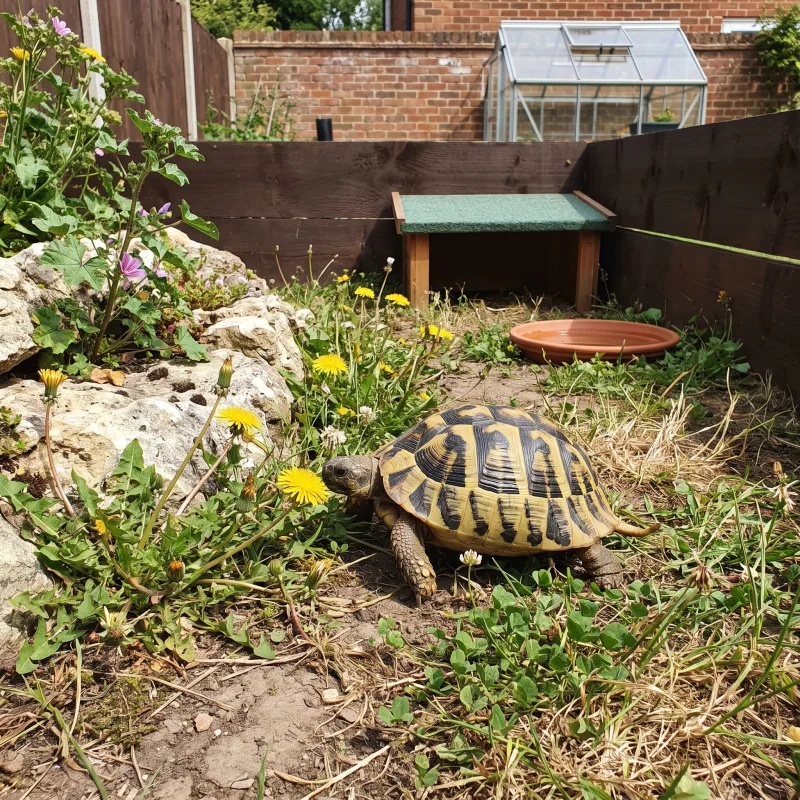
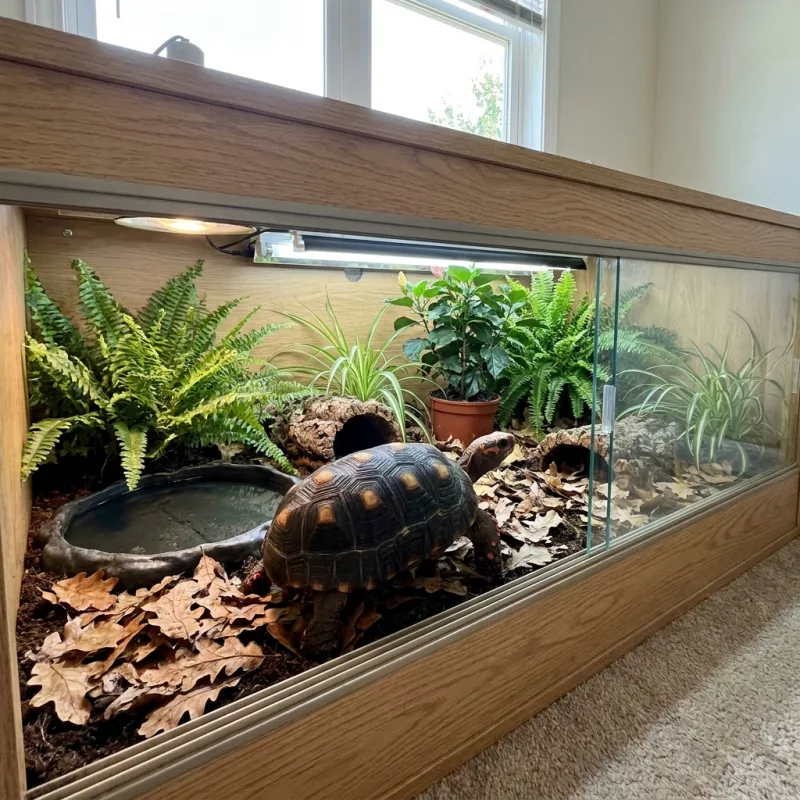
  • Indoors, house one adult in an open-topped tortoise table or pen of at least 6 x 4 ft, and more for the largest subspecies.
  • Provide a basking spot of 90-95°F under a heat lamp and a cooler end near 68-75°F, with a natural night-time drop and good ventilation throughout.
  • A UVB source over the basking zone is essential for shell and bone health and must be replaced on schedule.
Show 3 more
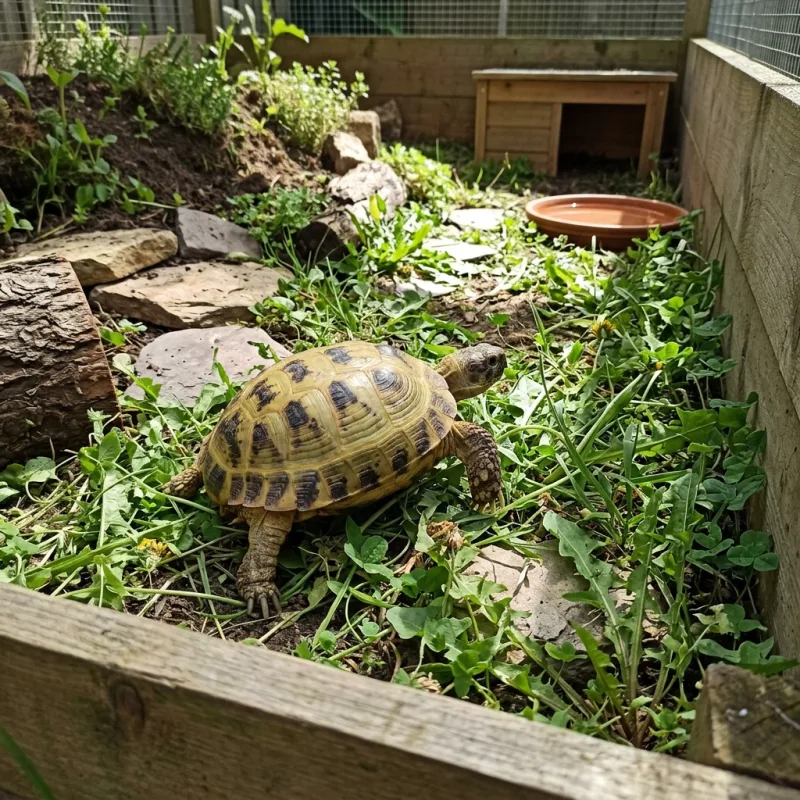
  • Use a deep, well-drained, burrowable substrate that is dry on the surface but slightly moist lower down, and offer hides, rocks and edible planting.
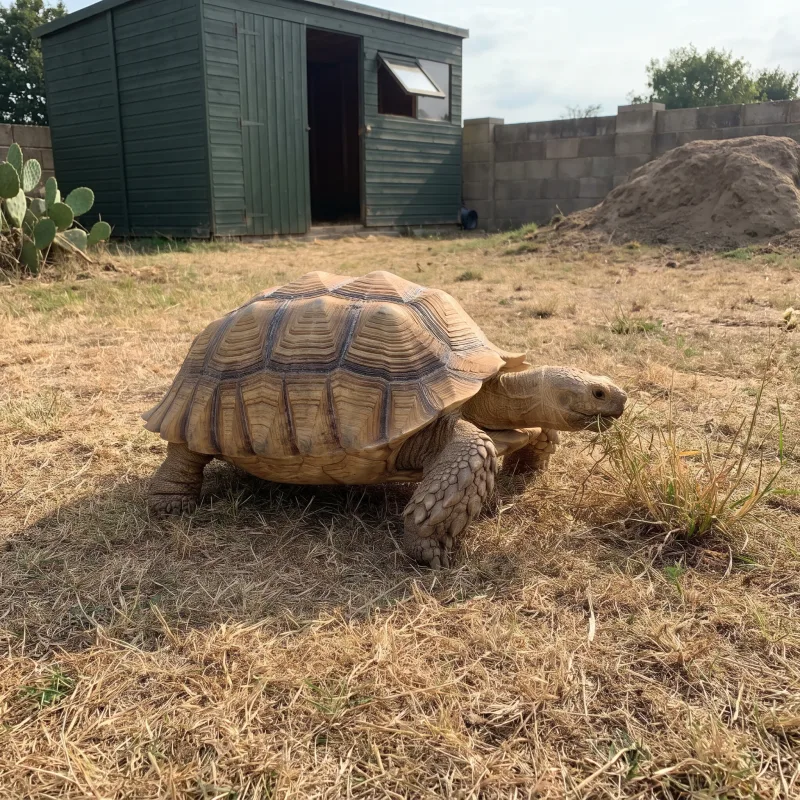
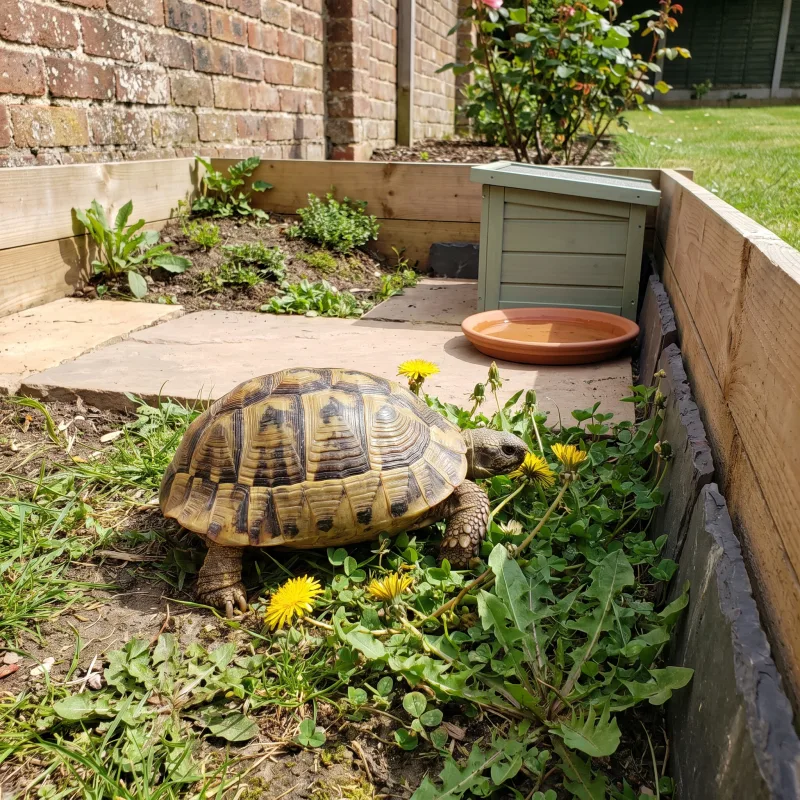
  • The best home, though, is a predator-proof outdoor pen of at least 108 sq ft with sun, shade, grazing and a dry, heated shelter, used in warm, dry conditions; the indoor table is for cold or wet spells.
  • Keep them dry and warm, as damp cold causes illness.

Check your enclosure

Supplies

Setup

  • Indoor table or enclosure
  • Secure outdoor pen
  • Heating, UVB and thermostat
  • Substrate and furnishings

Ongoing

  • Tortoise weed seed mix to grow your own forage
  • Dandelion, endive, escarole and chicory from the produce aisle
  • Grass hay for grazing species
  • Calcium powder for dusting
  • Cuttlebone
Show 3 more
  • Edible flower mix (dried hibiscus, dandelion blooms)
  • Shallow water dish and a soaking tub
  • Flat feeding slate or tile to keep food off the substrate

Safe substrate: Topsoil and coco coir mix, deep enough to dig into · Topsoil or loam with a low sand fraction

Work out the cost

Care routine

Daily

  • Check temperatures and humidity for the species you keep
  • Fresh water bowl
  • Look the animal over
  • Outdoor time whenever the weather allows
  • Spot-clean waste and uneaten food
  • Weeds and leafy greens

Weekly

  • Warm shallow soak
Show 7 more

Every few weeks

  • Brief, infrequent handling onlyevery 2 weeks

Monthly

  • Check beak and nails
  • Deep-clean decor, glass and bowls
  • Test thermostats, lamps and guards
  • Weigh and record

Less often

  • Refresh the substrateevery 3 months
  • Check the UVB lamp's age and replace it if due (if one is fitted)every 6 months

Vet: Annual exam and faecal check, every 12 months

Tools

Care in depth

Diet

Herbivore (weeds, wild plants)
  • Greek tortoises are herbivores that need a high-fibre, calcium-rich, low-protein, low-sugar diet built from weeds and wild plants such as dandelion, plantain, clover, sow thistle, mallow and other safe flowers.
  • Fruit should be avoided, and shop salads kept to a minor role.
  • Dust food with calcium regularly and provide a cuttlebone for calcium and beak wear.
  • Always supply fresh water and bathe young tortoises a few times weekly.
  • Protein-heavy or pelleted diets and overfeeding drive shell pyramiding, obesity and serious kidney and bladder disease over time.

Health

Signs of good health, and the common problems
  • A healthy Greek tortoise has a smooth, firm shell, clear eyes and nose, and strong leg resistance when lifted.
  • Respiratory infection, shell pyramiding, metabolic bone disease, bladder stones and parasites are the main concerns, often traceable to poor heat, UVB, humidity or diet.
  • Brumation needs vary by subspecies; some brumate, while warm-climate forms may not, so know your animal before cooling it.
  • Only healthy, parasite-checked tortoises should brumate, ideally with veterinary input.
  • Seek an exotics vet for faecal testing and for any runny nose, lethargy or weight loss.

Is this urgent?

4 warning signs and how fast to act, 1 of them right away

Tortoise problems build over months, so the signs to watch are shape and habit rather than sudden events.

Go now

Runny nose, bubbles, or noisy breathingGo now. Respiratory infections in tortoises become chronic quickly.
Now

Today

Not eating for more than a few days outside a planned brumationCall today. An unplanned fast in an active tortoise is not normal.
Today
Swollen eyelids, or eyes held shutBook today. Often an infection, including upper respiratory disease, or eye damage after a cold spell or hibernation. Vitamin A deficiency, common in aquatic turtles, is less usual in a tortoise eating a varied diet of greens and weeds. All need treating.
Today

Soon

A soft shell in a growing tortoise, or a pyramided, lumpy shellBook an appointment and review UVB, diet and humidity. Both are husbandry outcomes. A soft shell can firm up once UVB, calcium and diet are corrected, though any deformity it caused stays; pyramided growth is permanent, but new growth can come in smooth.
This week

This is general guidance for a healthy adult, not a diagnosis. An exotics vet who knows your animal always overrides it, and the time to find one is before you need one.

Bedding and substrate

2 safe, 1 with a caveat, 3 to avoid

Tortoise substrate has to hold a burrow and hold moisture, because dry-brooded tortoises pyramid.

Safe

Topsoil and coco coir mix, deep enough to dig intoHolds humidity at the shell without being wet at the surface.
safe
Topsoil or loam with a low sand fractionDeep enough to dig into, dry on the surface and slightly moist lower down. Keep the sand fraction low enough that it still packs and holds a burrow.
safe

With a caveat

Orchid bark over soilFor humid-species tables such as red-foots. Kept damp, it is too wet underfoot for Mediterranean species and sulcatas.
with a caveat

Never

Pure sandEaten during grazing, and it does not hold a burrow.
never
Wood shavings of any softwoodAromatic oils, and they are eaten.
never
Rabbit pellets as a substrateSold for it. It moulds, and the tortoise eats a diet it was never meant to have.
never

Top resources for more info

Independent creators and organisations we would send a friend to. We have no affiliation with any of them, and nothing here is sponsored. Links checked 2026-10-22.

YouTubers

Sites

Keep going

Tortoises, side by side

Same axes, same care guides: the honest way to choose between types.
More Reptiles guides

Is your enclosure big enough?

These are the smallest sizes that give good conditions, not legal minimums. More room is always better.

Minimum 23 sq ft of floor · 6 x 4 ft

Every figure, and where it comes from

This is the indoor figure. The best home is a secure outdoor pen of at least 108 sq ft, used whenever the weather is warm and dry, with this table or a heated shelter for cold and wet days. The largest Greek tortoises, with a shell over 9 in, need at least 8 x 4 shell lengths indoors, for example 6.5 x 3.3 ft at 10 in.

Minimum floor area23 sq ft of continuous, unbroken floor
As dimensions6 x 4 ft
CompanyUsually kept alone. Best housed singly; not social
The recognised standards do not agree on this one
RSPCA (UK): At least 6 x 4 ft indoors for one tortoise, plus an outdoor enclosure of 108 sq ft. The indoor figure this site uses, for one tortoise. The RSPCA asks for the outdoor enclosure as well, with free access to both in summer. Checked 2026-10-23.
Tortoise Trust: An indoor pen of about 6 x 6 ft minimum for one adult, with a secure outdoor pen as the main home. A larger indoor figure, given for the Russian tortoise, a Testudo of about the same size. The Trust advises against keeping any tortoise indoors all the time. Checked 2026-10-23.
Swiss Animal Protection STS: At least 108 sq ft of outdoor enclosure for two to four tortoises. It says only outdoor housing meets the needs of spur-thighed and the other European tortoises, and a terrarium does not. Checked 2026-10-23.
Swiss legal minimum (Tierschutzverordnung, Anhang 2, Tabelle 5): 8 x 4 shell lengths for one or two tortoises, and 2 x 2 shell lengths more for each extra, plus an outdoor run whenever the weather allows. A legal minimum, recorded for context: 5 x 2.5 ft for an 8-inch shell. The figure used here meets it for a shell of up to 9 in. Checked 2026-10-23.
Austrian legal minimum (2. Tierhaltungsverordnung, Anlage 3): 22 sq ft (for example 6.5 x 3.3 ft) for one or two animals over 4.5 in, and 5.5 sq ft more for each extra. A legal minimum, recorded for context. Juveniles of 2.4-4.7 in already need 11 sq ft. Checked 2026-10-23.

What it really costs

Setup, monthly, first year and across a whole life, itemised and with the electricity worked out from the actual wattage. Published figures for the same animal disagree by a factor of four, so the calculator shows ranges rather than picking one.

Can a Greek Tortoise eat that?

A tortoise is a grazer, not a fruit eater. For Mediterranean and arid species, fruit and protein are the two things that do lasting damage.

The full list: 26 foods

Never (17)

AlcoholNo safe amount at any body weight on this site.
never
Animal proteinCauses shell pyramiding and irreversible kidney damage. This includes dog and cat food, which is still sometimes recommended.
never
AvocadoPersin, concentrated in the leaves, skin and stone. It damages the heart in birds and in many mammals, rabbits and rodents among them; it has not been studied in reptiles, so treat it as unsafe for them too.
never
ButtercupProtoanemonin.
never
CaffeineCoffee, tea and energy drinks. Cardiac and neurological toxicity at tiny doses for an animal this size.
never
ChocolateTheobromine and caffeine. Small mammals and reptiles cannot clear either.
never
DaffodilToxic. Common in gardens where tortoises graze in spring.
never
FoxgloveCardiac glycosides.
never
FruitFor Mediterranean and arid species (Hermann's, Greek, Russian, sulcata, leopard), fruit sugars disrupt the gut flora and are associated with parasitic overgrowth and diarrhoea. Tropical species such as red-footed tortoises are the exception and do take fruit; check the species guide.
never
GarlicSame allium toxicity as onion, and more concentrated by weight.
never
Iceberg lettuceNo nutritional value.
never
IvyToxic, and it grows exactly where a tortoise pen tends to be.
never
LeekAllium family. Same mechanism as onion and garlic.
never
OnionOrganosulphur compounds damage red blood cells. The whole allium family is out.
never
RhubarbOxalates.
never
Salty or seasoned human foodSalt, oil and seasoning. Crisps, chips, seasoned leftovers and processed meat are all out.
never
TomatoA sugary, acidic fruit, so the fruit rule applies: leave it out for Mediterranean and arid tortoises. The leaves, stems and green fruit are toxic to all of them.
never

Rare treats (2)

Pellets and commercial tortoise foodMost are too high in protein and too low in fibre. Weeds and greens are better in every respect. Not needed if the diet is right.
rare treat
SpinachOxalates, in a species already at risk of bladder stones. Rarely if at all.
rare treat

Occasional (4)

Bell pepperSafe in small amounts. A little, once or twice a week.
occasional
Butternut squashWell tolerated. A small amount weekly.
occasional
CucumberMostly water. Useful for a tortoise that will not drink. A slice occasionally.
occasional
KaleGood, but rotate it rather than feeding it daily. Twice a week.
occasional

Everyday foods (3)

Grasses and hayEssential for grazing species such as sulcatas and leopard tortoises. Available at all times for grazing species.
everyday food
Leafy greensCollard, mustard, turnip greens, watercress and rocket in rotation. Daily where weeds are unavailable.
everyday food
Weeds and wild forageDandelion, plantain, clover, sow thistle, hawkbit. This is the natural diet and it is free. Pick well away from roads and sprayed ground. The bulk of the diet, daily, for Mediterranean and Central Asian species; for sulcatas, a supplement to grass and hay.
everyday food

That plant is not on our list. Tortoises graze indiscriminately and a great many garden plants are toxic, so identify it before it goes anywhere near the pen.

Check the species guide before applying the fruit rule: it is correct for Mediterranean and arid tortoises and wrong for tropical ones like the red-footed.