Hermann's Tortoise
Testudo hermanni
Mediterranean tortoise for dedicated keepersIntermediate
- Lifespan
- 50+ years
- Size
- 5-8 in13-20 cm (females larger; western animals smallest, some eastern animals larger)
- Social needs
- Best housed singly; not social
- Time
- Medium; daily feed, seasonal care, lifetime
- Cost
- Medium
- Diet
- Herbivore (weeds, wild flowers)
Overview
What is this animal?
- Hermann's tortoise is a small Mediterranean species from southern Europe, valued for its manageable size, hardy nature and food-motivated personality.
- It occurs in western and eastern forms and suits outdoor keeping in temperate climates during warmer months.
- This is a lifelong, even multi-generational, commitment, with healthy animals often living past 50 years.
- Captive-bred, microchipped animals with the correct paperwork are the responsible choice, as the species is protected and wild collection has harmed natural populations.
Temperament
- Hermann's tortoises are confident, curious and notably food-driven, often approaching their keeper and learning routines.
- They are diurnal and spend the day grazing, basking and exploring.
Show 4 more
- They tolerate brief, gentle handling but are not pets to be carried around.
- They are solitary by nature and best housed alone.
- Males can be persistent and aggressive, ramming and biting rivals and harassing females.
- Mixed or crowded groups lead to stress, injury and uneven access to food and basking, so single housing is strongly recommended.
A good fit for
- Keepers wanting a hardy Mediterranean tortoise
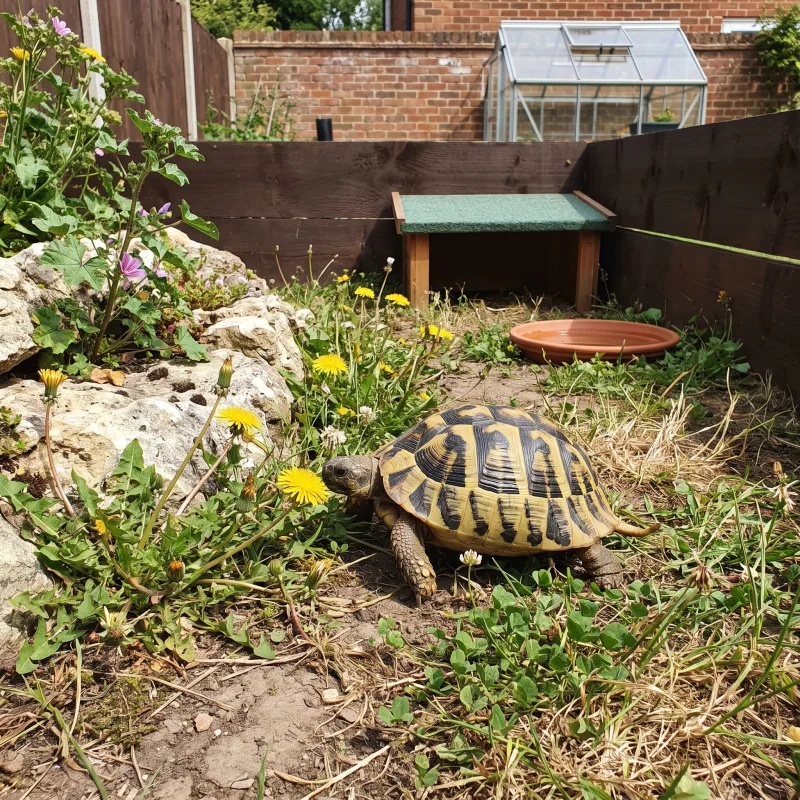
- Gardeners who can build an outdoor grazing pen
- Owners prepared for a lifelong commitment
- People wanting an interactive, food-motivated reptile
Common mistakes to avoid
- Buying without captive-bred paperwork/microchip
- Salad-and-fruit diets instead of weeds
- Inadequate UVB and basking heat
- Brumating an unfit or unchecked tortoise
Enclosure
Minimum 23 sq ft2.16 m² of floor · 6 x 4 ft1.8 x 1.2 m
Usually kept alone. Best housed singly; not social
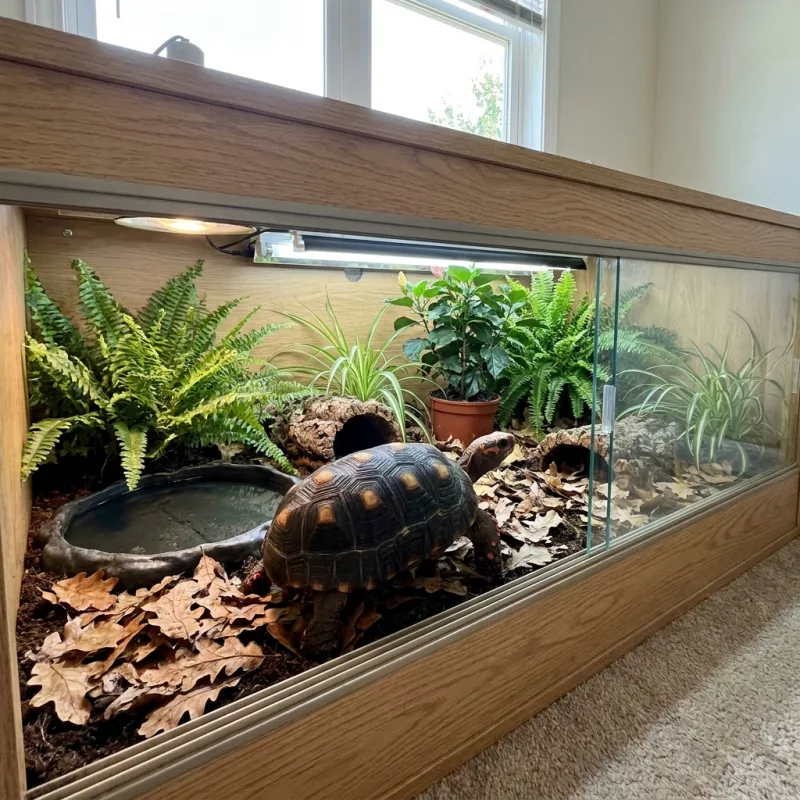
- Indoors, provide an open-topped tortoise table or pen of at least 6 x 4 ft1.8 x 1.2 m for one adult, and larger if you can.
- Create a gradient with a basking spot of 90-95°F32-35°C under a heat lamp and a cooler end of 68-75°F20-24°C, allowing a natural night-time drop.
- A UVB lamp over the basking area is essential for healthy shell and bone development; replace it on schedule.
Show 2 more
- Use a deep substrate, slightly moist underneath, for burrowing, plus hides and edible plants.
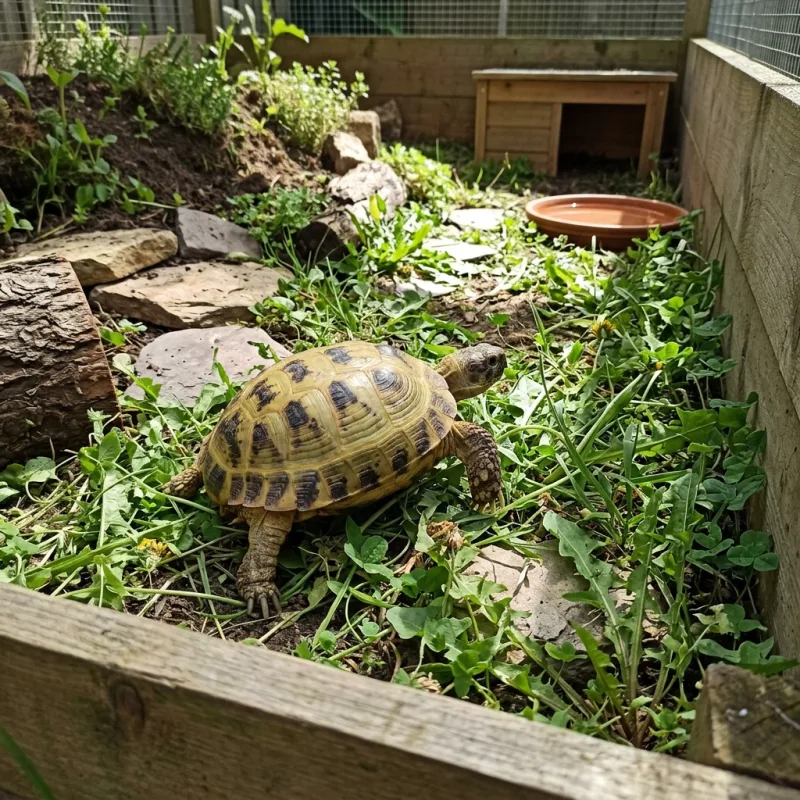
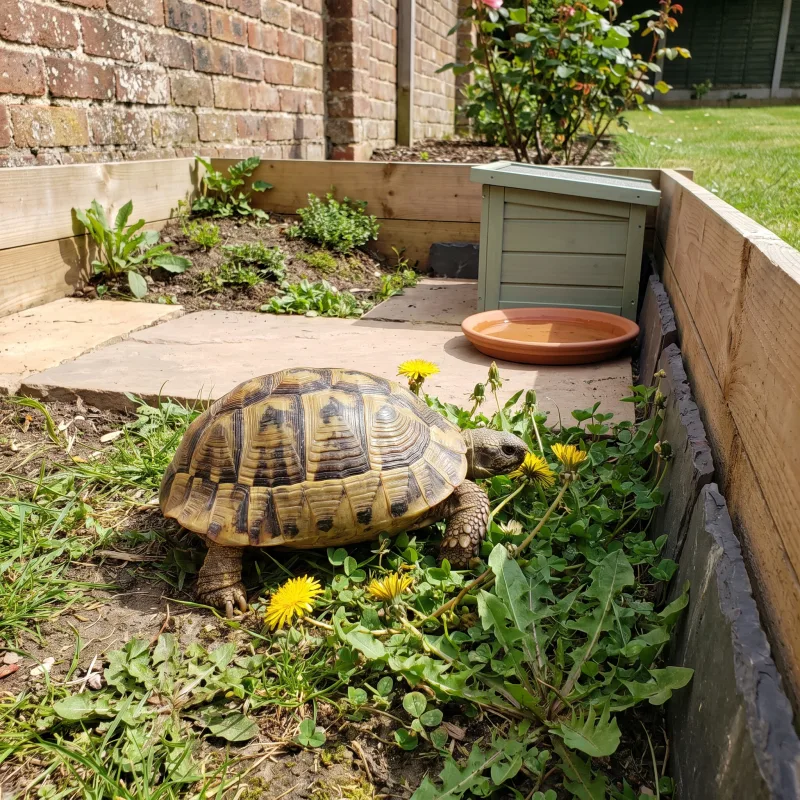
- The best home, though, is a secure, predator-proof outdoor enclosure of at least 108 sq ft10 m² with sunlight, grazing, shade and a dry, heated shelter, used whenever the weather is warm and dry; the indoor table is for cold or wet spells.
Supplies
Setup
- Indoor table or enclosure
- Secure outdoor pen
- Heating, UVB and thermostat
- Substrate and furnishings
Ongoing
- Tortoise weed seed mix to grow your own forage
- Dandelion, endive, escarole and chicory from the produce aisle
- Grass hay for grazing species
- Calcium powder for dusting
- Cuttlebone
Show 3 more
- Edible flower mix (dried hibiscus, dandelion blooms)
- Shallow water dish and a soaking tub
- Flat feeding slate or tile to keep food off the substrate
Safe substrate: Topsoil and coco coir mix, deep enough to dig into · Topsoil or loam with a low sand fraction
Care routine
Daily
- Check temperatures and humidity for the species you keep
- Fresh water bowl
- Look the animal over
- Outdoor time whenever the weather allows
- Spot-clean waste and uneaten food
- Weeds and leafy greens
Weekly
- Warm shallow soak
Show 7 more
Every few weeks
- Brief, infrequent handling onlyevery 2 weeks
Monthly
- Check beak and nails
- Deep-clean decor, glass and bowls
- Test thermostats, lamps and guards
- Weigh and record
Less often
- Refresh the substrateevery 3 months
- Check the UVB lamp's age and replace it if due (if one is fitted)every 6 months
Vet: Annual exam and faecal check, every 12 months
Tools
Care in depth
Diet
Herbivore (weeds, wild flowers)
- Hermann's tortoises are herbivores that thrive on a high-fibre, calcium-rich, low-protein diet of weeds and wild flowers such as dandelion, plantain, clover, sow thistle, hibiscus and mallow.
- Supermarket salads should be a minor part only, and fruit avoided, as it disrupts gut flora.
- Dust greens with calcium regularly and provide a cuttlebone.
- Offer fresh water at all times and bathe young or new tortoises a few times a week.
- Diets high in protein, sugar or pellets, or low in fibre and calcium, cause shell pyramiding, obesity and kidney and bladder problems.
Health
Signs of good health, and the common problems
- Signs of health include a firm, smooth shell, clear bright eyes, dry nostrils and strong leg resistance when handled.
- Respiratory infections (runny nose, bubbling, lethargy), shell pyramiding and metabolic bone disease are the most common husbandry-linked issues.
- Fit adults naturally brumate over winter, but only healthy, parasite-free, correctly weighed animals should be cooled down, ideally with veterinary guidance.
- Watch for beak and nail overgrowth, parasites and bladder stones.
- An exotics vet should perform faecal checks and assess any worrying change.
Is this urgent?
4 warning signs and how fast to act, 1 of them right away
Tortoise problems build over months, so the signs to watch are shape and habit rather than sudden events.
Go now
Today
Soon
This is general guidance for a healthy adult, not a diagnosis. An exotics vet who knows your animal always overrides it, and the time to find one is before you need one.
Bedding and substrate
2 safe, 1 with a caveat, 3 to avoid
Tortoise substrate has to hold a burrow and hold moisture, because dry-brooded tortoises pyramid.
Safe
With a caveat
Never
Top resources for more info
Independent creators and organisations we would send a friend to. We have no affiliation with any of them, and nothing here is sponsored. Links checked 2026-10-22.
YouTubers
Sites
Tortoises, side by side
Same axes, same care guides: the honest way to choose between types.