Sulcata Tortoise
Centrochelys sulcata
Tiny hatchling, enormous lifelong commitmentAdvanced
- Lifespan
- 70+ years
- Size
- 24-31 in60-80 cm (males), about 13-23 in34-58 cm (females)
- Weight
- 100-200+ lb45-90+ kg (males), about 65-110 lb30-50 kg (females)
- Social needs
- Solitary; males fight and harass other tortoises
- Time
- High; daily care, lifetime, major space
- Cost
- High
- Diet
- Grazer (grasses, hay)
Overview
What is this animal?
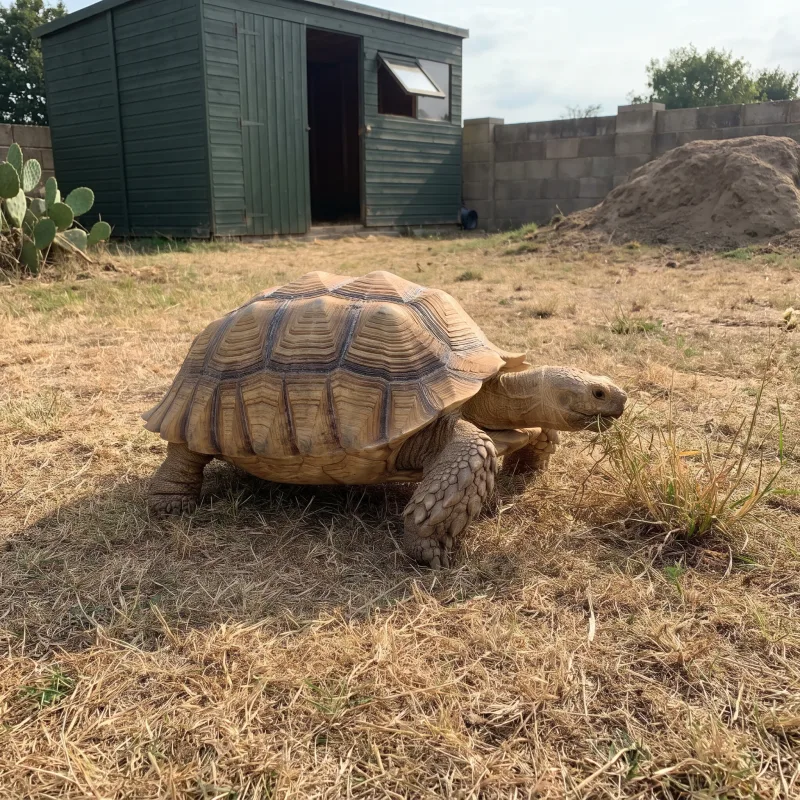
- The sulcata, or African spurred tortoise, is the largest mainland tortoise; only the giant tortoises of the Galápagos, and of Aldabra and the Seychelles, grow larger.
- Sold as a small, cheap hatchling, it grows steadily into a powerful animal that commonly exceeds 99 lb45 kg and can live well past 70 years.
- Its size and longevity make it one of the most frequently surrendered reptiles, as owners are overwhelmed by its space, heat and feeding needs.
Show 2 more
- It is not a beginner or indoor-only pet.
- Only take one on with a realistic, lifelong plan for housing a very large tortoise.
Temperament
- Sulcatas are bold, strong and surprisingly active, often described as having dog-like persistence.
- They push, dig and bulldoze through their environment and will move or break poorly secured furniture and fencing.
Show 4 more
- Many recognise their keeper and are food-motivated, but their power demands respect.
- They are not social and are best kept singly.
- Males are territorial and combative, ramming rivals and harassing other tortoises, and even large enclosures rarely prevent conflict.
- Solitary housing in adequate space is the only responsible arrangement for this species.
A good fit for
- Keepers with land and a heated outbuilding
- Experienced reptile owners in warm climates
- People committed to a 70+ year, large animal
- Those who can afford ongoing space and heating costs
Common mistakes to avoid
- Buying a hatchling without adult-space planning
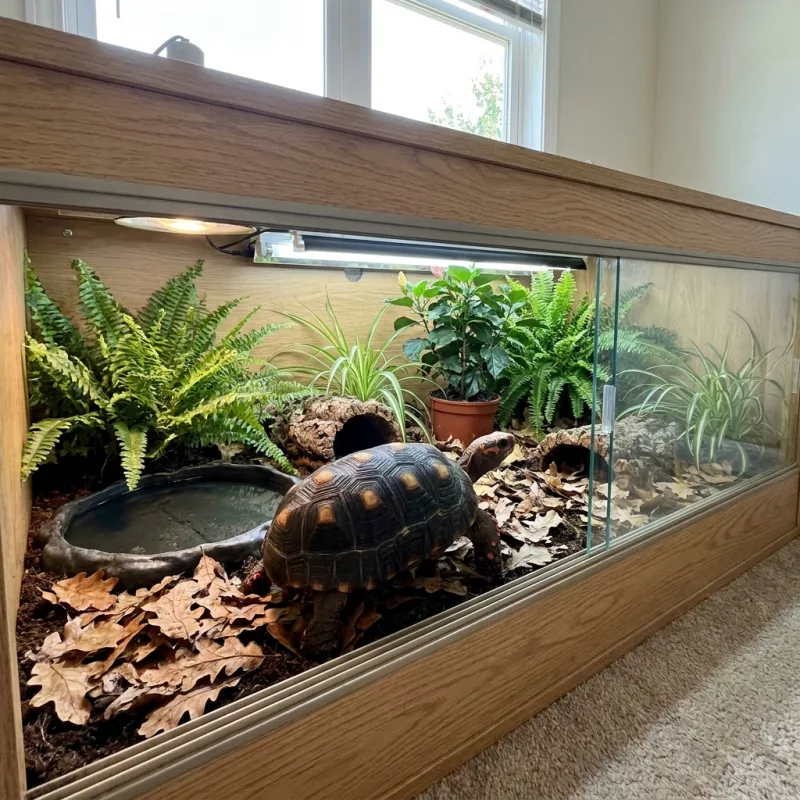
- Indoor or tank housing as it grows
- Low humidity and rich diet causing pyramiding
- Underestimating cold sensitivity and escape ability
Enclosure
Minimum size: not yet recorded
This animal outgrows indoor housing entirely. The guide states a heated shed plus secure outdoor space rather than a figure, because no enclosure size makes an adult sulcata an indoor animal.
Must be housed alone. Solitary; males fight and harass other tortoises
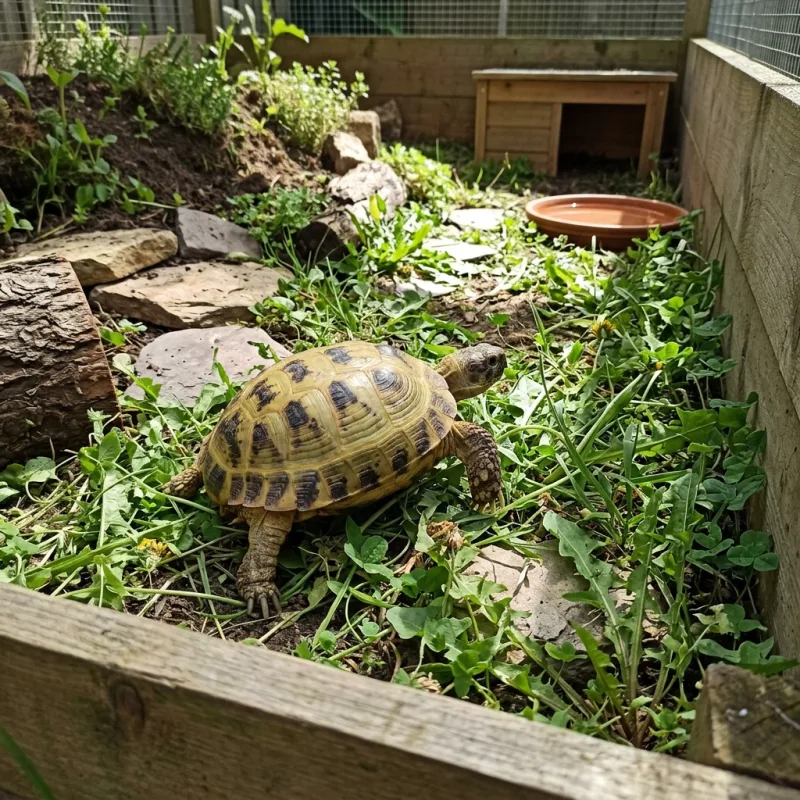
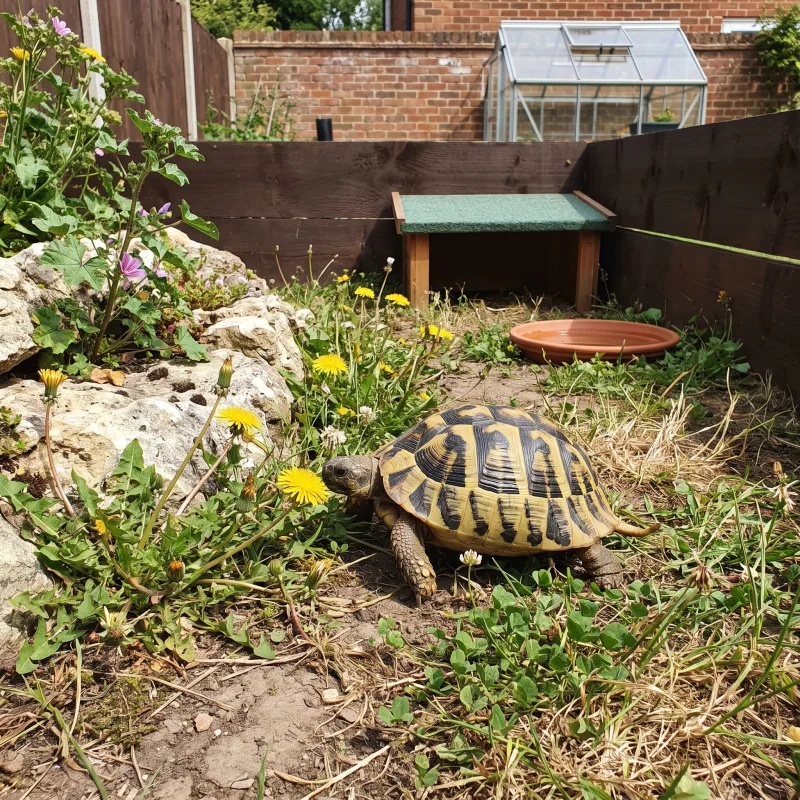
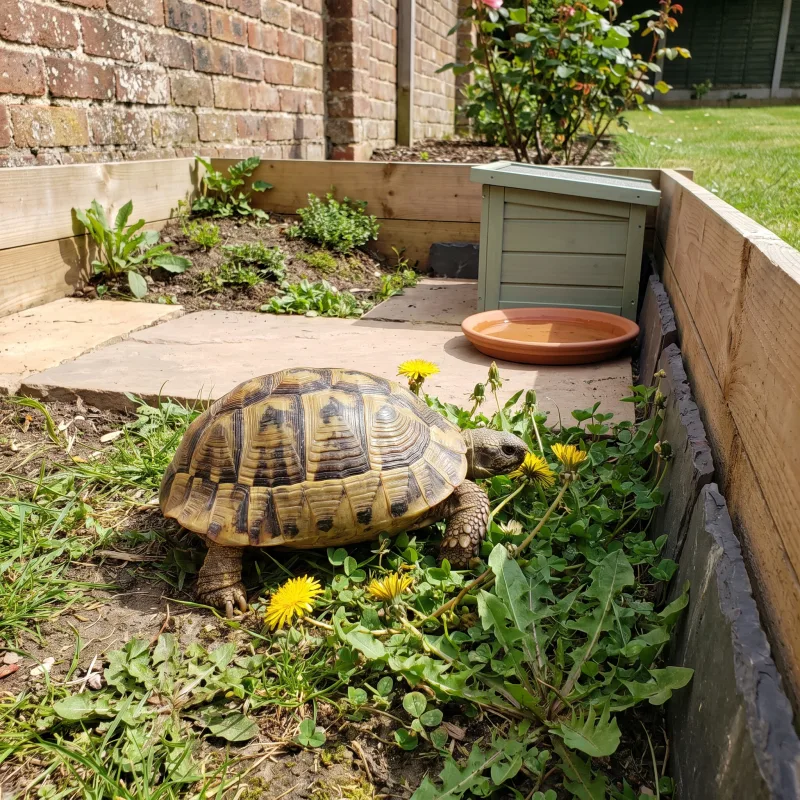
- Adults require a large, secure outdoor area with grazing, sun and shade, plus a heated, insulated shed or building they can enter, as they cannot be kept in tanks or vivariums long-term.
- From hatchling onward they need a basking spot of 95-99°F35-37°C, a cooler retreat and a warm night-time floor; sustained cold or damp is dangerous.
- UVB is essential indoors and supplied by natural sun outdoors.
Show 2 more
- Sulcatas are powerful diggers and burrowers and will undermine fences and walls, so boundaries must be deep, solid and escape-proof.
- Give young animals a humid microclimate (a humid hide over moist substrate) and do not let the whole enclosure become arid, because hatchlings reared in dry air pyramid more; adults do well in drier, well-ventilated quarters with a humid retreat.
Supplies
Setup
- Hatchling and juvenile indoor enclosure, 7 x 3.5 ft2.1 x 1.1 m or larger
- Insulated, heated shed or outbuilding, about 10 x 10 ft3 x 3 m, with power
- Outdoor grazing pen, 20 x 10 ft6 x 3 m or larger, with a solid block wall sunk at least 12 in30 cm
- Shed heating, UVB and thermostat
- Substrate and furnishings
Ongoing
- Tortoise weed seed mix to grow your own forage
- Dandelion, endive, escarole and chicory from the produce aisle
- Grass hay for grazing species
- Calcium powder for dusting
- Cuttlebone
Show 3 more
- Edible flower mix (dried hibiscus, dandelion blooms)
- Shallow water dish and a soaking tub
- Flat feeding slate or tile to keep food off the substrate
Safe substrate: Topsoil and coco coir mix, deep enough to dig into · Topsoil or loam with a low sand fraction
Care routine
Daily
- Check temperatures and humidity for the species you keep
- Fresh water bowl
- Grass and hay to graze all day, plus weeds and leafy greens
- Look the animal over
- Outdoor grazing whenever the weather allows; check the pen walls and shed heating
- Spot-clean waste and uneaten food
Weekly
- Warm shallow soak
Show 7 more
Every few weeks
- Brief, infrequent handling onlyevery 2 weeks
Monthly
- Check beak and nails
- Deep-clean decor, glass and bowls
- Test thermostats, lamps and guards
- Weigh and record
Less often
- Refresh the substrateevery 3 months
- Check the UVB lamp's age and replace it if due (if one is fitted)every 6 months
Vet: Annual exam and faecal check, every 12 months
Tools
Care in depth
Diet
Grazer (grasses, hay)
- Sulcatas are grazing herbivores built for a very high-fibre, low-protein, low-sugar diet.
- The bulk of their food should be grasses and grass hay, supplemented with weeds and leafy greens.
- They graze continuously, so constant access to safe grass or hay is ideal.
- Avoid fruit, high-sugar vegetables, excess pellets and all animal protein, which cause rapid pyramided growth, kidney disease and bladder stones in this fast-growing species.
- Provide calcium and a cuttlebone, and always supply fresh water plus regular soaking for hatchlings to maintain hydration.
Health
Signs of good health, and the common problems
- Healthy sulcatas grow steadily with a relatively smooth shell, clear eyes, a dry nose and strong limbs.
- The defining captive problem is shell pyramiding, driven by low humidity, poor diet and excess protein, alongside metabolic bone disease, respiratory infection from cold or damp, and bladder stones from dehydration and rich diets.
- Their size makes veterinary care, transport and routine handling challenging, so prevention through correct husbandry is critical.
- Sulcatas do not brumate.
- Any nasal discharge, lethargy, soft shell or appetite loss needs prompt attention from a reptile-experienced exotics vet.
Is this urgent?
4 warning signs and how fast to act, 1 of them right away
Tortoise problems build over months, so the signs to watch are shape and habit rather than sudden events.
Go now
Today
Soon
This is general guidance for a healthy adult, not a diagnosis. An exotics vet who knows your animal always overrides it, and the time to find one is before you need one.
Bedding and substrate
2 safe, 1 with a caveat, 3 to avoid
Tortoise substrate has to hold a burrow and hold moisture, because dry-brooded tortoises pyramid.
Safe
With a caveat
Never
Top resources for more info
Independent creators and organisations we would send a friend to. We have no affiliation with any of them, and nothing here is sponsored. Links checked 2026-10-22.
YouTubers
Sites
Tortoises, side by side
Same axes, same care guides: the honest way to choose between types.