Russian Tortoise
Testudo horsfieldii
Hardy small tortoise that digsIntermediate
- Lifespan
- 40+ years
- Size
- 5-8 in13-20 cm (females larger)
- Social needs
- Best housed singly; not social
- Time
- Medium; daily feed, weekly cleaning, decades
- Cost
- Medium
- Diet
- Herbivore (weeds, leafy greens)
Overview
What is this animal?
- The Russian tortoise comes from the arid steppes of Central Asia and is one of the smaller, more cold-tolerant tortoises kept as a pet.
- It is active and an enthusiastic digger and climber, which makes it engaging but also a frequent escape artist.
- Despite its modest size, it is a multi-decade commitment that often lives past 40 years and may pass between owners.
- Many are sold as easy starter pets, yet they need correct lighting, space and a fibrous, weed-based diet to avoid the chronic problems common in captive tortoises.
Temperament
- Russian tortoises are bold and determined, spending much of the day foraging, basking and trying to dig under or climb over barriers.
- They tolerate gentle, infrequent handling but, like all tortoises, do not enjoy being picked up and are not cuddly pets.
Show 3 more
- They are not social and are best kept singly.
- Males can be aggressive, ramming and biting, and will harass females.
- Housing two together often leads to stress, injury and competition over food and basking spots, so solo housing is the responsible default.
A good fit for
- Keepers wanting a smaller tortoise species
- People who can provide an outdoor pen in summer
- Owners ready for a 40+ year commitment
- Those wanting an active, foraging reptile
Common mistakes to avoid
- Cramped glass tanks instead of an open table
- Feeding fruit or high-protein foods
- Skimping on UVB, causing shell deformity
- Brumating a sick or underweight animal
Enclosure
Minimum 24 sq ft2.3 m² of floor · 7 x 3.5 ft2.13 x 1.07 m
Usually kept alone. Best housed singly; not social
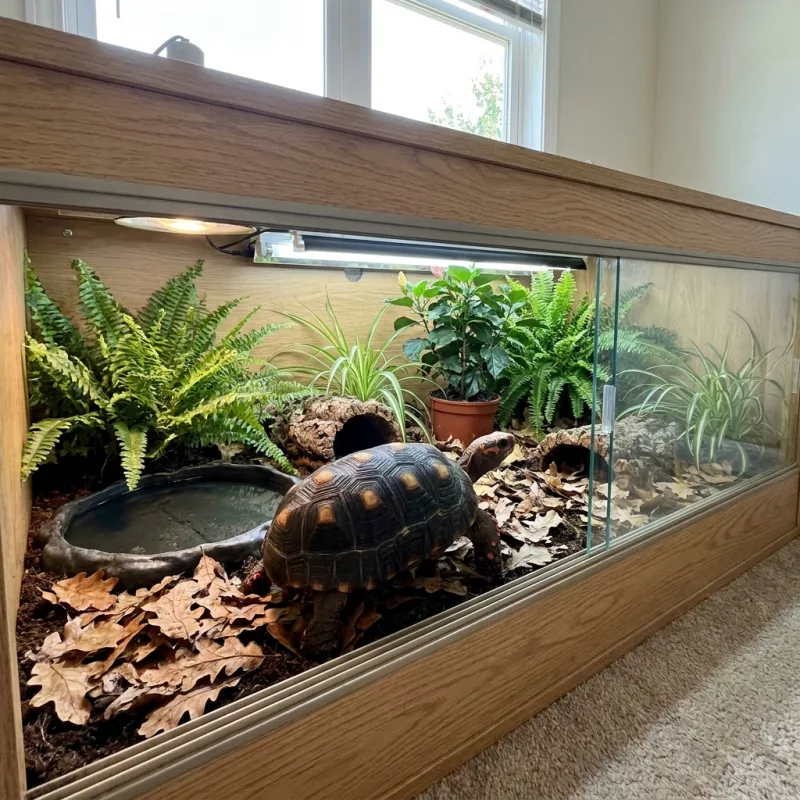
- Indoors, house one adult in an open-topped tortoise table or pen of at least 7 x 3.5 ft2.13 x 1.07 m, and larger if you can, since glass tanks restrict airflow.
- Provide a basking spot of 90-95°F32-35°C under a heat lamp at one end and a cooler area of 68-75°F20-24°C, with night temperatures allowed to drop.
- A UVB source covering the basking zone is essential for vitamin D3 and shell health; replace tubes on the manufacturer's schedule.
Show 2 more
- Give a deep, well-drained substrate for burrowing that is dry on the surface but slightly moist lower down (mist it lightly in the morning), plus a humid hide, other hides and basking rocks.
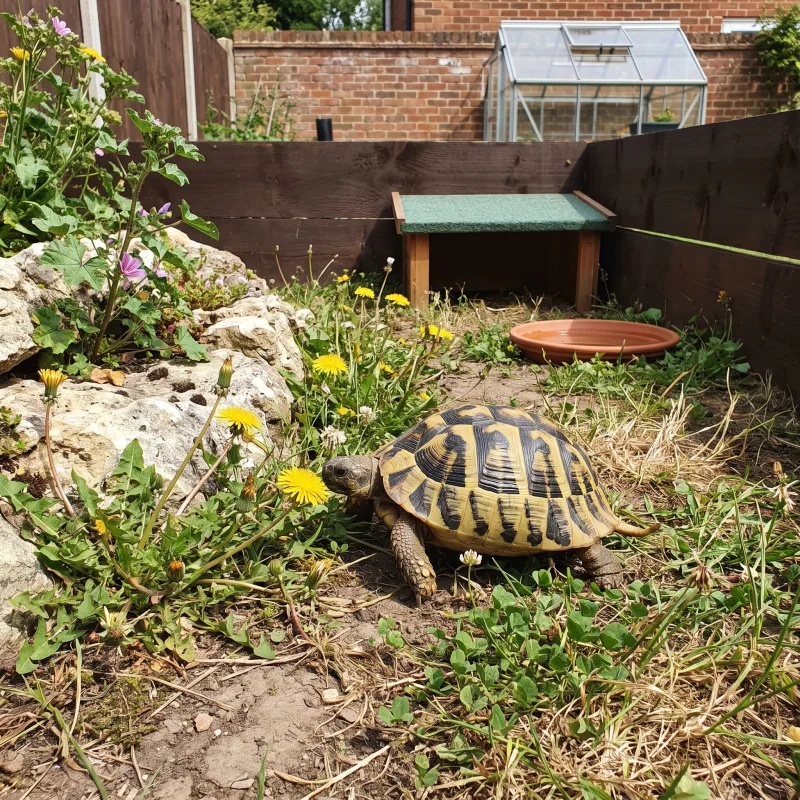
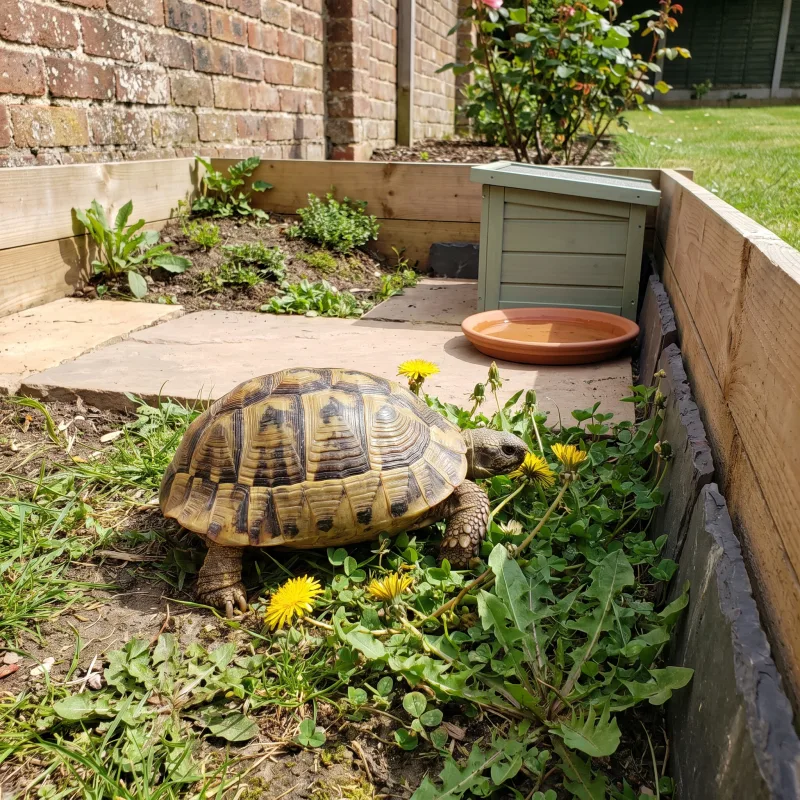
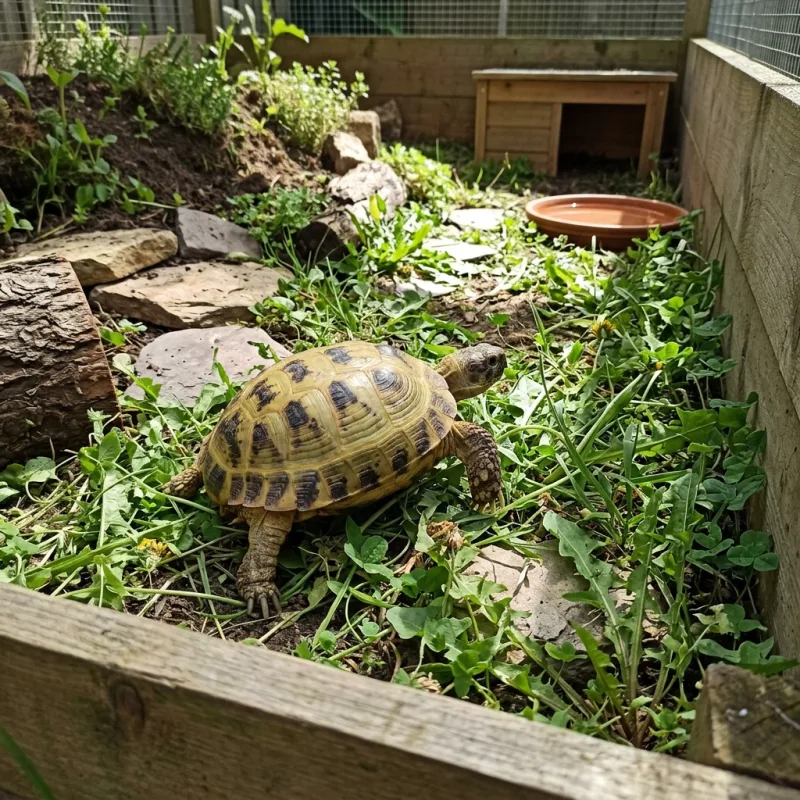
- The best home, though, is a secure, predator-proof outdoor pen of at least 108 sq ft10 m² with sun, shade and a dry, heated shelter, used whenever the weather is warm and dry; the indoor table is for cold or wet spells.
Supplies
Setup
- Indoor table or enclosure
- Secure outdoor pen
- Heating, UVB and thermostat
- Substrate and furnishings
Ongoing
- Tortoise weed seed mix to grow your own forage
- Dandelion, endive, escarole and chicory from the produce aisle
- Grass hay for grazing species
- Calcium powder for dusting
- Cuttlebone
Show 3 more
- Edible flower mix (dried hibiscus, dandelion blooms)
- Shallow water dish and a soaking tub
- Flat feeding slate or tile to keep food off the substrate
Safe substrate: Topsoil and coco coir mix, deep enough to dig into · Topsoil or loam with a low sand fraction
Care routine
Daily
- Check temperatures and humidity for the species you keep
- Fresh water bowl
- Look the animal over
- Outdoor time whenever the weather allows
- Spot-clean waste and uneaten food
- Weeds and leafy greens
Weekly
- Warm shallow soak
Show 7 more
Every few weeks
- Brief, infrequent handling onlyevery 2 weeks
Monthly
- Check beak and nails
- Deep-clean decor, glass and bowls
- Test thermostats, lamps and guards
- Weigh and record
Less often
- Refresh the substrateevery 3 months
- Check the UVB lamp's age and replace it if due (if one is fitted)every 6 months
Vet: Annual exam and faecal check, every 12 months
Tools
Care in depth
Diet
Herbivore (weeds, leafy greens)
- Russian tortoises are herbivores adapted to coarse, high-fibre, low-protein plants.
- Feed a varied mix of weeds and leafy greens such as dandelion, clover, plantain, sow thistle, endive and spring greens.
- Avoid fruit, which can cause gut upset, and never feed dog food, grains or meat.
- Dust food with calcium regularly and provide a cuttlebone.
- Always offer fresh water and bathe young tortoises a few times weekly to support hydration.
- Low-fibre, high-protein or high-sugar feeding causes pyramided shell growth, kidney strain and obesity.
Health
Signs of good health, and the common problems
- A healthy tortoise has clear eyes and nostrils, a smooth firm shell, a good appetite and strong leg power when lifted.
- Watch for a runny nose, wheezing or open-mouth breathing, which signal respiratory infection, and for a soft or pyramided shell from poor UVB, calcium or diet.
- Common problems include metabolic bone disease, shell pyramiding, bladder stones, parasites and overgrown beaks.
- Healthy adults may brumate in cool months, but only if fit and parasite-free; never brumate a sick or underweight tortoise.
- Use an exotics vet for faecal checks and any concern.
Is this urgent?
4 warning signs and how fast to act, 1 of them right away
Tortoise problems build over months, so the signs to watch are shape and habit rather than sudden events.
Go now
Today
Soon
This is general guidance for a healthy adult, not a diagnosis. An exotics vet who knows your animal always overrides it, and the time to find one is before you need one.
Bedding and substrate
2 safe, 1 with a caveat, 3 to avoid
Tortoise substrate has to hold a burrow and hold moisture, because dry-brooded tortoises pyramid.
Safe
With a caveat
Never
Top resources for more info
Independent creators and organisations we would send a friend to. We have no affiliation with any of them, and nothing here is sponsored. Links checked 2026-10-22.
YouTubers
Sites
Tortoises, side by side
Same axes, same care guides: the honest way to choose between types.