Bristlenose Pleco
Ancistrus sp.
Compact algae-grazer that stays a manageable sizeBeginner
- Lifespan
- 5-12 years
- Size
- 4-6 in10-15 cm
- Social needs
- Can live solo; males territorial
- Time
- Moderate (daily feed, weekly water changes)
- Cost
- Low-Medium
- Diet
- Herbivore-leaning omnivore
Overview
What is this animal?
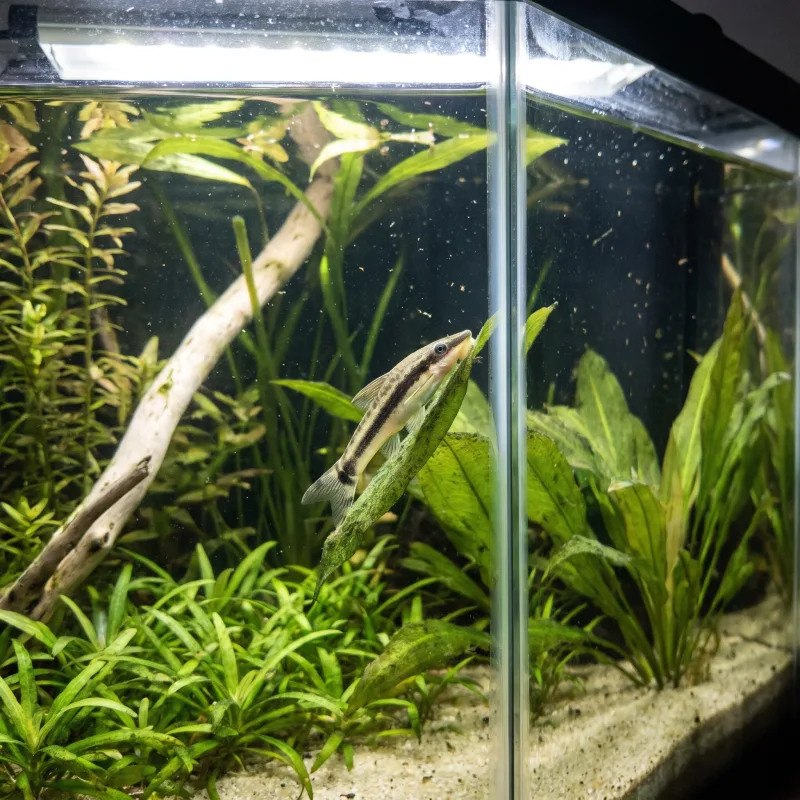
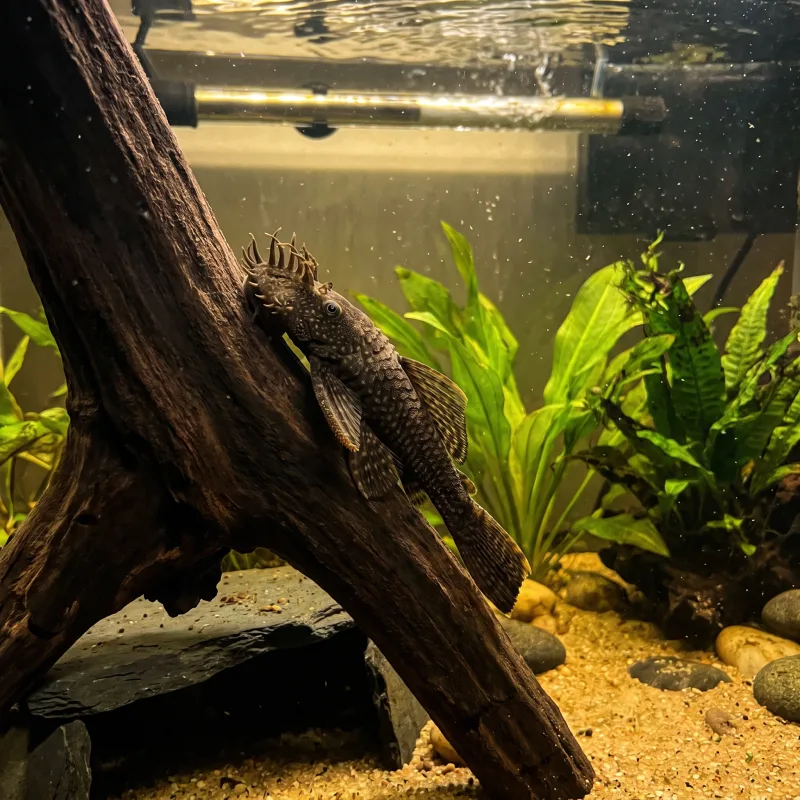
- The Bristlenose Pleco is a small, hardy South American suckermouth catfish, named for the bushy fleshy tentacles that mature males develop on their snouts.
- Unlike the common pleco, it stays under about 6 in15 cm, making it a practical algae-eater for most home tanks.
- The common aquarium bristlenose is sold as Ancistrus cirrhosus or A. cf. cirrhosus, but genetic data suggest it is not that Argentinian species, and its true identity is unresolved; some think it is a long-domesticated hybrid.
Show 2 more
- Nocturnal and peaceful, it grazes surfaces and driftwood while staying out of other fish's way.
- Its modest size and easy temperament make it a reliable first bottom-feeder beyond the corydoras.
Temperament
- The Bristlenose Pleco is peaceful toward other species and largely nocturnal, ignoring tankmates while it grazes surfaces.
- The main social caveat is between mature males, which become territorial over caves and feeding spots.
Show 2 more
- They suit almost any peaceful community and tolerate a wide range of companions, from tetras to gouramis to peaceful cichlids.
- Keep a single male in modest tanks, and provide multiple caves if housing more than one of these catfish.
A good fit for
- Community tanks needing a true algae grazer
- Beginners wanting a small, manageable pleco
- Planted/driftwood aquascapes
- Keepers who avoid the oversized common pleco
Common mistakes to avoid
- Assuming algae alone feeds them
- Skipping driftwood (a grazing surface they use constantly)
- Underfiltering their heavy waste output
- Housing two males in a small tank
Enclosure
Minimum 30 gallons112 litres
Fine alone or with company. Can live solo; males territorial
- A single adult needs a tank of at least 30 US gallons112 litres that is at least 32 in80 cm long, such as a standard 30-gallon115-litre tank or a 31 x 14 x 16 inan 80 x 35 x 40 cm tank, with strong filtration, as plecos are heavy waste producers.
- Maintain 73-81°F23-27°C, pH 6.0-7.5, in a fully cycled system with good oxygenation and some current.
- Driftwood is strongly recommended: bristlenoses rasp it constantly, grazing the biofilm that grows on it, and it doubles as cover.
Show 2 more
- Provide caves and shaded hideouts for daytime rest.
- Keep only one male per tank unless space is generous, as mature males defend territory and caves vigorously.
Supplies
Setup
- Tank and stand
- Filter
- Heater and thermometer
- Substrate, plants and decor
- Liquid test kit
- Dechlorinator and starter supplies
Ongoing
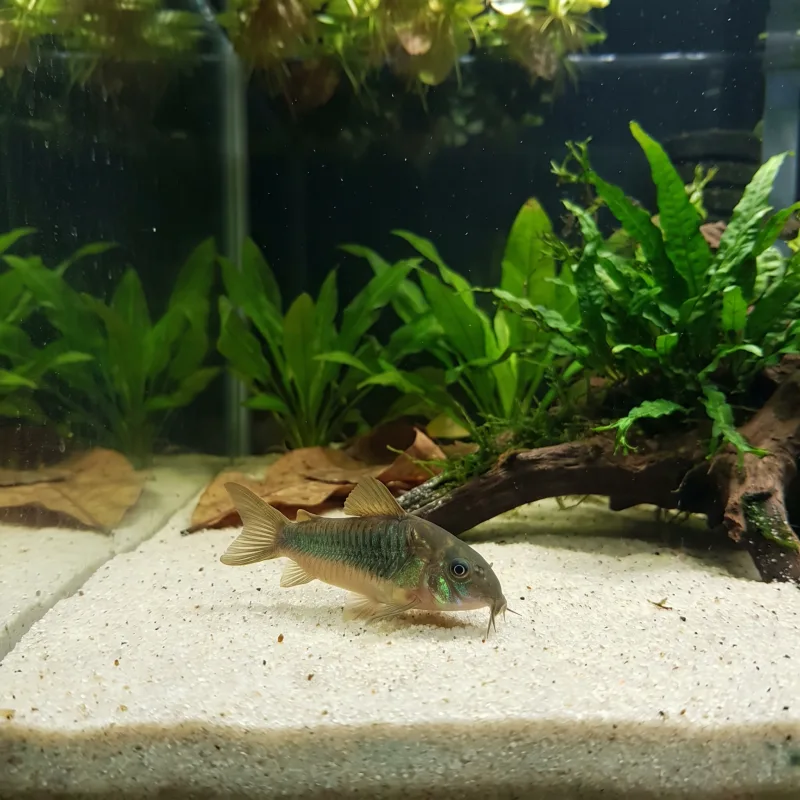
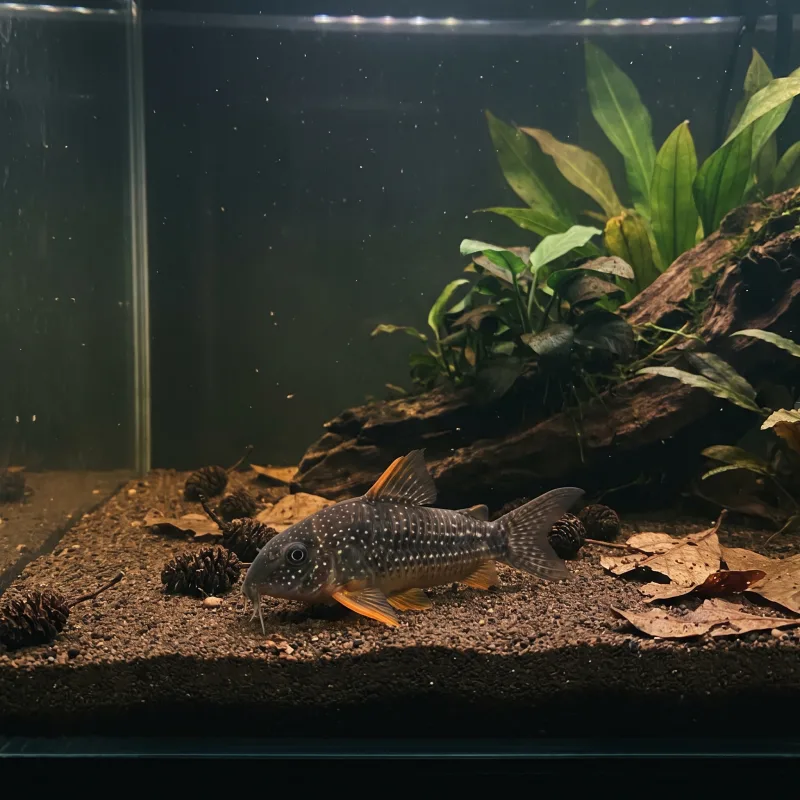
- Sinking pellets, wafers or tablets (corydoras)
- Algae or spirulina wafers (bristlenose and otocinclus)
- Frozen bloodworm, daphnia and brine shrimp (corydoras)
- Untreated aquarium driftwood (for bristlenose plecos to rasp)
- Courgette, cucumber and spinach for blanching (bristlenose and otocinclus)
Show 3 more
- Veg clip or a stainless veg skewer (bristlenose and otocinclus)
- Feeding tongs or a pipette for target-feeding
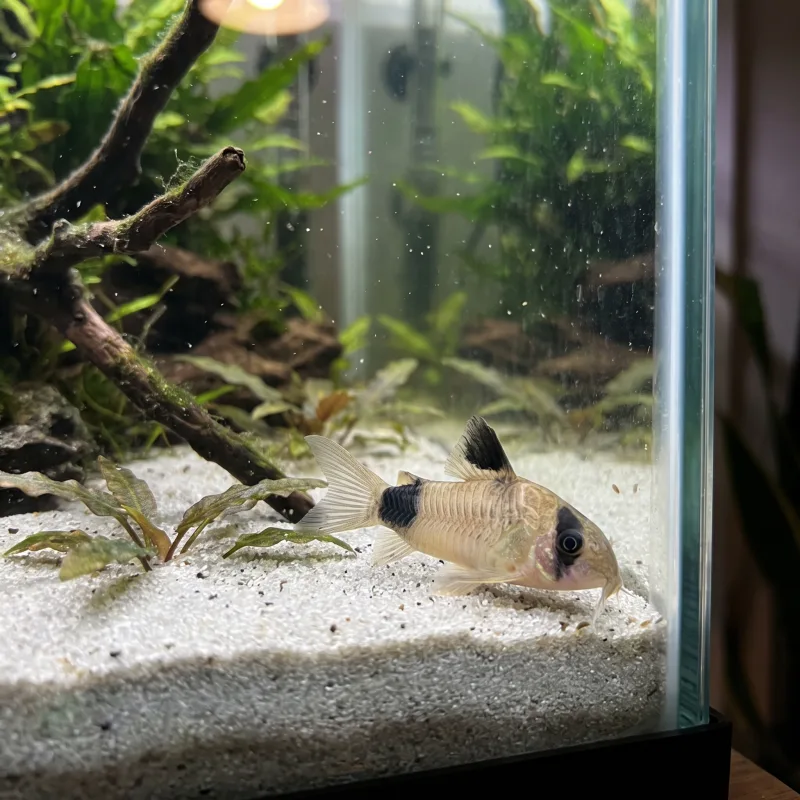
- Fine sand substrate for corydoras foraging
Safe substrate: Fine, smooth sand · Smooth, rounded fine gravel (not for loaches or sand-sifting cichlids; sand is better for corydoras) · Bare bottom (quarantine and grow-out only)
Care routine
Daily
- Check temperature and equipment
- Head-count and look everyone over
- Sinking food at lights-out
Every few days
- Top up evaporationevery 3 days
Show 9 more
Weekly
- Check belly profiles
- Test the water
- Water change and gravel vacuum
- Wipe the front glass only
Every few weeks
- Trim and thin the plantsevery 2 weeks
Monthly
- Check supplies and reagent dates
- Check the driftwood
- Replace or recharge chemical media, if you use any (skip it in a blackwater tank)
- Rinse the filter media
Health review: Quarterly bottom-dweller review, every 3 months
Tools
Care in depth
Diet
Herbivore-leaning omnivore
- Despite their algae-eating reputation, bristlenoses cannot live on tank algae alone.
- Their staple should be quality sinking algae wafers and spirulina, plus regular blanched vegetables such as courgette, cucumber, and spinach.
- Offer occasional protein such as sinking pellets or frozen bloodworm in moderation, and always provide driftwood to gnaw.
- Feed in the evening when they are active.
- Underfeeding a so-called cleaner fish is a common mistake; a varied, plant-led diet keeps them healthy.
Health
Signs of good health, and the common problems
- Bristlenose Plecos are tough but sensitive to poor water and low oxygen given their bioload.
- The most common issues are bloating from too much protein, malnutrition from an algae-only diet, and skin or fin infections in dirty water.
- Keep nitrate low with regular water changes and robust filtration, and provide driftwood as a grazing surface.
- Watch for a sunken belly (starvation) or swelling (overfeeding), and check their breathing, as they need well-oxygenated water.
Is this urgent?
6 warning signs and how fast to act, 3 of them right away
In a fish tank the patient is usually the water. Test before you treat: dosing a healthy tank for a disease it does not have makes things worse.
Go now
Today
Soon
Never add a new fish to a tank that is not fully cycled, and never treat blind. A test kit is cheaper than the fish.
This is general guidance for a healthy adult, not a diagnosis. An exotics vet who knows your animal always overrides it, and the time to find one is before you need one.
Bedding and substrate
3 safe, 4 with a caveat, 2 to avoid
Substrate in an aquarium is a filter as much as a floor. Most of the biology lives in and on it.
Safe
With a caveat
Never
This is our general list for freshwater fish. We have not built one specific to Catfish yet.
Top resources for more info
Independent creators and organisations we would send a friend to. We have no affiliation with any of them, and nothing here is sponsored. Links checked 2026-10-22.
YouTubers
Sites
Catfish, side by side
Same axes, same care guides: the honest way to choose between types.