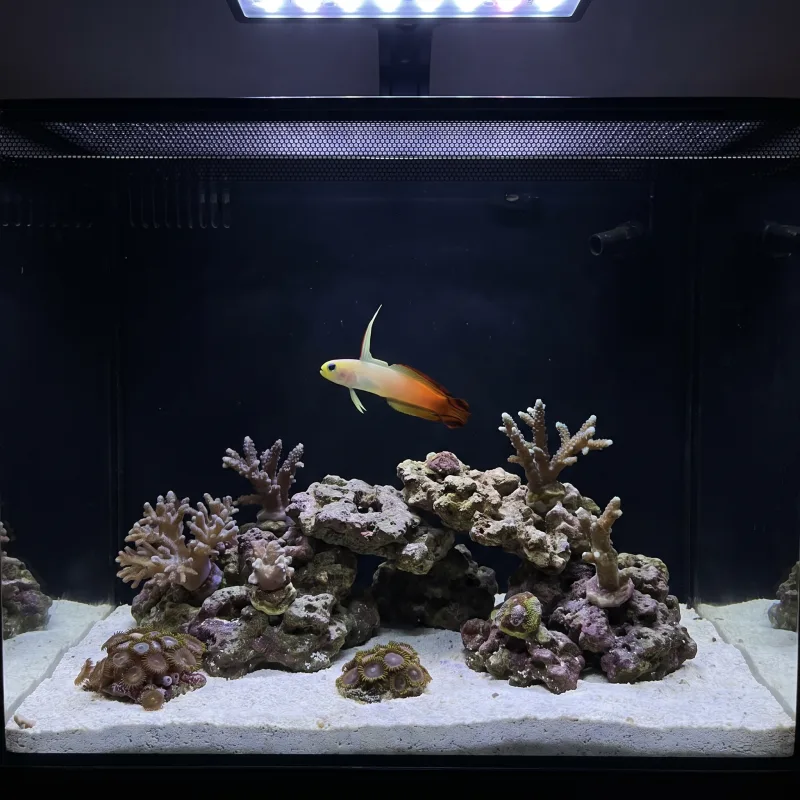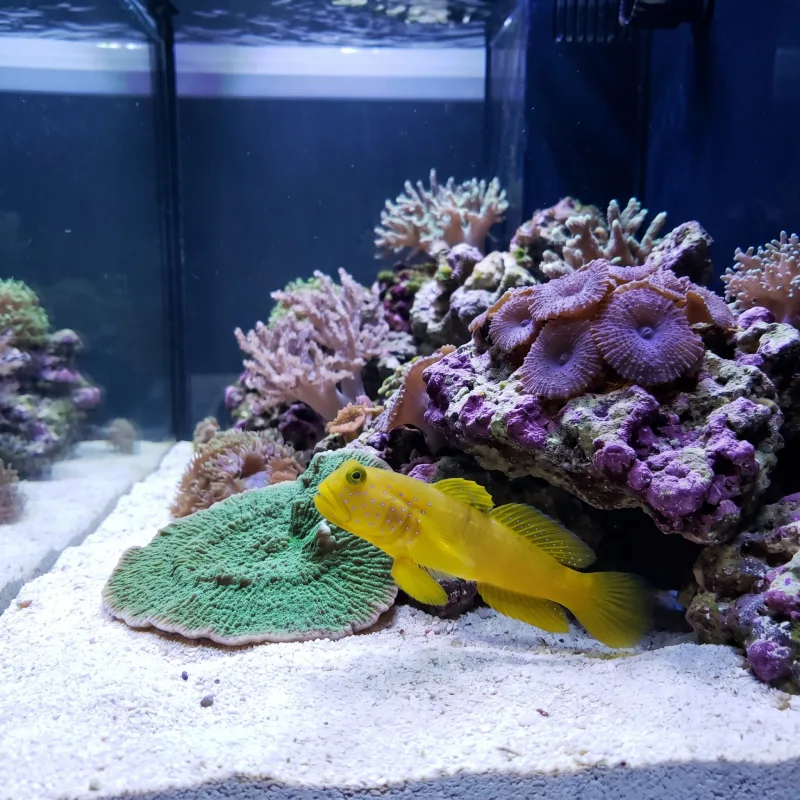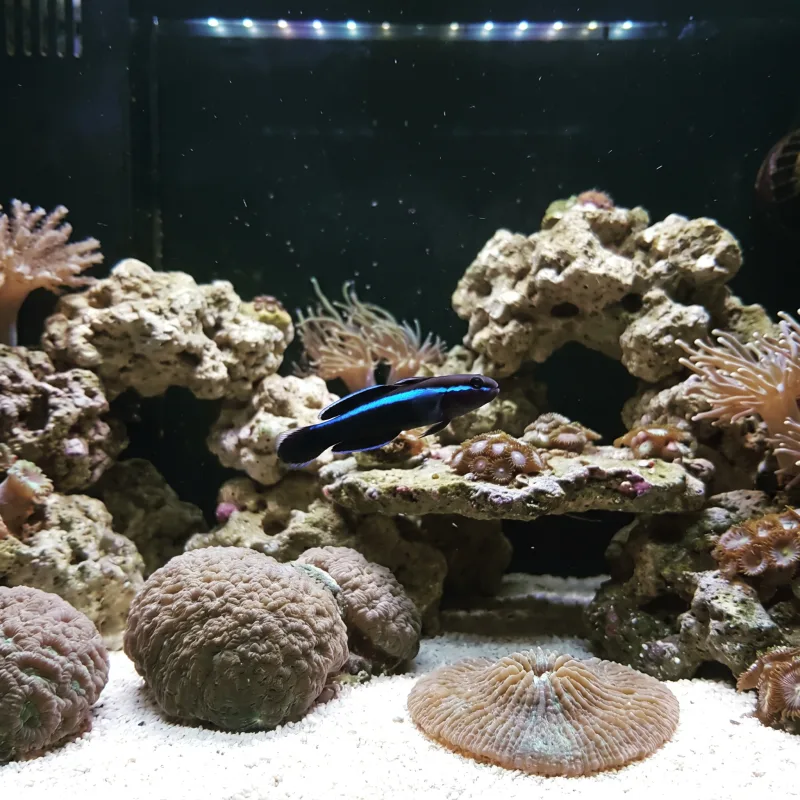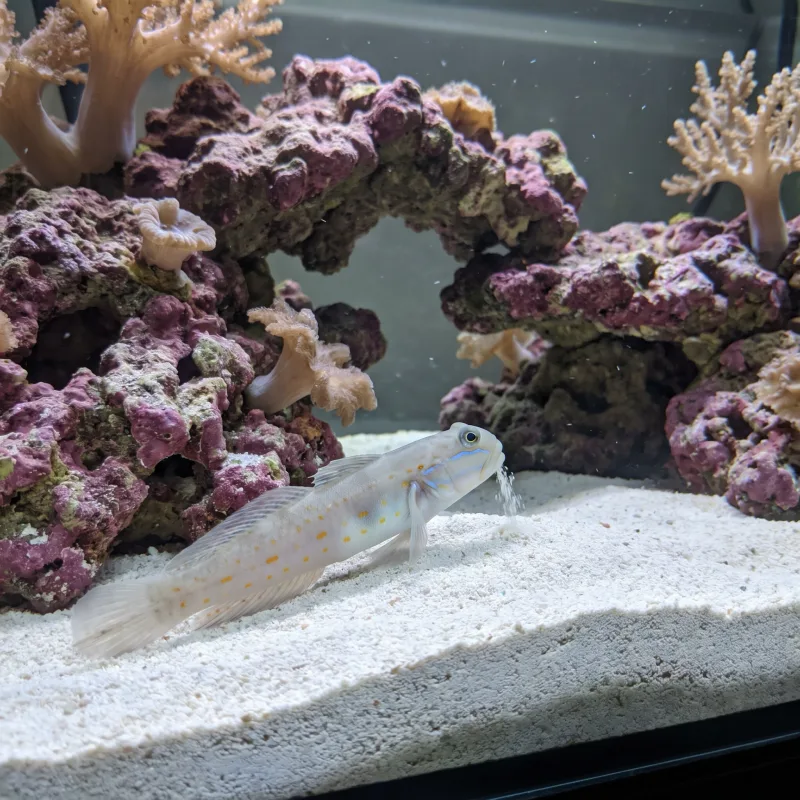
Diamond Watchman Goby
Valenciennea puellaris
Tireless sand-sifter that keeps the substrate cleanIntermediate
- Lifespan
- 4-6 years
- Size
- 5-6 inches13-15 cm in aquariums; recorded to 8 inches20 cm in the wild
- Social needs
- Singly or, better, a bonded pair
- Time
- Medium
- Cost
- High
- Diet
- Carnivore, sand-dwelling micro-invertebrates
Overview
What is this animal?
- The Diamond Watchman Goby is a pale, orange-spotted sand-sifter that constantly scoops mouthfuls of substrate to filter out food, keeping the sandbed clean and aerated.
- It is attractive, peaceful, and endlessly busy.
- It is rated intermediate because, like other sifting gobies, it depends on a mature sandbed rich in microfauna and can slowly starve in sterile tanks.
- A mature, fine sandbed about 2-3 in5-8 cm deep and supplemental feeding are essential.
Temperament
- Peaceful and reef-safe, it ignores corals and other fish, spending its time sifting and excavating burrows under rocks.
- It rarely bothers tankmates and is bullied only by very aggressive fish.
Show 3 more
- Keep singly or, better, as a bonded male-female pair: these gobies live and forage in pairs, and single fish are often reported to die early.
- Two unpaired individuals may quarrel, so buy a pair that has already formed.
- Its burrowing can undermine rockwork, so build a stable aquascape on the bare bottom rather than on the sand.
A good fit for
- Reef keepers wanting a clean sandbed
- Tanks with a mature sandbed 2-3 in5-8 cm deep
- Keepers who will supplement feedings
- Peaceful community and reef systems
Common mistakes to avoid
- Starves in sterile or shallow sandbeds
- Sifting dusts corals and shifts rockwork
- Known jumper; needs a secure lid
- Two unpaired gobies may fight
Enclosure
Minimum 265 gallons1,000 litres
Fine alone or with company. One fish, or better a bonded male-female pair: these gobies live and forage in pairs, and single fish are often reported to die early. Two unpaired fish may fight.
- Provide a tank of at least 265 gallons1,000 L with a mature, fine sandbed 2-3 in5-8 cm deep that it can sift and burrow in, plus live rock for shelter.
- Care guides give 30-55 gallons114-208 L, but a sifter strips a small sand bed of its fauna quickly, and the bigger the bed, the longer it goes on feeding the fish: in the wild a pair forages over about 11 square feeta square metre of sand.
- A mature sandbed populated with micro-invertebrates supports its natural feeding.
Show 2 more
- Keep temperature 75-81°F24-27°C, salinity 1.024-1.026, pH 8.1-8.4, and ammonia and nitrite at zero.
- Its constant sifting can dust corals and shift aquascaping, so anchor rockwork securely.
Supplies
Setup
- Tank, stand and sump, about 80-90 US gallons300-340 litres
- Return pump and powerheads
- Protein skimmer
- Reef lighting
- Rock and sand
Show 2 more
- Salt mix, refractometer and test kits
- Quarantine tank
Ongoing
- Frozen mysis shrimp
- Frozen enriched brine shrimp
- Frozen cyclops
- Micro marine pellets
- Copepod bottle or refugium culture
Show 2 more
- Turkey baster or pipette for target-feeding
- Small thawing cup and fine strainer
Safe substrate: Aragonite sand · Dry or cured live rock
Care routine
Daily
- Check salinity, temperature and flow
- Check the lid and every gap
- Feed
- Head-count and look everyone over
- Top up evaporation with fresh water
Every few days
- Service the skimmer and filter socksevery 3 days
Show 8 more
Weekly
- Clean the glass
- Test the water
- Water change
Monthly
- Calibrate the refractometer
- Check salt, RO/DI and reagents
- Top up sand-bed life
Less often
- Deep-clean pumps and powerheadsevery 3 months
- Replace RO/DI filter mediaevery 6 months
Health review: Quarterly review with a lid check, every 3 months
Tools
Care in depth
Diet
Carnivore, sand-dwelling micro-invertebrates
- A carnivore that sifts sand for copepods, worms, and other tiny invertebrates throughout the day.
- As it depletes the sandbed's fauna, supplement with frozen mysis, brine shrimp, and sinking carnivore foods.
- Many sifting gobies slowly waste away in tanks without enough sandbed life, so target-feeding and a mature, living sandbed are important.
- A rounded belly confirms it is getting enough food.
Health
Signs of good health, and the common problems
- Reasonably hardy once feeding, but starvation in a depleted sandbed is the leading cause of decline.
- Quarantine new fish, keep water stable, and confirm the goby is eating before relying on natural sifting.
- Watch the belly profile and energy: a thin, listless fish needs more supplemental food.
- It is also a jumper, so a secure lid prevents a common and avoidable loss.
Is this urgent?
6 warning signs and how fast to act, 3 of them right away
In a reef, stability matters more than any single target number. A parameter moving fast does more damage than a parameter sitting slightly off.
Go now
Today
Quarantine every new animal, including corals and inverts. It is the single practice that separates a reef that lasts from a reef that restarts.
This is general guidance for a healthy adult, not a diagnosis. An exotics vet who knows your animal always overrides it, and the time to find one is before you need one.
Bedding and substrate
2 safe, 3 with a caveat, 2 to avoid
In a marine system the rock and the sand are life support, and how you start them decides the first six months.
Safe
With a caveat
Never
This is our general list for saltwater fish. We have not built one specific to Gobies yet.
Top resources for more info
Independent creators and organisations we would send a friend to. We have no affiliation with any of them, and nothing here is sponsored. Links checked 2026-10-22.
YouTubers
Sites
Gobies, side by side
Same axes, same care guides: the honest way to choose between types.