Peppermint Shrimp
Lysmata boggessi
Shy night-shift shrimp hired to eat AiptasiaIntermediate
- Lifespan
- 2-3 years
- Size
- 1.5-2 in4-5 cm
- Social needs
- Singly or in small groups of 2-3
- Time
- Minimal beyond reef upkeep
- Cost
- Low
- Diet
- Scavenger (Aiptasia anemones, frozen foods, pellets)
Overview
What is this animal?
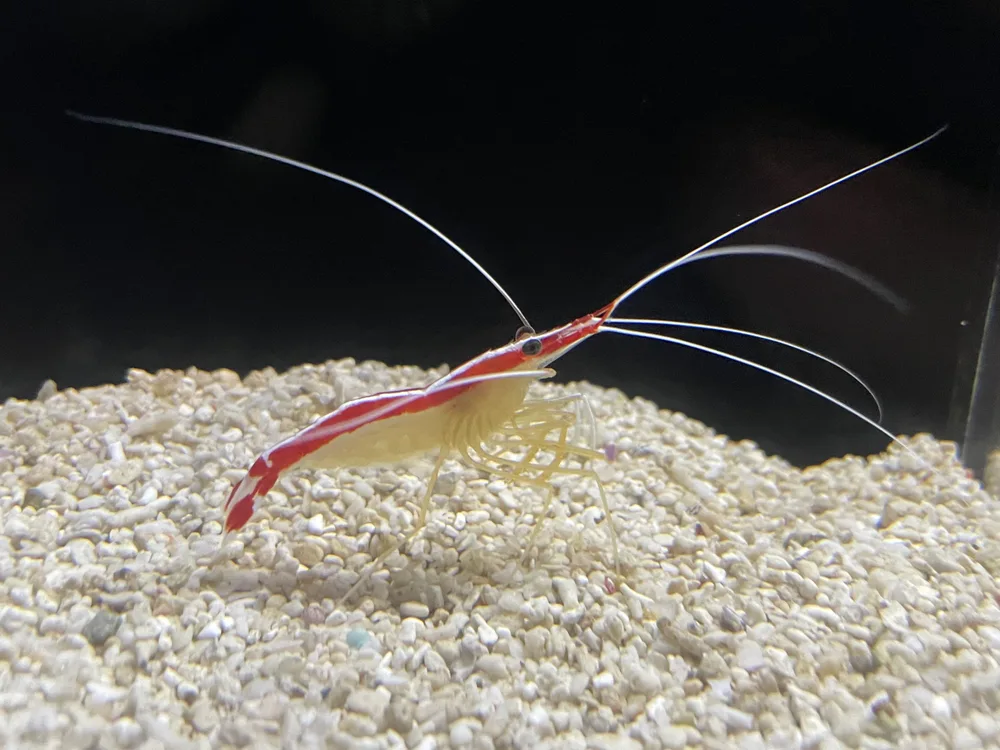
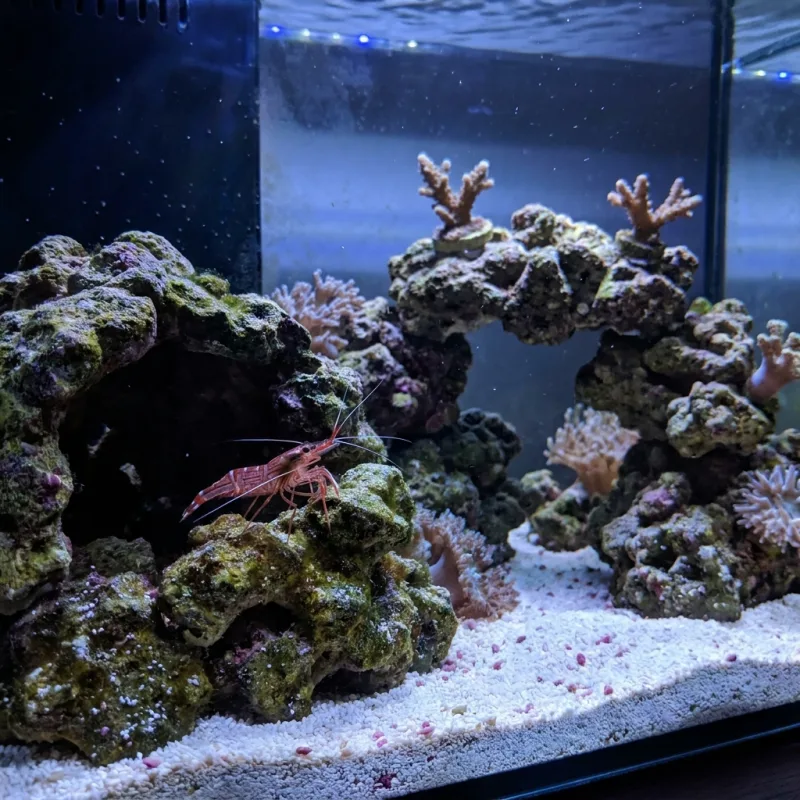
- The peppermint shrimp is a small, translucent western Atlantic shrimp striped in candy-cane red, bought almost exclusively for one job: eating Aiptasia, the stinging pest anemones that plague reef tanks.
- Unlike its showy cousin the skunk cleaner shrimp, it is not a dedicated fish-cleaner and spends its days wedged deep in the rockwork, emerging mostly after lights-out.
- It is cheap, peaceful, and genuinely effective pest control when you get the real thing.
Show 3 more
- That is the catch: 'peppermint shrimp' covers a complex of near-identical Lysmata species, and shops routinely mislabel the coral-nipping camel shrimp (Rhynchocinetes) as a peppermint, so buy from a source that can tell them apart.
- Within the complex, a genetic survey of the trade found that most peppermints sold are Lysmata boggessi, collected off Florida's Gulf coast, even when the label says L. wurdemanni.
- The giveaway is the body and beak: a true peppermint has a slim, straight body with fine red stripes, while the camel shrimp is visibly humpbacked with a sharply upturned, hinged rostrum.
Temperament
- Peaceful toward fish, corals, snails, and other shrimp, the peppermint is a background animal rather than a pet you interact with.
- Keepers used to a bold skunk cleaner riding their hand should expect the opposite: glimpses of antennae from a cave by day and cautious foraging at night.
Show 3 more
- It is reef-safe with an asterisk: a hungry individual may pinch food from coral mouths and occasionally pick at LPS or zoanthid polyps.
- Groups get along fine, and since they are protandric simultaneous hermaphrodites (young shrimp start as males and adults function as both sexes), any two adults can pair and produce larvae, which become live food for the fish.
- Check the stocking list both ways before buying: hawkfish, dottybacks, large wrasses, triggers, and puffers all treat a 2-inch5 cm shrimp as an expensive snack.
A good fit for
- Reef keepers fighting an Aiptasia anemone outbreak
- Established, copper-free systems with stable salinity
- Budget-friendly additions to a clean-up crew
- Keepers happy with a shy, mostly nocturnal animal
- Small reefs from 15 gal57 L upward
Common mistakes to avoid
- Camel shrimp (humpbacked, hinged beak) sold mislabeled as peppermints: they nip coral
- Well-fed individuals may ignore Aiptasia entirely
- Fast acclimation: osmotic shock kills on day one
- Copper medications anywhere in the system
- Hungry shrimp picking at LPS and zoanthid polyps
- Predatory tankmates: hawkfish, dottybacks, triggers, puffers
Enclosure
Minimum 15 gallons57 litres
Fine alone or with company. Singly or in small groups of 2-3
- Give one shrimp a mature, stable reef of 15 gallons57 litres or more, with plenty of rockwork caves and overhangs because this is a cryptic, nocturnal animal that needs daytime cover.
- Small groups of two or three work well in larger tanks, at about one shrimp per 10-15 gallons38-57 litres, and hunt Aiptasia more thoroughly than a lone shrimp.
- Keep salinity locked at 1.025-1.026 (about 35 ppt) and temperature at 75-79°F24-26°C, with no copper anywhere in the system.
Show 2 more
- Like all Lysmata shrimp it tolerates far less parameter swing than fish do, so sloppy top-offs and rushed water changes are the real hazards.
- Do not add it to a brand-new tank; wait until the system has been cycled and stable for a couple of months so there is biofilm and detritus to graze between meals.
Supplies
Setup
- Tank, stand and sump
- Return pump and powerheads
- Protein skimmer
- Reef lighting
- Rock and sand
Show 2 more
- Salt mix, refractometer and test kits
- Quarantine tank
Ongoing
- Sinking marine pellets
- Frozen mysis shrimp
- Frozen chopped seafood blend
- Feeding tongs
- Turkey baster for target-feeding
- Small thawing cup and strainer
Safe substrate: Aragonite sand · Dry or cured live rock
Care routine
Daily
- Check salinity, temperature and flow
- Head-count and look everyone over
- Top up evaporation with fresh water
Every few days
- Service the skimmer and filter socksevery 3 days
- Target-feed the shrimpevery 3 days
Show 9 more
Weekly
- Check for moults
- Clean the glass
- Test the water
- Water change
Monthly
- Calibrate the refractometer
- Check labels for copper
- Check salt, RO/DI and reagents
Less often
- Deep-clean pumps and powerheadsevery 3 months
- Replace RO/DI filter mediaevery 6 months
Health review: Quarterly moult and stability review, every 3 months
Tools
Care in depth
Diet
Scavenger (Aiptasia anemones, frozen foods, pellets)
- Aiptasia is the headline, and a hungry peppermint shrimp will mow down small and medium anemones, often overnight.
- Be honest about the limits: individuals vary, large established anemones are frequently ignored, and a shrimp kept well fed on easier food may never touch an Aiptasia at all.
- Beyond pest control it is a scavenger, picking over rockwork for detritus and leftovers after dark.
- Target-feed a few sinking pellets or frozen mysis a couple of times a week so it does not go hungry, but keep portions lean while an Aiptasia outbreak is being cleared.
- A genuinely underfed peppermint will start picking at easier targets, including LPS coral polyps and zoanthids, so the balance is lean feeding, not starvation.
Health
Signs of good health, and the common problems
- Acclimation is the make-or-break moment, as with all ornamental shrimp: drip-acclimate over at least an hour, because osmotic shock from a quick transfer is the classic first-day killer.
- Copper-based medications are lethal to it at trace levels, so never treat the display and never reuse copper-dosed equipment.
- Regular moulting is normal: you will find a perfect ghost shell on the sand and the shrimp will hide for a day or two while its new shell hardens.
- Failed or incomplete moults usually point to unstable salinity or low calcium or magnesium, so steady reef-standard alkalinity and mineral levels are the fix.
- Low iodine is often blamed, but the evidence is thin and an overdose harms invertebrates, so never dose iodine without a test.
- Expect a working lifespan of two to three years even in a well-run tank, and factor that into how attached you get.
Is this urgent?
6 warning signs and how fast to act, 3 of them right away
In a reef, stability matters more than any single target number. A parameter moving fast does more damage than a parameter sitting slightly off.
Go now
Today
Quarantine every new animal, including corals and inverts. It is the single practice that separates a reef that lasts from a reef that restarts.
This is general guidance for a healthy adult, not a diagnosis. An exotics vet who knows your animal always overrides it, and the time to find one is before you need one.
Bedding and substrate
2 safe, 3 with a caveat, 2 to avoid
In a marine system the rock and the sand are life support, and how you start them decides the first six months.
Safe
With a caveat
Never
This is our general list for saltwater fish. We have not built one specific to Shrimp yet.
Top resources for more info
Independent creators and organisations we would send a friend to. We have no affiliation with any of them, and nothing here is sponsored. Links checked 2026-10-22.
YouTubers
Sites
Shrimp, side by side
Same axes, same care guides: the honest way to choose between types.