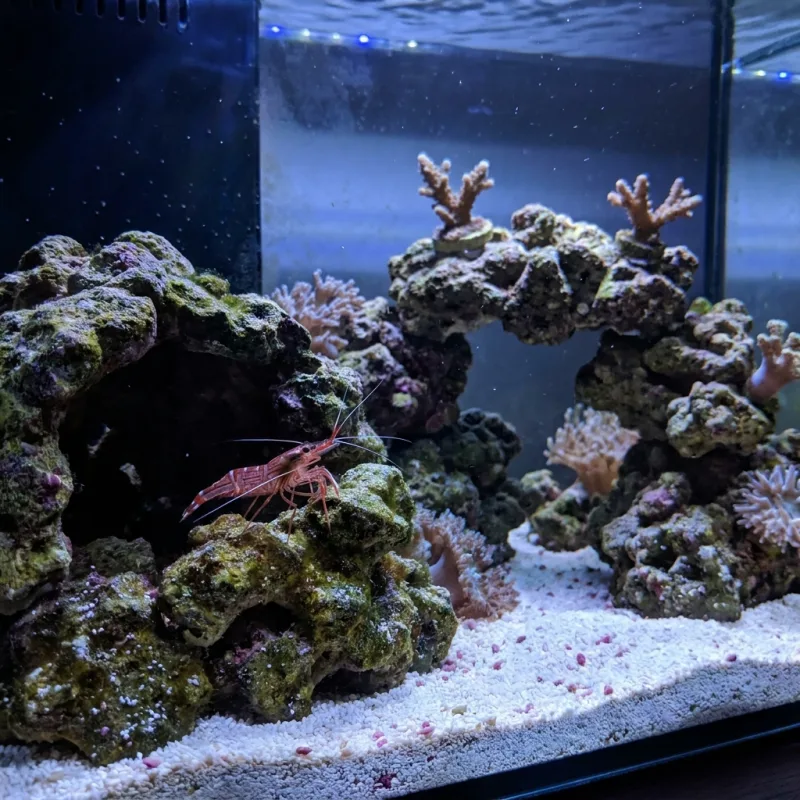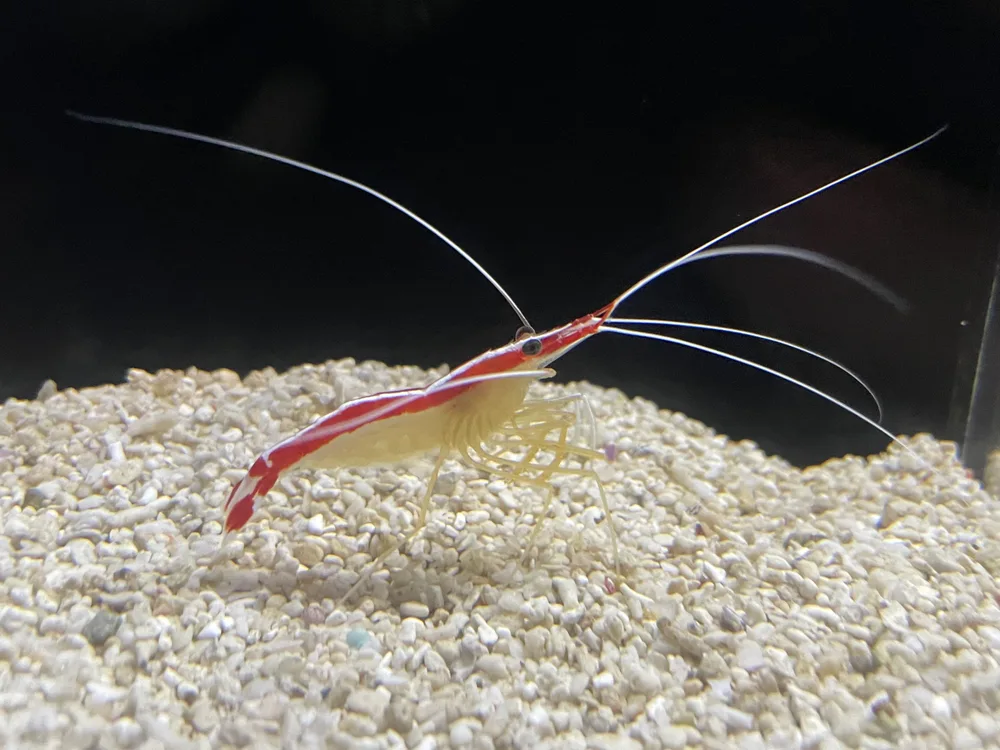
Skunk Cleaner Shrimp
Lysmata amboinensis
Runs the reef's cleaning station, and knows itIntermediate
- Lifespan
- 3-5 years
- Size
- 2-2.4 in5-6 cm
- Social needs
- Singly or as a pair
- Time
- Minimal beyond reef upkeep
- Cost
- Medium
- Diet
- Scavenger (frozen foods, pellets, fish parasites)
Overview
What is this animal?
- The skunk cleaner shrimp is the white-striped, antennae-waving shrimp of nature documentaries, famous for picking parasites and dead tissue from fish at cleaning stations.
- In aquariums it does the same, with fish queueing and even opening their gills for service.
- It is peaceful, reef-safe, and genuinely useful, but it is an invertebrate, and inverts play by stricter water-chemistry rules than fish.
Temperament
- Completely peaceful and impressively bold, a settled cleaner shrimp rides hands during tank maintenance and inspects anything new.
- The cleaning interactions with fish are mesmerising and genuinely beneficial.
Show 3 more
- It coexists with corals, snails, most other ornamental shrimp and almost all reef fish.
- Keep it away from the coral banded shrimp (Stenopus hispidus), which can attack and kill other shrimp, and remove any hitchhiking mantis shrimp, which will hunt it.
- Predatory exceptions (hawkfish, large wrasses, triggers, puffers) see it as lunch, so check the stocking list both ways.
A good fit for
- Reef keepers wanting visible, useful invertebrates
- Tanks with occasional fish-parasite pressure
- Aquarists who enjoy interactive animals
- Established systems with stable parameters
Common mistakes to avoid
- Fast acclimation, the classic first-day killer
- Copper medications anywhere in the system
- Housing with hawkfish, triggers, or puffers
- Salinity swings from careless top-offs
Enclosure
Minimum 30 gallons114 litres
Fine alone or with company. Singly or as a pair
- Provide a stable, mature reef of 30 gallons114 litres or more, and larger if you can, with rockwork ledges and overhangs where the shrimp sets up shop.
- Singles and pairs both work; skunk cleaners are simultaneous hermaphrodites, so any two adults form a pair.
- Keep salinity rock-steady at 1.024-1.026 and temperature at 75-79°F24-26°C.
- Sudden salinity or pH swings, including sloppy top-offs, are the main killer of healthy specimens.
Supplies
Setup
- Tank, stand and sump
- Return pump and powerheads
- Protein skimmer
- Reef lighting
- Rock and sand
Show 2 more
- Salt mix, refractometer and test kits
- Quarantine tank
Ongoing
- Sinking marine pellets
- Frozen mysis shrimp
- Frozen chopped seafood blend
- Feeding tongs
- Turkey baster for target-feeding
- Small thawing cup and strainer
Safe substrate: Aragonite sand · Dry or cured live rock
Care routine
Daily
- Check salinity, temperature and flow
- Head-count and look everyone over
- Top up evaporation with fresh water
Every few days
- Service the skimmer and filter socksevery 3 days
- Target-feed the shrimpevery 3 days
Show 9 more
Weekly
- Check for moults
- Clean the glass
- Test the water
- Water change
Monthly
- Calibrate the refractometer
- Check labels for copper
- Check salt, RO/DI and reagents
Less often
- Deep-clean pumps and powerheadsevery 3 months
- Replace RO/DI filter mediaevery 6 months
Health review: Quarterly moult and stability review, every 3 months
Tools
Care in depth
Diet
Scavenger (frozen foods, pellets, fish parasites)
- Cleaning service plus scavenging covers part of the menu, but feed directly: sinking pellets, frozen mysis, and bits of meaty seafood.
- A fed cleaner is a bold cleaner.
- Expect shameless theft of food intended for corals and fish; many keepers feed the shrimp first so target-fed corals stand a chance.
Health
Signs of good health, and the common problems
- Acclimation is the make-or-break moment: drip-acclimate over at least an hour, because osmotic shock from quick transfers kills more cleaner shrimp than anything else.
- Never expose them to copper-based medications.
- Regular moulting is normal: a perfect, ghostly shell on the sand and a hiding shrimp for a day or two.
- Failed moults usually point to unstable salinity or other swinging parameters.
- Low iodine is often blamed, but the evidence is thin and an overdose harms invertebrates, so never dose iodine without testing; steady reef-standard maintenance and regular water changes prevent most failed moults.
Is this urgent?
6 warning signs and how fast to act, 3 of them right away
In a reef, stability matters more than any single target number. A parameter moving fast does more damage than a parameter sitting slightly off.
Go now
Today
Quarantine every new animal, including corals and inverts. It is the single practice that separates a reef that lasts from a reef that restarts.
This is general guidance for a healthy adult, not a diagnosis. An exotics vet who knows your animal always overrides it, and the time to find one is before you need one.
Bedding and substrate
2 safe, 3 with a caveat, 2 to avoid
In a marine system the rock and the sand are life support, and how you start them decides the first six months.
Safe
With a caveat
Never
This is our general list for saltwater fish. We have not built one specific to Shrimp yet.
Top resources for more info
Independent creators and organisations we would send a friend to. We have no affiliation with any of them, and nothing here is sponsored. Links checked 2026-10-22.
YouTubers
Sites
Shrimp, side by side
Same axes, same care guides: the honest way to choose between types.