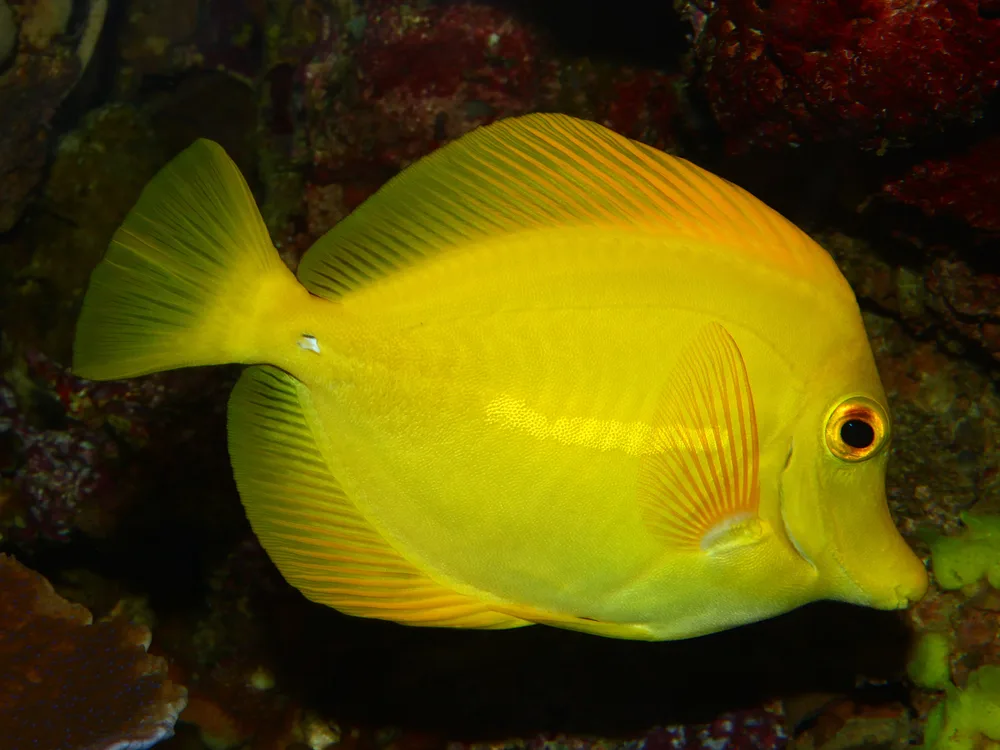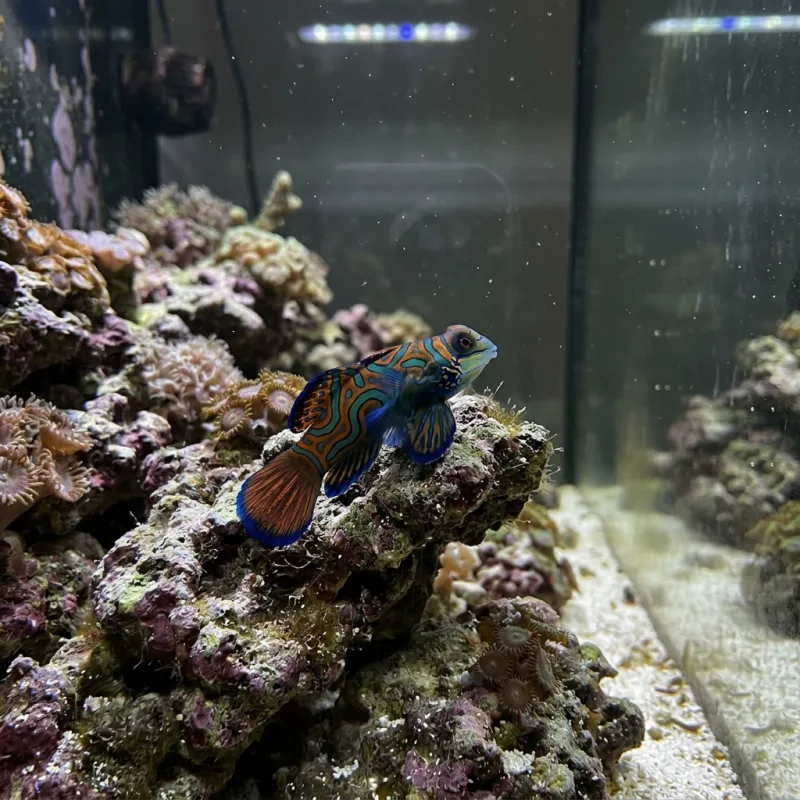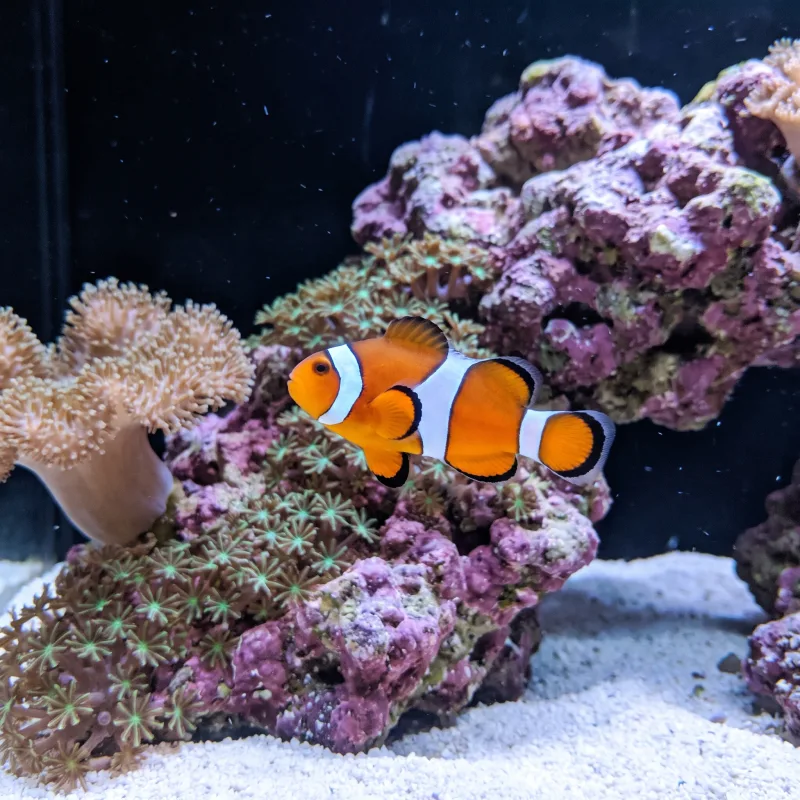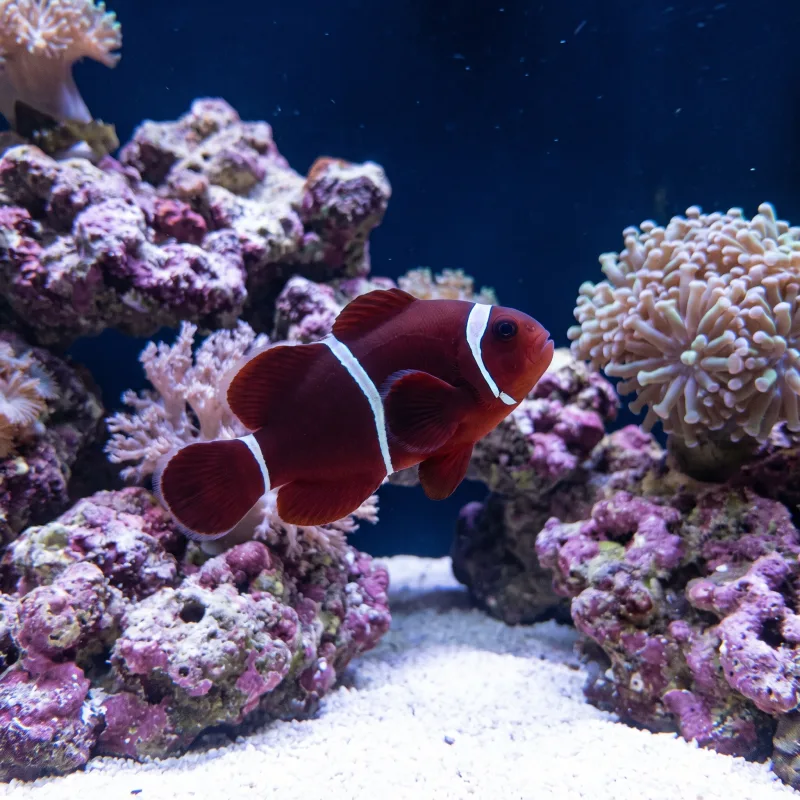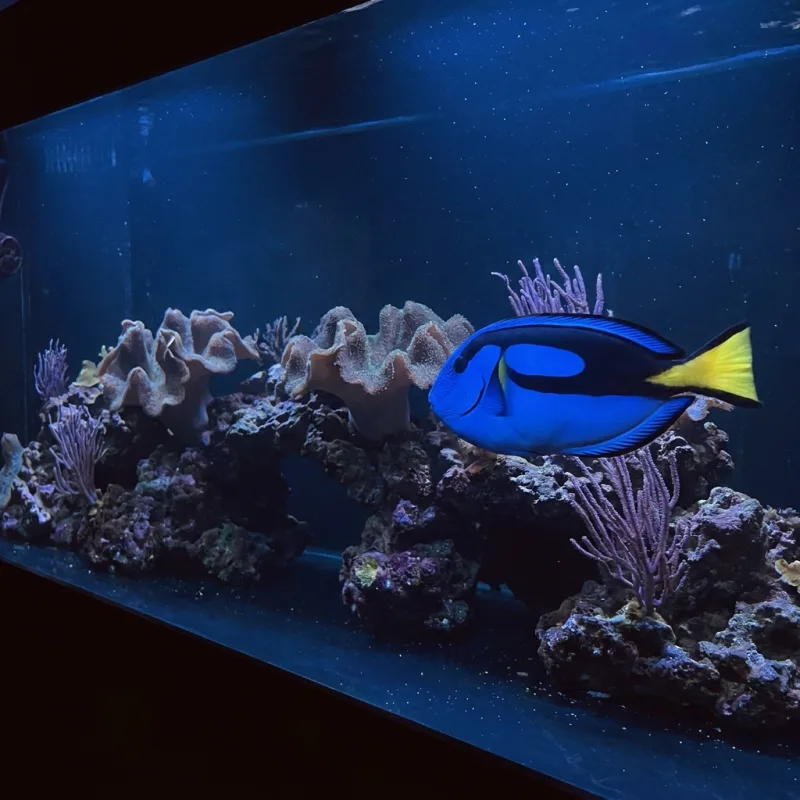
Regal Blue Tang
Paracanthurus hepatus
Large, active reef fish needing serious swimming spaceAdvanced
- Lifespan
- 10-20+ years
- Size
- 10-12 in25-30 cm
- Social needs
- Best kept one per tank unless the system is very large
- Time
- High
- Cost
- High
- Diet
- Omnivore (meaty marine foods plus marine algae)
Overview
What is this animal?
- The Regal Blue Tang is a large, active reef fish that grows far bigger and lives far longer than most buyers expect.
- Reaching up to 12 in30 cm, it is a fast, near-constant swimmer that quickly outgrows the small tanks it is often sold for.
- This is an advanced fish.
Show 2 more
- It needs a large, mature reef system, stable water, and an experienced keeper prepared for a decades-long, expensive commitment.
- It is frequently sold to beginners who lack the space and equipment it requires.
Temperament
- Generally peaceful toward other species but territorial toward other tangs and its own kind, especially in cramped quarters.
- A single specimen per tank is safest unless the system is very large and well aquascaped.
Show 2 more
- Newly added fish are often shy and may hide or wedge into rocks.
- With time and space they become bold, active centrepiece fish that need room to roam.
A good fit for
- Experienced reef keepers with large systems
- Hobbyists wanting a long-term centrepiece fish
- Keepers committed to quarantine protocols
- Those with the budget for a large setup
Common mistakes to avoid
- Sold small, but grows to 12 in30 cm and outgrows small tanks
- Prone to marine ich and velvet
- Buying without a large, mature reef ready
- A poor or unvaried diet, which is linked to HLLE
Enclosure
Minimum 1,320 gallons5,000 litres
One of its kind per tank; other compatible species can share it. Best kept one per tank unless the system is very large
- Provide an established reef aquarium of at least 1,321 gallons5,000 L and at least 8 ft2.4 m long for an adult, with open swimming space along its length and live rock with caves it can dart into when stressed.
- Practical Fishkeeping gives a juvenile a tank at least 5 ft1.5 m long and a large adult one close to 8 ft2.45 m, holding potentially over 265 gallons1,000 litres, and a German reef encyclopedia asks more than 530 gallons2,000 litres for an adult.
- This guide asks for more because good conditions are never less than a law requires, and Austria's law asks 1,320 gallons5,000 litres for a tang that grows past 10 in25 cm.
Show 4 more
- Care listings that give 180 gallons680 L and a 6 ft1.8 m tank are far too small for a fish that reaches 12 in30 cm.
- It is reef-safe and benefits from strong flow and good oxygenation.
- Keep parameters stable: temperature 75-81°F24-27°C, salinity 1.024-1.026, pH 8.1-8.4, ammonia and nitrite at zero, and nitrate low.
- A fully cycled, biologically mature tank is essential before introduction.
Supplies
Setup
- Tank, stand and sump
- Return pump and powerheads
- Protein skimmer
- Reef lighting
- Rock and sand
Show 2 more
- Salt mix, refractometer and test kits
- Quarantine tank
Ongoing
- Dried marine algae (nori) sheets in bulk
- Magnetic or suction veg clip
- Algae or herbivore pellets
- Herbivore frozen food blend
- Frozen mysis and other meaty marine foods (a small share for the yellow tang, a daily staple for the regal blue tang)
Show 2 more
- Vitamin or HUFA soaking supplement
- Second clip so nori can be offered in two places
Safe substrate: Aragonite sand · Dry or cured live rock
Care routine
Daily
- Check salinity, temperature and flow
- Clip on dried algae
- Feed
- Head-count and look everyone over
- Top up evaporation with fresh water
Every few days
- Service the skimmer and filter socksevery 3 days
Show 8 more
Weekly
- Check head, lateral line and flanks
- Clean the glass
- Test the water
- Water change
Monthly
- Calibrate the refractometer
- Check salt, RO/DI and reagents
Less often
- Deep-clean pumps and powerheadsevery 3 months
- Replace RO/DI filter mediaevery 6 months
Health review: Quarterly review with an HLLE check, every 3 months
Tools
Care in depth
Diet
Omnivore (meaty marine foods plus marine algae)
- Unlike the yellow tang, the Regal Blue Tang feeds mainly on zooplankton in the wild and grazes algae as well, so it needs both.
- Feed several times a day: frozen mysis, enriched brine and other meaty marine foods plus a quality marine pellet, and clip dried nori or seaweed sheets in the tank daily so it can graze.
- Frequent grazing supports digestion and reduces aggression.
- A varied diet with added vitamins helps prevent head and lateral line erosion (HLLE), which is linked to poor nutrition and water quality in tangs.
Health
Signs of good health, and the common problems
- Blue tangs are prone to marine ich (Cryptocaryon) and velvet, partly because of their thin scaling and sensitivity to stress.
- Quarantine every new fish and minimise stress during transport and acclimation.
- They tolerate copper-based treatment well, which is a useful tool in a hospital tank.
- Watch for white spots, scratching, rapid breathing, and faded colour.
- Head and lateral line erosion points to poor diet or water quality.
- Stable conditions and good nutrition are the best preventatives.
Is this urgent?
6 warning signs and how fast to act, 3 of them right away
In a reef, stability matters more than any single target number. A parameter moving fast does more damage than a parameter sitting slightly off.
Go now
Today
Quarantine every new animal, including corals and inverts. It is the single practice that separates a reef that lasts from a reef that restarts.
This is general guidance for a healthy adult, not a diagnosis. An exotics vet who knows your animal always overrides it, and the time to find one is before you need one.
Bedding and substrate
2 safe, 3 with a caveat, 2 to avoid
In a marine system the rock and the sand are life support, and how you start them decides the first six months.
Safe
With a caveat
Never
This is our general list for saltwater fish. We have not built one specific to Tangs yet.
Top resources for more info
Independent creators and organisations we would send a friend to. We have no affiliation with any of them, and nothing here is sponsored. Links checked 2026-10-22.
YouTubers
Sites
Tangs, side by side
Same axes, same care guides: the honest way to choose between types.