Sugar Glider
Petaurus breviceps
Bonded, gliding, demanding nocturnal marsupialsAdvanced
- Lifespan
- 10-15 years
- Size
- 4.5-8.5 in12-21 cm head and body, plus a tail about as long again (6-8.5 in15-21 cm)
- Weight
- 2.8-5.6 oz80-160 g, females smaller
- Social needs
- Highly social colony animal; never keep alone
- Time
- Very high; nightly interaction, complex diet
- Cost
- High
- Diet
- Omnivore; specialized protein, nectar, insects
Overview
What is this animal?
- Sugar gliders are small nocturnal marsupials, not rodents, from New Guinea and eastern Australia; pet gliders in the US descend from New Guinea stock.
- A 2020 revision split the species in three, leaving Petaurus breviceps in the strict sense only in south-eastern Australia, so exactly which species pet gliders belong to is unresolved.
- A membrane between their limbs lets them glide between perches, and they live in social colonies in the wild.
Show 4 more
- They are specialist exotics with a lifespan often exceeding a decade.
- They bond closely but need a large amount of attention, space, and dietary care.
- They are frequently mis-sold as pocket pets, leading to neglect.
- In some regions they are restricted or illegal, so verify local law first.
Temperament
- Sugar gliders are intensely social and form strong attachments, but bonding takes weeks of patient daily effort, including carrying them in a bonding pouch.
- Once bonded they are affectionate and playful, vocalizing with chirps, barks, and "crabbing" when upset.
Show 3 more
- They are strictly nocturnal.
- They must live with at least one other glider for psychological health; solitary gliders frequently self-harm.
- They are noisy at night, scent-mark, and are unsuitable for young children or anyone wanting a quiet, low-effort, daytime pet.
A good fit for
- Dedicated exotic keepers wanting a decade-plus bond
- Night-active owners able to interact after dark
- Homes that can house a bonded pair or colony
- Keepers with exotic-vet access and ample space
Common mistakes to avoid
- Keeping a single glider alone
- Fruit-only or seed diets causing metabolic bone disease
- Cages too short for gliding and climbing
- Underestimating the 10-15 year commitment
Enclosure
Minimum 43 sq ft4 m² of floor, for the pair · 6.5 x 6.5 x 6.5 ft2 x 2 x 2 m
Cannot be kept alone. The minimum is 2, and the space above is for that group.
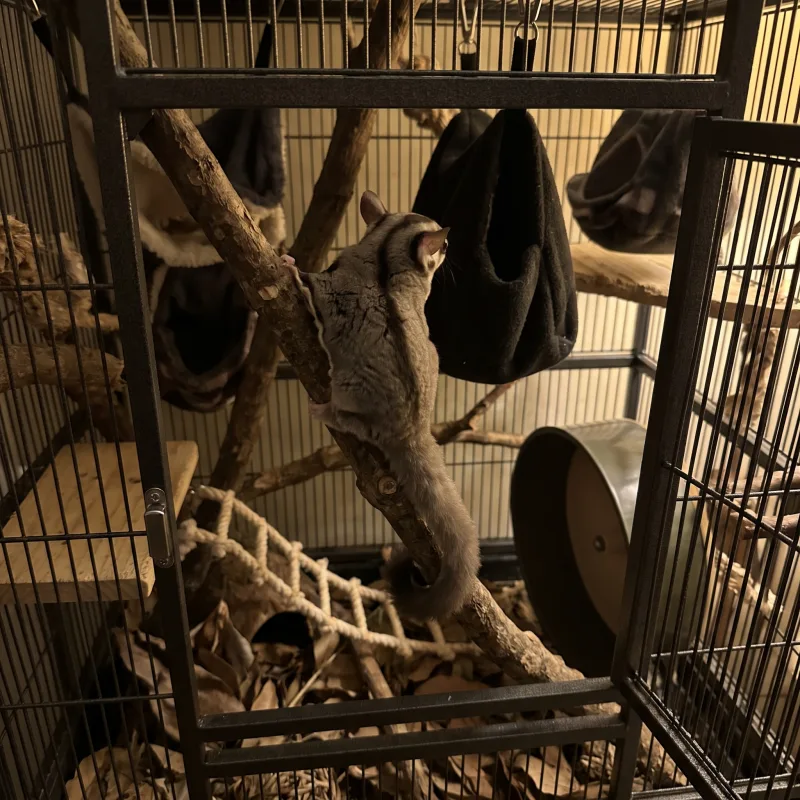
- Give a pair or small group an indoor, aviary-type enclosure of at least 6.5 x 6.5 x 6.5 ft2 x 2 x 2 m, and taller where the room allows, with mesh no wider than about 1/2 in1.25 cm rather than vertical bars, which they cannot climb.
- Equip it with branches, ropes, several sleeping pouches or nest boxes placed high, foraging toys, and a solid-surface wheel.
- Keep them warm and out of draughts and direct sun: Merck gives their preferred range as 80-88°F27-31°C, and other veterinary sources give ideal ranges from about 75°F24°C, so keep the room no cooler than 75°F24°C and ideally in the low 80s°Fthe upper 20s°C.
Show 2 more
- They are highly active and need regular supervised out-of-cage time in a fully secured room, as they glide and squeeze through small gaps.
- Housing a glider alone in a small enclosure is a leading cause of stress, self-mutilation, and poor welfare.
Supplies
Setup
- Aviary-type enclosure, 6.5 x 6.5 x 6.5 ft2 x 2 x 2 m or larger
- Water bottles, bowls, hides and enrichment
- Carrier and travel box
- Digital kitchen scale
Ongoing
- Nectar or sap supplement powder for a recognised glider diet plan
- Gut-loaded live insects (crickets, dubia roaches, black soldier fly larvae)
- Plain calcium supplement powder
- Small digital scale for weighing portions
- Shallow feeding dishes that mount off the floor
Show 2 more
- Water bottle plus a backup shallow dish
- Feeder insect gut-load and a ventilated tub
Safe substrate: Dust-extracted paper bedding or plain paper in the cage tray · Fleece sleeping pouches
Care routine
Daily
- Bonding time
- Fresh water
- Prepare the night's fresh diet
- Spot-clean the enclosure
- Watch them while they are awake
Show 7 more
Weekly
- Deep-clean the cage
- Hands-on health check
- Rotate enrichment
- Wash pouches and hammocks
- Weigh-in
Monthly
- Check nails and teeth
- Check supplies and dates
Vet: Annual exam and dental check, every 12 months (every 6 months from 7 years old)
Tools
Care in depth
Diet
Omnivore; specialized protein, nectar, insects
- Their diet is complex and a common failure point.
- They need a balanced mix of a quality nectar/sap supplement, appropriate insect protein, and limited fruits and vegetables, following an established veterinary feeding plan such as a recognized glider diet.
- Calcium-to-phosphorus balance is critical.
- Never feed only fruit or seed mixes; calcium-deficient diets cause metabolic bone disease and hind-leg paralysis.
- Avoid chocolate, caffeine, and high-fat treats.
- Fresh water must always be available, and portions should be weighed to prevent both obesity and malnutrition.
Health
Signs of good health, and the common problems
- The most common health crises stem from diet: metabolic bone disease, nutritional deficiencies, and obesity.
- Stress, boredom, and loneliness can trigger self-mutilation, over-grooming, and depression.
- Dental disease, parasites, and injuries from unsafe wheels or escapes also occur.
- They require an experienced exotic vet, who are not available everywhere.
- Signs such as trembling, hind-leg weakness, bald patches, or refusing to glide indicate serious problems.
- Their 10-plus-year lifespan means a long-term medical and financial commitment.
Is this urgent?
10 warning signs and how fast to act, 5 of them right away
Gliders hide illness, and most of what goes wrong traces back to diet or to stress. A glider that changes how it eats, grips, glides or grooms needs looking at.
Go now
Today
Soon
Experienced glider vets are scarce. Find one, and save the out-of-hours number, before you need it.
This is general guidance for a healthy adult, not a diagnosis. An exotics vet who knows your animal always overrides it, and the time to find one is before you need one.
Bedding and substrate
2 safe, 1 with a caveat, 2 to avoid
Gliders live up off the floor, so bedding here is mostly about the cage tray and the pouches they sleep in.
Safe
With a caveat
Never
Top resources for more info
Independent creators and organisations we would send a friend to. We have no affiliation with any of them, and nothing here is sponsored. Links checked 2026-10-22.
Sites
Other Small Pets worth knowing
Same axes, same care guides: the honest way to compare them.